
Small Household Snails: Identification, Slime Trails, and What to Do
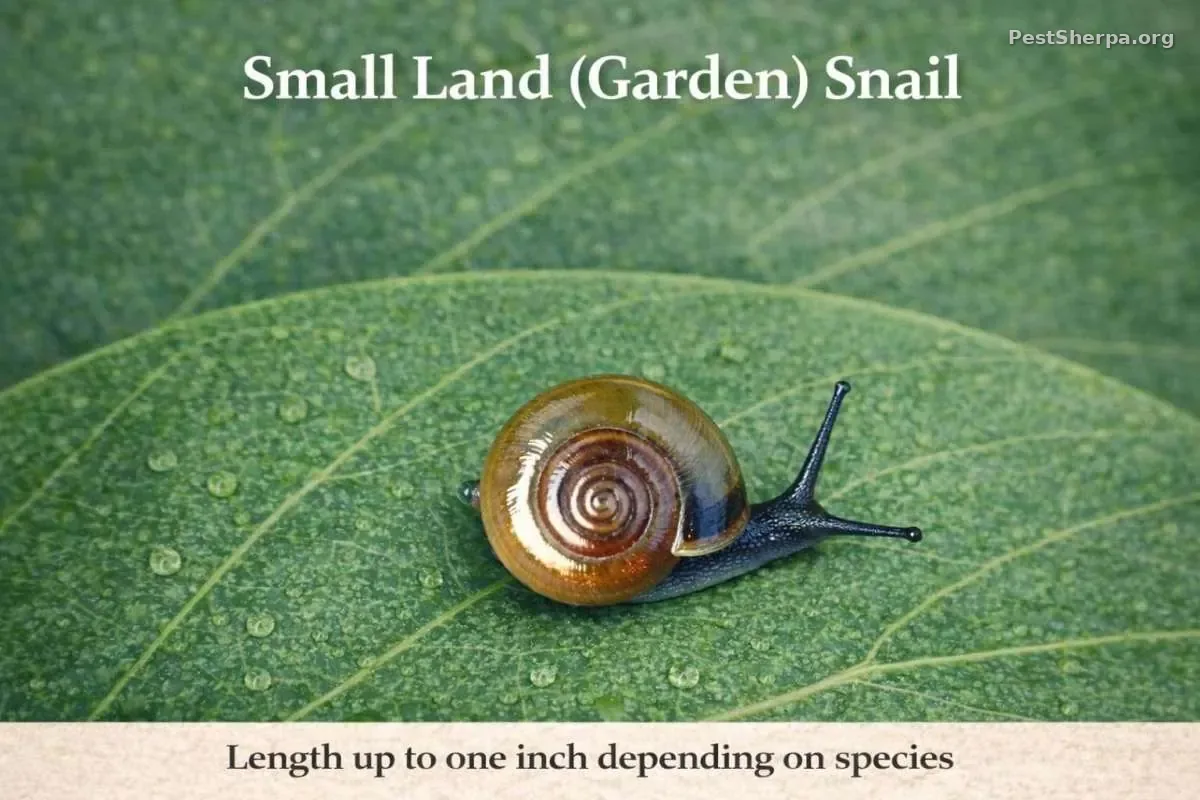
Finding small snails indoors usually means damp conditions nearby, not a true indoor colony. Look for fresh slime trails in basements, garages, crawlspaces, bathrooms, laundry rooms, or near doors. Then check outdoor mulch, pots, and shaded debris that keep moisture against the building.
Snails are mollusks, not insects. They are closely related to slugs, but snails have a visible external shell. This guide explains how to identify small household snails and what their presence usually means. It also covers how to find the source, what helps reduce them, and when more help may be worth considering.
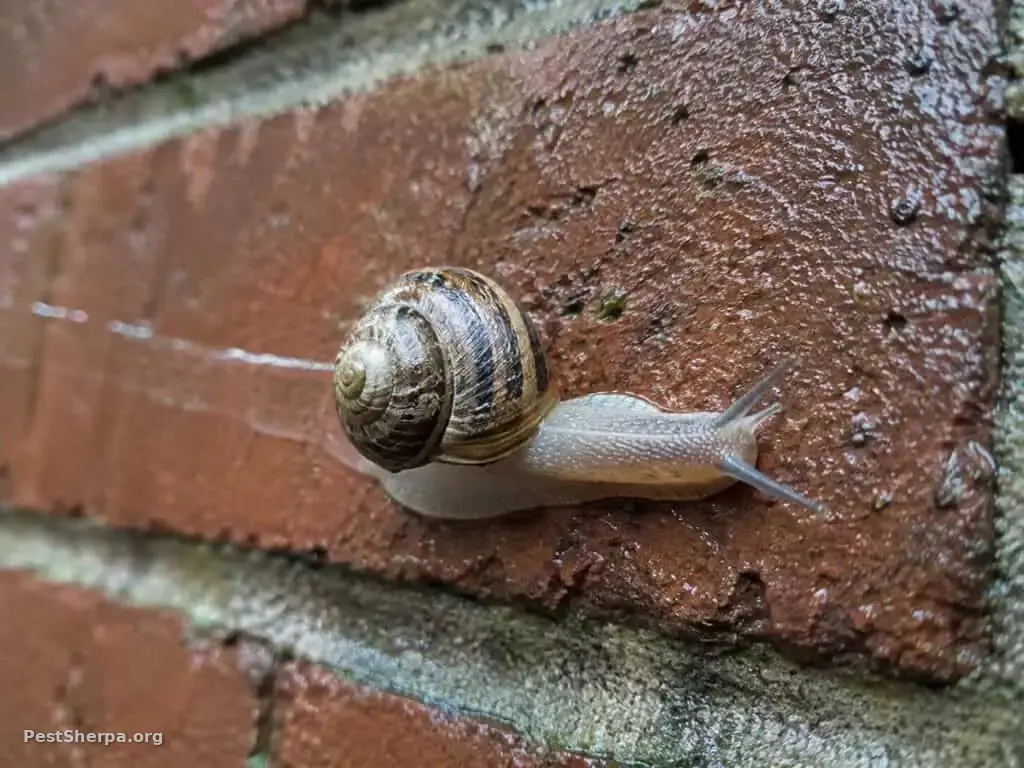
Small household snail with spiral shell and slime trail on damp foundation.
TL;DR
Finding small snails inside a home or office? The most likely cause is excess moisture or damp shelter near the home, not a true indoor infestation. Look for slime trails and inspect exterior doors and foundation gaps. Then check mulch and dense vegetation near the building, reduce irrigation and debris, and seal obvious entry points. Snail baits or pesticides are not always needed and should only be used according to the label, especially around children, pets, wildlife, and edible plants.
Quick Navigation
- What Small Snails Mean Indoors
- Identification
- Snail or Slug?
- Biology and Life Cycle
- Signs of Snail Activity
- Where Small Snails Come From
- Why Snails Suddenly Appear
- Conditions That Encourage Snails
- Inspection Checklist
- What To Do
- What Does Not Work Well
- How Long Will Snails Last?
- Health and Safety
- When Professional Help May Be Needed
- Lookalikes and Common Misidentifications
- Frequently Asked Questions
- References
What Small Snails Mean Indoors
Indoor snails are usually a symptom of favorable outdoor conditions. They need moisture, shade, shelter, and food. When those conditions exist next to a door, garage, crawlspace vent, utility opening, or foundation gap, snails may wander inside while moving through damp areas.
| What You See | What It Usually Means |
|---|---|
| One snail indoors | Likely accidental entry from outdoors or a potted plant |
| Repeated snails in the same room | Nearby moisture, entry point, or sheltered exterior habitat |
| Slime trails near doors or baseboards | Snails are moving through that area, often at night |
| Snails in basement, garage, or crawlspace | Dampness, foundation gaps, stored items, or exterior landscaping may be involved |
| Plant damage plus slime trails | Snails or slugs are likely feeding nearby |
Expert Insight: A snail sighting is often more useful as a moisture clue than as a pest emergency. The best long-term fix is usually source correction: reduce damp shelter, inspect likely entry points, and adjust outdoor conditions that support snails close to the structure.
Moisture problems can also encourage other occasional invaders, including springtails, sowbugs, and pillbugs.
Identification: What Small Household Snails Look Like
Snails are members of the phylum Mollusca and class Gastropoda. Unlike insects, they do not have six legs, segmented bodies, or wings. The easiest clue is the shell.
- Shell: A visible external shell, usually spiral or coiled.
- Body: Soft, moist, gray, tan, brown, or dark-colored body tissue.
- Movement: Slow gliding movement on a broad muscular foot.
- Mucus: Shiny or silvery slime trails on floors, walls, patios, stones, pots, or plant leaves.
- Tentacles: Two pairs of head tentacles, with the eyes usually located on the upper pair.
Size varies by species and age. Many small household sightings involve juvenile or small adult snails, while some garden species can grow larger. “Small household snail” is a descriptive phrase, not a single species name. So exact size, shell color, and life-cycle timing can vary by region and species.
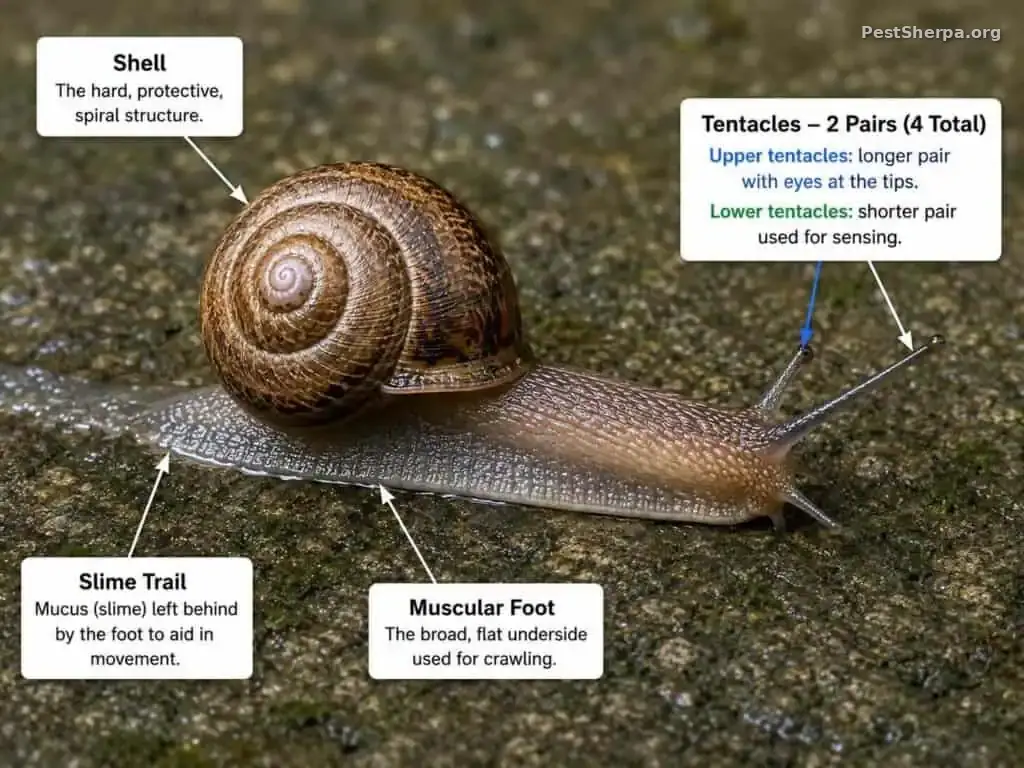
Labeled small land snail showing spiral shell, tentacles, muscular foot, and slime trail.
Snail or Slug?
Snails and slugs are closely related and often occur in the same damp habitats. The shell is the key difference.
| Feature | Snail | Slug |
|---|---|---|
| External shell | Visible shell present | No visible external shell |
| Body texture | Soft body partly protected by shell | Soft exposed body |
| Movement | Slow gliding movement | Slow gliding movement |
| Slime trails | Common | Common |
| Common habitat | Moist soil, mulch, gardens, pots, shaded debris | Moist soil, mulch, gardens, pots, shaded debris |
If the animal has a visible shell, it is a snail. If it looks similar but has no external shell, compare it with the slug identification guide.
Biology and Life Cycle
Small land snails develop gradually. They hatch from eggs as tiny snails that already resemble miniature adults. They do not go through insect-style metamorphosis.
- Eggs: Usually placed in soil and protected cavities near the soil surface, mulch, leaf litter, cracks, or sheltered debris.
- Juveniles: Newly hatched snails look like small adults but have delicate shells.
- Adults: Mature snails feed, reproduce, and continue seeking moisture and shelter.
- Dormancy: During dry, hot, or cold periods, many snails become inactive and conserve moisture.
Many land snails are hermaphroditic, meaning each individual has both male and female reproductive organs. In many species, mating between two individuals still occurs before eggs are produced. Egg counts, development time, adult size, and lifespan vary by species and environmental conditions.
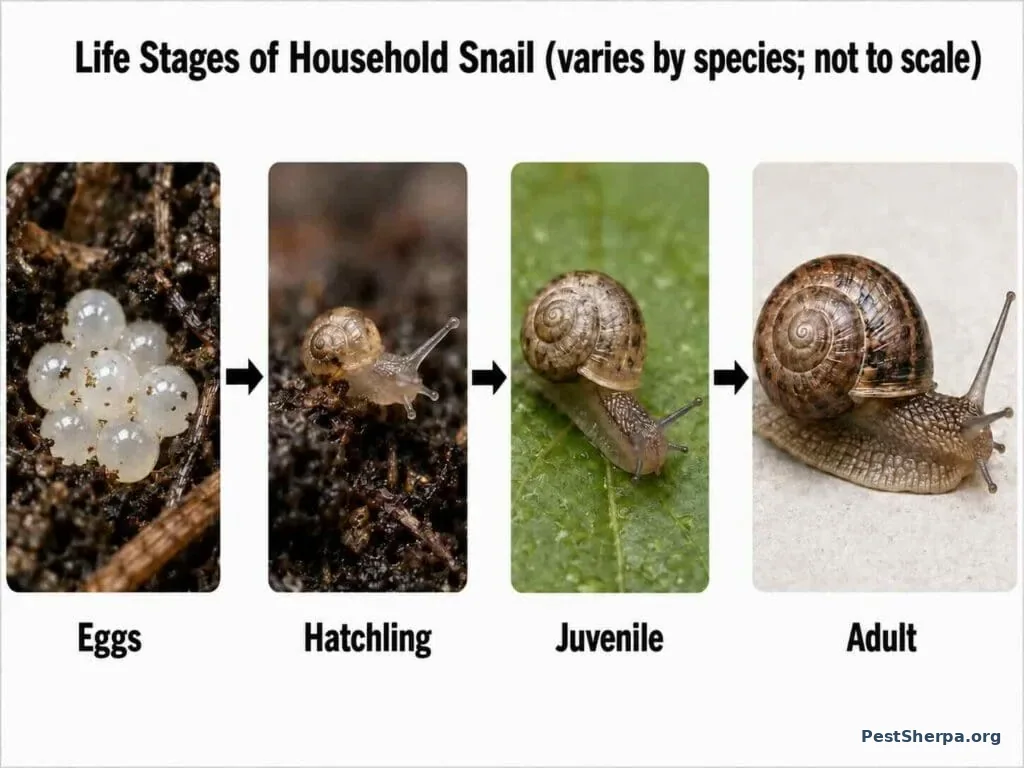
Small household land snail life stages from egg to hatchling to juvenile to adult.
Signs of Snail Activity
Snails hide during bright, dry periods, so signs are often easier to find than the animals themselves.
Slime Trails
Silvery or shiny trails are the most common clue. They may appear on floors, walls, garage slabs, patios, plant containers, foundation edges, sidewalks, stones, or leaves.
Live Snails
Snails may be seen near damp thresholds, under stored items, around floor drains, beneath plant pots, near crawlspace access points, or along shaded foundation edges.
Plant Damage
Snail and slug feeding often leaves irregular holes or scraped areas on tender leaves, flowers, seedlings, and low-growing fruit or vegetables. Slime trails near damaged leaves help separate snail or slug injury from chewing insects.
Empty Shells
Empty shells may collect in mulch, under boards, beneath stones, near pots, or along damp foundation edges. This could be a sign of current or previous and now inactive snail presence.
Where Small Snails Come From
Most indoor snails originate outdoors. They may enter directly through a gap, arrive on potted plants, or move in from damp areas that connect to the living space.
| Likely Source | What To Check |
|---|---|
| Mulch beds | Deep mulch, damp leaf litter, stones, landscape timbers, and dense groundcover near the foundation |
| Potted plants | Soil surface, saucers, pot rims, nursery pots, and plants recently brought indoors |
| Door thresholds | Weather stripping, door sweeps, patio doors, garage doors, and damp entry mats |
| Foundation gaps | Cracks, utility penetrations, crawlspace vents, weep gaps needed for drainage of walls, and gaps at the sill |
| Basements and crawlspaces | Condensation, seepage, stored cardboard, damp debris, and gaps to the exterior |
| Greenhouses or sunrooms | Overwatering, trays, plant debris, and damp benches |
Why Snails Suddenly Appear
Snails often seem to appear suddenly because their activity increases when conditions become cool, damp, cloudy, rainy, or humid. They may have been present outdoors for some time but hidden under mulch, pots, leaves, stones, boards, or dense vegetation.
- Recent rainfall or irrigation increased surface moisture.
- Mulch, leaves, or groundcover stayed damp near the structure.
- Potted plants were moved indoors or closer to doors.
- Weather stripping, door sweeps, or screens have gaps.
- A basement, crawlspace, garage, or utility area has excess moisture.
- Young snails hatched outdoors in protected soil or mulch.
Conditions That Encourage Snails Around Structures
Snails need moisture and shelter. Reducing those conditions near the structure is usually more effective than trying to treat every snail individually.
Excess Moisture
Overwatering, poor drainage, irrigation overspray, clogged gutters, condensation, and shaded wet soil can support snail activity.
Dense Landscaping
Dense groundcover, ivy, low branches, thick mulch, and plants pressed against the foundation can create the humidity and shelter snails need.
Organic Debris
Leaf litter, boards, stones, stacked pots, landscape fabric edges, decaying plant matter, and stored items provide daytime hiding places.
Food Sources
Many snails feed on decaying plant material, fungi, algae, and tender plant tissue. Some species damage seedlings, flowers, ornamental plants, vegetables, and low-growing fruit.
Calcium and Shell Development
Snails need calcium to build and maintain shells. Local soil, masonry, limestone, concrete dust, and natural mineral conditions may influence how well some snail populations persist but it is speculation. This varies by location and species.
Small Household Snail Inspection Checklist
Inspect at night, early morning, or after rain when snails are more likely to be active. A flashlight helps reveal slime trails and live snails.
Step 1: Start Where You See Trails
Follow slime trails toward doors, baseboards, floor drains, exterior walls, garage thresholds, or potted plants.
Step 2: Check Nearby Moisture
Look for condensation, water seepage, wet mats, damp cardboard, overwatered plants, leaking hose bibs, or irrigation overspray.
Step 3: Inspect Entry Points
- Door sweeps and thresholds
- Garage door corners
- Window wells and basement windows
- Foundation cracks
- Utility and plumbing penetrations
- Crawlspace vents and access doors
Step 4: Inspect Outdoor Harborages
- Mulch touching the foundation
- Leaf litter and plant debris
- Stones, boards, pots, and landscape timbers
- Dense groundcover and low vegetation
- Potted plants and saucers
- Shaded damp soil near exterior doors
Step 5: Look for Plant Damage
Check seedlings, tender leaves, flowers, low fruit, and container plants. If irregular holes appear with slime trails nearby, snails or slugs are likely involved.
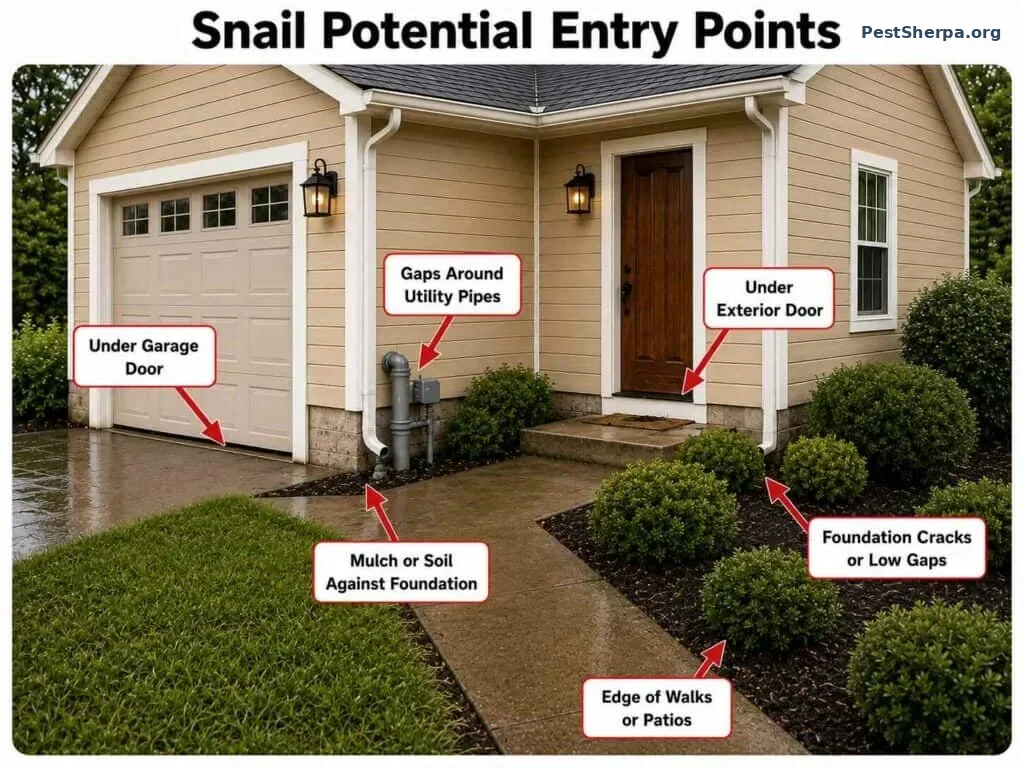
House image showing common small snail entry points and damp outdoor harborages.
What To Do
1. Remove Visible Snails
Pick up individual snails with gloves, a paper towel, or a small container. Avoid bare-handed handling, especially if you have cuts or will be handling food afterward. Wash hands after cleanup.
2. Clean Slime Trails
Wipe trails from indoor surfaces using an appropriate household cleaner for that surface. Test delicate surfaces first. Cleaning trails helps confirm whether new activity continues.
3. Reduce Moisture
- Repair leaks and improve drainage.
- Adjust irrigation so water does not keep the foundation wet.
- Water earlier in the day so surfaces dry before night.
- Improve ventilation in damp basements, garages, crawlspaces, and greenhouse spaces.
- Remove wet cardboard, leaves, and organic debris from storage areas.
4. Remove Outdoor Shelter Near the Structure
- Thin dense groundcover near the foundation.
- Pull mulch back from door thresholds and siding where practical.
- Remove boards, stones, unused pots, and plant debris that stay damp.
- Elevate or move potted plants away from entry points.
- Keep vegetation from pressing against exterior walls.
5. Improve Exclusion
- Install or repair door sweeps.
- Replace damaged weather stripping.
- Seal foundation cracks and utility gaps where appropriate.
- Repair damaged screens and crawlspace vent covers.
- Check garage door corners where gaps often remain.
6. Protect Plants Without Overreacting
For garden or container plants, start with nonchemical steps. Hand-pick snails at night and use temporary boards or overturned pots as monitoring shelters. Reduce excess moisture and remove nearby hiding places. Some barriers can help protect individual plants or raised beds when installed correctly.
7. Use Snail or Slug Baits Carefully If Needed
Snail and slug baits are not always necessary. If a bait is used, read and follow the product label exactly. Keep products away from children, pets, wildlife, food-preparation areas, and edible plant parts unless the label specifically allows that use. Do not apply products in drains, vents, or indoor food areas unless the label clearly permits that site.
What Does Not Work Well
- Only removing the snail you see: This helps immediately, but repeated sightings usually continue until moisture, shelter, or entry points are corrected.
- Using salt around plants or soil: Salt can harm plants and soil and is not a good structural prevention method.
- Spraying without finding the source: General spraying rarely solves a snail problem if damp habitat remains nearby.
- Assuming every leaf hole is from snails: Caterpillars, earwigs, beetles, and other pests can also chew plants. Slime trails are an important clue.
- Treating drains automatically: Snails may appear near damp drains, but they usually enter from gaps, plants, or outdoor moisture. They do not breed in drains the way some small flies do.
How Long Will Snails Last?
The timeline depends on the source.
| Situation | Likely Pattern |
|---|---|
| One snail wandered in | Activity may stop after removal |
| Potted plant source | Activity may continue until plant soil and saucers are inspected |
| Outdoor mulch or vegetation source | Activity may recur after rain or irrigation until habitat is reduced |
| Structural moisture issue | Activity may continue until dampness and entry points are corrected |
| Outdoor eggs or juveniles present | Activity may appear in waves during favorable weather |
Because snails are strongly tied to moisture, activity often declines during dry periods and increases again after rain, irrigation, or humidity.
Health and Safety
Small household snails do not bite, sting, or damage structures. The main concerns are nuisance slime trails, plant feeding, and sanitation. Depending on species and region, some snails or slugs can also carry rat lungworm parasites.
- Do not eat raw wild snails or slugs.
- Wash garden produce thoroughly, especially low-growing produce from areas with snail or slug activity.
- Use gloves or a tool when handling snails, slime, or debris.
- Wash hands after handling plants, soil, snails, or cleanup materials.
- Keep children and pets away from snail baits and treated areas according to the product label.
In regions where invasive or medically important snails are a concern, identification may be more important. Local Extension offices or agriculture departments may be able to help with regional snail identification.
When Professional Help May Be Needed
Most small household snail problems can be reduced with moisture correction, habitat reduction, hand removal, and exclusion. Professional help may be worth considering when the source is unclear, the activity is persistent, or the setting requires a more careful inspection.
- Snails keep appearing indoors after obvious moisture and entry points are corrected.
- There is ongoing moisture in a crawlspace, basement, garage, greenhouse, or commercial facility.
- Plant damage is severe and the pest has not been confirmed.
- A protected, invasive, or quarantine-significant snail is suspected.
- Snail baits or other products are being considered around children, pets, wildlife, food areas, or edible plants.
A careful inspection should focus on identification, moisture, harborages, entry points, and plant damage. It should also check whether nonchemical steps can solve the problem before product use is considered.
Lookalikes and Common Misidentifications
Snails are usually easy to recognize when the shell is visible. But their slime trails, link to moisture, and plant damage can be confused with other pests.
| Pest or Sign | How It Differs From Small Snails |
|---|---|
| Slugs | Similar body and slime trails, but no visible external shell |
| Springtails | Tiny jumping moisture insects; no shell and no broad slime trail |
| Sowbugs | Small gray crustaceans with many legs; no snail shell or mucus trail |
| Pillbugs | Roll into a ball; hard segmented body instead of a soft body and shell |
| Millipedes | Many-legged arthropods that may enter during wet weather; no shell or slime trail |
| Earwigs | Can chew irregular plant holes but have pincers and do not leave snail-like slime trails |
Frequently Asked Questions
Why are small snails coming into my house?
They are usually following moisture or moving from damp outdoor shelter near the structure. Common sources include mulch, potted plants, leaf litter, dense vegetation, door gaps, garage thresholds, crawlspaces, and damp foundation areas.
Does one snail mean I have an infestation?
No. One snail may have wandered in from outdoors or arrived with a plant. Repeated sightings in the same area are more meaningful and should prompt a moisture and entry-point inspection.
Do snails bite people?
Small household snails do not bite or sting people. Handle them with gloves or a tool and wash hands afterward because snails move through soil, plant debris, and other outdoor materials.
Are slime trails enough to confirm snails?
Slime trails strongly suggest snail or slug activity, but the shell confirms snails specifically. If no shell is seen, compare the animal with slugs and other moisture-associated pests.
Can snails come from drains?
They may appear near damp drains, but they rarely breed in drains the way some small flies do. Check nearby gaps, wet mats, potted plants, exterior doors, utility openings, and damp areas first.
What is the fastest way to stop snails indoors?
Remove visible snails, clean trails, reduce moisture, inspect exterior habitat, and seal obvious entry points. If outdoor habitat remains damp and sheltered, new snails may continue to appear after rain or irrigation.
Should I use snail bait inside?
Usually no. Indoor snail sightings are often better handled by removal, cleanup, moisture correction, and exclusion. If any bait or pesticide is used, follow the label exactly and avoid unsafe use around children, pets, food areas, drains, vents, and edible plants.
Why do snails appear after rain?
Rain increases moisture and reduces the risk of drying out. Snails are more active during cool, damp, cloudy, humid, or rainy conditions, so they are easier to notice after wet weather.
Will snails damage my house?
Snails do not damage the structure itself. Their main issues are slime trails, nuisance presence, sanitation concerns, and feeding damage to some plants.
References
- UC Statewide IPM Program: Snails and Slugs / Home and Landscape
- UF/IFAS Gardening Solutions: Snails and Slugs
- UF/IFAS Extension: Terrestrial Snails (Phylum Mollusca, Class Gastropoda) Affecting Plants in Florida
- Cornell University NYS IPM: Slug and Snail Control
- Oregon State University Extension: How to Control Slugs in Your Garden
This article was written by Greg Baumann, founder of Pest Sherpa, and reflects more than 40 years of professional pest management experience.
About the Author

Greg Baumann | Pest Control Expert
Greg Baumann is the founder of Pest Sherpa and a Pest Control Expert with more than 40 years of professional pest management experience. His articles combine decades of field experience, technical expertise, and science-based guidance to help homeowners identify pests correctly, understand real-world risks, and make informed pest management decisions.
Mission: Identify the pest. Understand the risk. Stop the problem. Prevent the comeback. Know when it’s time to call a professional.