
Wolf Spiders: Identification, Bites, and How to Keep Them Out
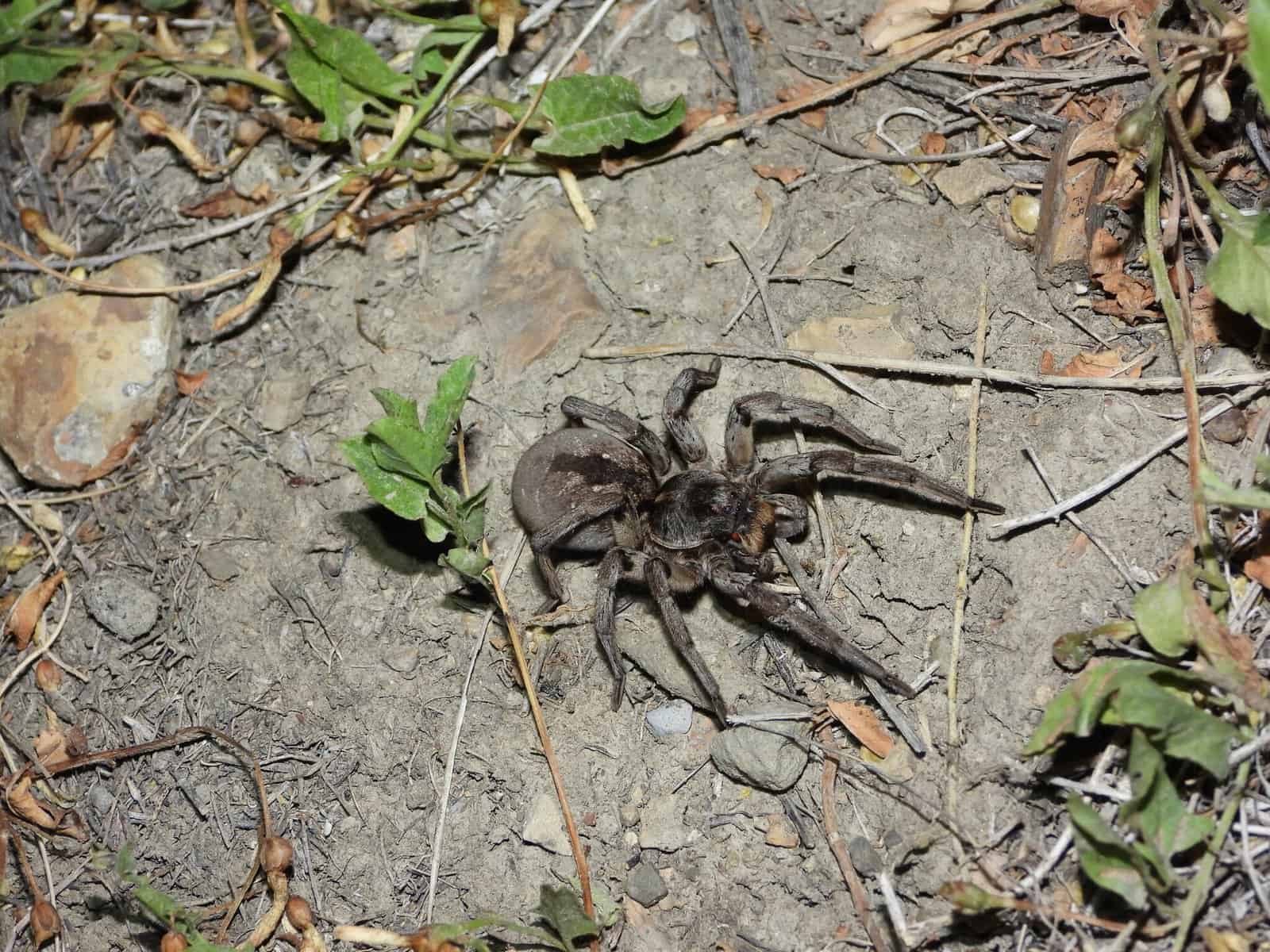
A large, hairy, fast-running brown spider darting across a garage floor or basement may be a wolf spider, although several other spiders have a similar appearance. Some wolf spiders are among the larger spiders encountered around homes, and their size and speed can be alarming. In reality, they are generally shy, ground-dwelling hunters that rarely bite people and are not considered medically important.
Wolf spiders usually live outdoors, occasionally wandering into garages, basements, and other buildings. They do not normally establish permanent indoor populations.
This guide explains how to identify wolf spiders, distinguish them from brown recluse spiders and other look-alikes, understand their habits, and prevent unwanted spiders from entering your home.
Key Points
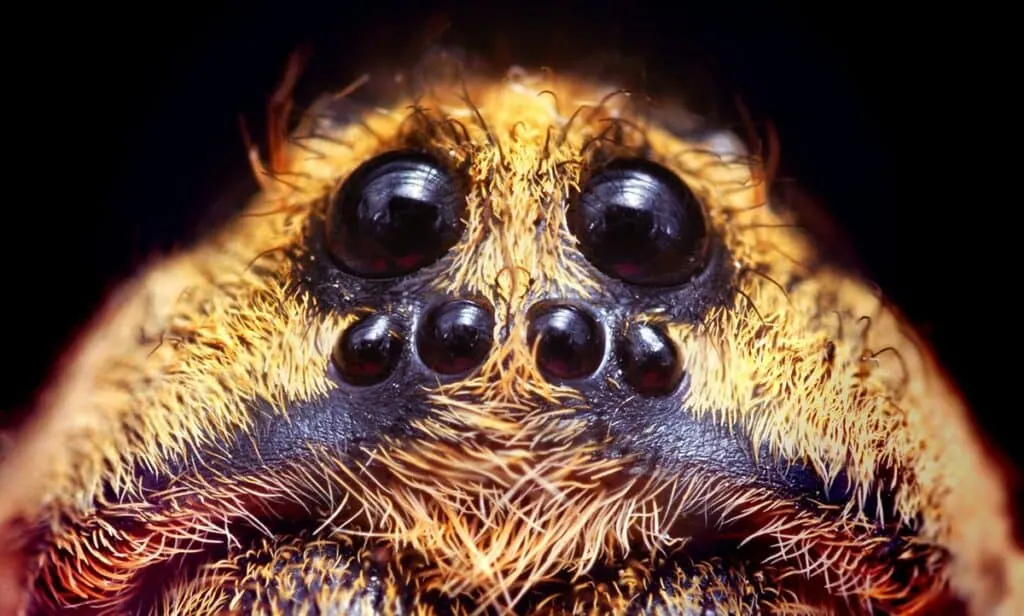
Wolf spiders (family Lycosidae) are active hunters that vary considerably in size. Approximately 240 species occur in the United States. Most are brown, tan, or gray, often with darker stripes or markings and relatively hairy legs. Their most reliable identifying feature is the arrangement of eight eyes in three rows: four small eyes along the lower front of the head, two large forward-facing eyes above them, and two medium-sized eyes positioned farther apart on top of the head.
Wolf spiders generally hunt insects and other small arthropods rather than capturing prey in webs. Many species hunt at night, although others are active during the day. Depending on the species, they shelter in burrows, beneath stones, boards, firewood, vegetation, or other protected outdoor locations. They produce silk for egg sacs, safety lines, and retreats, and a few species construct funnel-like webs. In my experience, many of these funnel webs become more prevalent at peak arthropod season which is mid to late summer. Females carry their egg sacs attached to their spinnerets and later transport newly emerged spiderlings on their backs. Wolf spiders occasionally wander indoors, particularly during periods of increased activity, but generally do not establish breeding populations inside buildings.
Wolf spider bites are uncommon and usually occur when a spider is handled, squeezed, or trapped against the skin. This also can happen if someone is barefoot and just barely puts pressure on a spider with the side of the foot. Again, these bites are rare. Most reported bites produce temporary localized pain, redness, or swelling rather than serious medical effects. Prevent accidental entry by sealing foundation cracks, installing tight-fitting door sweeps and screens, and removing unnecessary debris and stored materials from around the home’s foundation. Also, don’t go barefoot if there are lots of rocks nearby which will support spider populations.
In This Guide
- How to Identify a Wolf Spider
- Wolf Spider vs Brown Recluse and Other Look-Alikes
- Life Cycle
- Habits and Why They Come Inside
- Wolf Spider Bites
- How to Get Rid of Wolf Spiders
- Prevention
- What a Pro Visit Looks Like
- What It Costs
- Common Questions
- References
How to identify a wolf spider
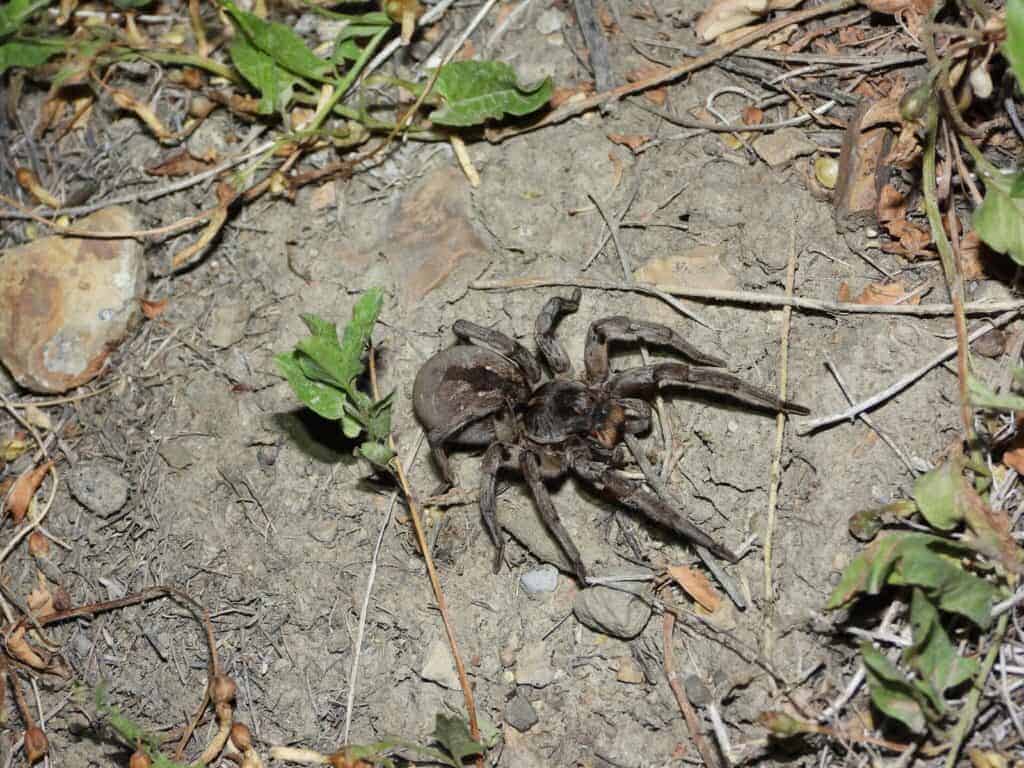
Wolf spiders are generally brown, tan, or gray, often with darker stripes, spots, or other markings that help them blend into soil, leaf litter, and surrounding vegetation. They typically have sturdy bodies and relatively long, hairy legs, although their size and appearance vary considerably among species.
Their most distinctive identifying feature is the arrangement of eight eyes in three rows: four small eyes in a nearly straight row across the front, two large, forward-facing eyes immediately above them, and two medium-sized eyes positioned farther back and widely separated on top of the cephalothorax (the front body section).
At night, wolf spiders can often be located by shining a flashlight across the ground. Some of their eyes contain a reflective layer that produces a greenish eyeshine when illuminated, particularly when the light is held near the observer’s eye level. The eyes reflect the light rather than producing their own glow.
Because other spiders may also be brown and hairy, the distinctive eye arrangement is more reliable for identification than color or body size alone.
| Carolina wolf spider (Hogna carolinensis) | Tigrosa aspersa | |
|---|---|---|
| Female length | 22 to 35 mm (about 7/8 to 1 3/8 inches) | 18 to 25 mm (about 3/4 to 1 inch) |
| Male length | 18 to 20 mm (about 3/4 inch) | 16 to 18 mm (about 5/8 to 3/4 inch) |
| Color | Dark brown with scattered gray hairs on the carapace and a somewhat darker stripe along the upper abdomen | Similar dark brown coloration, but with a distinct narrow line of yellow hairs on the carapace near the eyes; males are generally lighter-colored than females |
| Legs | Generally solid-colored without conspicuous banding | Lighter brown bands near the joints; males typically show lighter banding primarily on the third and fourth pairs of legs |
These are two of the larger wolf spider species occasionally encountered around homes. Many other wolf spiders are considerably smaller and commonly inhabit lawns, gardens, fields, and leaf litter. Size and coloration vary among species, so the characteristic wolf spider eye arrangement remains an important identification feature.
Wolf spider vs brown recluse and other look-alikes
| Spider | Eyes | Body and legs | Habits |
|---|---|---|---|
| Wolf spider | Eight eyes in three rows: four small eyes in front, two large forward-facing eyes above them, and two widely spaced eyes farther back | Usually brown, tan, or gray, often striped or mottled, with relatively hairy legs; size varies considerably | Active ground hunters; generally do not construct prey-catching webs; eyes may reflect greenish light at night |
| Brown recluse | Six eyes arranged in three pairs forming a semicircle | Generally tan to brown with relatively uniform coloration, unbanded legs, and fine body hairs; may have a darker violin-shaped marking on the carapace | Hides in protected, undisturbed locations; established primarily in the south-central and parts of the Midwest and Southeast |
| Hobo spider | Eight relatively similar-sized eyes in two rows; exact identification requires closer examination | Brown with darker markings, sometimes including abdominal chevrons; resembles other funnel-weaving spiders | Builds funnel-shaped webs in sheltered locations; established mainly in portions of the western United States |
| Grass spiders | Eight eyes, generally arranged in a 2-4-2 pattern | Brown to grayish, often with longitudinal stripes on the carapace, abdominal chevrons, and two conspicuously elongated rear spinnerets | Build flat, sheet-like webs with funnel-shaped retreats, commonly in grass, shrubs, and low vegetation |
Wolf spiders, brown recluses, and funnel weavers are often mistaken for one another because many are brown, relatively fast-moving, and found around buildings.
The eye arrangement provides one of the best ways to distinguish wolf spiders from brown recluses. Wolf spiders have eight eyes, including two conspicuously large forward-facing eyes, while brown recluses have six eyes arranged in three pairs.
However, examining spider eyes may require a strong hand lens, magnified photograph, or microscope. Do not handle an unfamiliar spider to obtain a closer view.
The violin-shaped marking alone is not a reliable way to identify a brown recluse because other spiders can have similar markings.
Grass spiders are frequently mistaken for wolf spiders. Their prominent rear spinnerets and funnel-shaped webs are useful distinguishing features. Hobo spiders are more difficult to identify reliably because several related funnel weavers have similar appearances.
Life cycle
Wolf spiders develop from eggs through a series of immature stages before reaching adulthood. Their development, mating seasons, and lifespans vary considerably by species and environmental conditions.
For the large Carolina wolf spider (Hogna carolinensis) and Tigrosa aspersa described by Penn State Extension, mating typically occurs in autumn. Males generally die before winter, while fertilized females overwinter in protected locations, including sheltered areas around or occasionally within buildings.
The surviving females produce silk egg sacs during the following May or June. Unlike most spiders, female wolf spiders carry their egg sacs attached to the spinnerets at the rear of the abdomen.
Spiderlings generally emerge during June or July and climb onto their mother’s back, where they remain for a period before dispersing. This maternal behavior is one of the most distinctive characteristics of wolf spiders.
For these large species, young spiders may reach approximately half their adult size by the following winter. They overwinter in protected sites and complete development during the next spring and summer.
Females of these species may survive for several years after reaching maturity.
This seasonal pattern is characteristic of the large wolf spiders described in the Penn State publication. Other wolf spider species may mate, reproduce, and mature at different times, particularly in warmer climates.

Habits and why they come inside
Wolf spiders generally live outdoors, where they shelter in burrows, beneath boards, stones, firewood, and vegetation, or in protected spaces around building foundations and siding. Many species hunt at night, searching for insects and other small arthropods on the ground, although some are active during daylight.
They do not seek out people. Most wolf spiders found indoors are occasional wanderers that entered beneath doors or through cracks and other openings.
Some species are more frequently encountered around buildings during late summer and fall, when adults become active in mating or searching for protected locations. For the large Carolina wolf spider and Tigrosa aspersa described by Penn State Extension, mating occurs in autumn, and fertilized females may overwinter in sheltered locations, including buildings.
However, seasonal activity and overwintering behavior vary among wolf spider species.
Because wolf spiders hunt primarily at ground level, homeowners may encounter them in garages, basements, and ground-floor rooms. They may also appear in sticky monitoring traps placed along walls.
Most wolf spiders do not establish permanent indoor populations. Finding a few indoors usually indicates activity around the building or openings that permit spiders to enter, rather than an established indoor infestation.
Wolf spider bites
Wolf spiders may bite when handled, squeezed, or trapped against the skin, but bites are uncommon.
Typical reactions include immediate localized pain, redness, and sometimes mild swelling. In reported cases, symptoms often subside within about 24 hours, although individual reactions may vary.
Penn State reports that serious medical consequences from wolf spider bites have not been documented in the cases reviewed. Wolf spiders are not generally considered medically important.
However, a suspected spider bite is not necessarily caused by a spider. Insect bites, skin infections, and other conditions can produce similar symptoms.
First aid for a spider bite
- If possible, obtain a clear photograph of the spider for identification without attempting to handle it.
- Wash the affected area thoroughly with soap and water.
- Apply a cool, damp cloth or an ice pack wrapped in cloth to help reduce pain and swelling.
- Elevate the affected area when practical.
- Seek medical evaluation if pain or swelling worsens, redness spreads, blistering develops, or fever or other concerning symptoms occur.
- Seek emergency care for difficulty breathing, faintness, or other signs of a severe allergic reaction. This is extremely rare for bites from this type of spider, but it needs to be mentioned.
Avoid squeezing, cutting, or attempting to extract venom from the bite. If the spider’s identity is uncertain, medical recommendations should be based on the symptoms rather than an assumed identification.
How to get rid of wolf spiders
- Capture or vacuum the spider. For an occasional wolf spider indoors, place a container over it, slide a piece of stiff paper underneath, and release it outdoors if desired. Vacuuming is another practical way to remove individual spiders without applying insecticides.
- Use sticky traps selectively. Sticky monitoring traps positioned flush against walls and in corners of garages or basements can capture wandering spiders and help identify areas of activity. Place them where children, pets, and wildlife cannot contact them, and inspect them regularly.
- Seal entry points. Inspect gaps beneath exterior and garage doors, foundation cracks, damaged weatherstripping, and openings around pipes, vents, and utility lines. Install appropriate door sweeps and seal accessible openings with durable materials.
- Reduce outdoor shelter. Remove unnecessary firewood, boards, stones, leaf piles, and other debris from around the foundation. Trim dense ground cover and vegetation that directly touches the building.
- Adjust outdoor lighting. Consider warm yellow or other insect-reducing outdoor lighting, motion-activated fixtures, or positioning lights away from entrances. Reducing the number of insects gathering near doors may also reduce hunting spiders in those locations.
- Consider targeted exterior treatment only when justified. If numerous spiders continue entering despite exclusion and habitat management, an appropriately labeled exterior insecticide treatment around identified entry points may help reduce activity. Treatment should be limited to locations and applications permitted by the product label. Keep in mind that due to the physiology of spiders, liquid treatments might not be as effective against spiders as they are with insects. It will vary by spider type and product.
Routine indoor insecticide application is generally unnecessary for wolf spiders. Contact sprays may kill exposed spiders but usually provide only temporary relief if entry points and favorable outdoor conditions remain unchanged.
For an individual spider, capture or vacuuming is generally simpler and avoids unnecessary pesticide use.
Prevention
- Install tight-fitting door sweeps and maintain weatherstripping, particularly on garage, basement, and exterior doors.
- Repair damaged window screens and close openings around windows, vents, and utility penetrations.
- Store firewood off the ground and away from the house. Remove unnecessary debris and maintain accessible space along the foundation.
- Trim shrubs, vines, and branches that touch siding or provide protected areas near building entrances.
- Reduce clutter in garages, basements, storage areas, and crawl spaces. Use closed storage containers when practical.
- Wear gloves when moving firewood, stones, stored materials, or other items where spiders may be concealed.
- Inspect garage thresholds, basement entrances, and foundation openings periodically for conditions that allow spiders to enter.
These preventive steps reduce entry opportunities and shelter near the home without requiring routine pesticide applications.
What a pro visit looks like
Professional wolf spider management should begin with identifying the spider and locating entry points rather than automatically spraying the building.
Most problems involve occasional spiders moving indoors from surrounding outdoor habitat. A useful inspection should therefore emphasize exclusion, exterior shelter, and areas where spiders are entering.
The inspection
The technician should confirm the spider’s identity and inspect exterior foundations, garage doors, basement entrances, crawl spaces, window wells, siding, stored materials, and other locations where spiders have been reported.
For wolf spiders, particular attention should be given to openings near ground level and nearby areas containing vegetation, woodpiles, stones, boards, or other potential shelter.
Inside the building, the technician may inspect garages, basements, storage rooms, and accessible ground-floor areas.
Sticky monitoring traps positioned along walls may help identify movement patterns, although finding spiders in traps does not necessarily indicate an established indoor population.
The inspection should distinguish wolf spiders from house spiders, funnel weavers, brown recluse spiders, and others before recommending treatment.
Your prep before the visit
- Move stored boxes, firewood, and unnecessary yard debris away from the foundation where practical.
- Clear access to garage thresholds, basement walls, crawl-space entrances, and other suspected entry points.
- Follow the company’s instructions for protecting pets, food, and water dishes if insecticide treatment is planned.
- Note where and when spiders have been seen, especially near doors, garage edges, and basement entrances.
- Tell the technician about previous treatments and any areas where spider activity has been persistent.
The treatment
Depending on the inspection findings, professional management may include:
- Removing spiders from accessible interior locations by vacuuming or capture.
- Identifying and sealing gaps beneath doors, around utility lines, and along foundations.
- Recommendations for removing outdoor debris, excess vegetation, and other shelter near the building.
- Adjustments to outdoor lighting that may reduce insect activity near entrances.
- Targeted exterior insecticide applications around identified entry points when justified and permitted by the product label. In this case, the application can control other arthropods including insects making the food source scarce and not as hospitable to wolf spiders.
- Limited crack-and-crevice treatment indoors only when necessary and specifically allowed by the product labeling. This is usually unnecessary. Some technicians fear that if they do not apply a product that the customer feels like they didn’t get service. Understand that the days of arbitrarily applying a chemical as the only reason to hire a professional are long gone.
An exterior repellent residual insecticide treatment may help reduce spider entry under some conditions, but it should not automatically be included in every wolf spider service.
The primary objective should be preventing spiders from entering rather than treating large indoor surfaces.
Follow-up
The need for follow-up depends on the number of spiders encountered, whether entry points have been corrected, and whether insecticides were used.
Some exterior residual treatments gradually lose effectiveness and may require reapplication when continued activity justifies treatment.
However, recurring pesticide applications are not automatically necessary for occasional wolf spiders. Effective exclusion and removal of outdoor shelter may resolve the problem without additional service.
Continue inspecting entry points, maintaining door sweeps, and reducing clutter between visits.
Questions to ask before you book
- What spider species did you identify, and is it considered medically important?
- What product will you use, where will it be applied, and how long is it expected to remain effective?
- Is indoor insecticide treatment necessary, or can the problem be addressed through exclusion and targeted exterior management?
- What entry points or outdoor conditions should I correct?
- Is the proposed service a one-time treatment or an ongoing contract, and what are the cancellation terms?
See how to hire a licensed pest control company for guidance on licensing, service contracts, and selecting a qualified professional.
What it costs
Most wolf spider problems can be managed without professional insecticide treatment. Occasional spiders indoors generally require only removal, improved exclusion, and reduced shelter around the foundation.
When professional service is appropriate, wolf spider treatment is normally priced as a general spider-control or pest-management service rather than a specialized procedure.
Our guide to the cost of spider treatment compares national estimates for one-time visits and ongoing pest-control plans.
Typical national ranges
Published consumer pricing estimates include:
- Spider extermination: $100 to $500, with an average of approximately $300 (Angi, 2026).
- General pest-control visit: Average of approximately $172, with a broad range of $50 to $500 (Angi, 2026).
- One-time spider treatment: $100 to $300 (HomeGuide, 2026).
- One-time exterminator visit across pest categories: $100 to $600 (HomeGuide, 2026).
- Annual general pest-control plan: $300 to $900 (HomeGuide, 2026).
- Quarterly general pest-control visit: $100 to $300 per visit (HomeGuide, 2026).
These are national consumer cost estimates based on published data, not prices specifically established for wolf spider control.
Actual charges depend on the property’s size, treatment needs, location, and services included. Exclusion repairs or additional visits may be priced separately.
A homeowner with occasional wolf spider sightings may have no need to purchase professional treatment.
What moves the price
- Property size: Larger buildings and treatment areas may require additional inspection and labor.
- Exterior conditions: Woodpiles, dense vegetation, stored materials, and other shelter near the foundation can increase the amount of work required.
- Additional structures: Garages, crawl spaces, sheds, and outbuildings may add to the service.
- Exclusion repairs: Installing door sweeps, sealing utility openings, and correcting structural gaps may be priced separately.
- Service frequency: One-time visits generally cost less overall than ongoing seasonal or quarterly plans.
One-time job or ongoing plan
Wolf spiders are primarily outdoor hunters that occasionally enter buildings. Most homeowners do not need a recurring professional spider-control program; however, many regular pest control services cover an array of pests.
A one-time inspection and exclusion work may be sufficient when spiders repeatedly enter through identifiable openings.
Targeted exterior insecticide treatment may help in persistent situations, but it is not automatically necessary during autumn or any other season.
Recurring service may be reasonable when spider activity remains substantial despite exclusion, or when the property has other pest problems requiring ongoing management.
Living near fields, woods, or other natural habitat does not by itself justify a recurring insecticide contract.
Red flags in a quote
- Recommending indoor fogging or widespread spraying of living spaces without a clear justification. This is a clear red flag that this company should be questioned further.
- Proposing treatment without identifying the spider species.
- Recommending a long-term contract without explaining the need or cancellation conditions.
- Promising that one pesticide application will permanently prevent spiders from entering.
- Ignoring obvious gaps beneath doors, foundation openings, and other preventable entry routes.
Ask for the spider species, or at least type, proposed treatment areas, pesticide products, exclusion recommendations, and visit schedule in writing.
Common questions about wolf spiders
Are wolf spiders dangerous?
Wolf spiders are not generally considered medically important to humans.
They may bite when handled, squeezed, or trapped against the skin, but bites are uncommon. Reported reactions generally involve localized pain, redness, or mild swelling that often subsides within about 24 hours.
Seek medical care if symptoms are severe, worsening, or extend beyond the bite site.
How can I tell a wolf spider from a brown recluse?
The eye arrangement is one of the most reliable differences.
Wolf spiders have eight eyes arranged in three rows, including two conspicuously large forward-facing eyes. You might not get close enough, though, to see details.
Brown recluse spiders have six eyes arranged in three pairs forming a semicircle. They typically have uniformly colored tan-to-brown legs without the conspicuous banding or heavy hair seen on many wolf spiders. Do not approach the spider if you suspect brown recluse; however, most wolf spiders are easily distinguished from brown recluse spiders.
However, brown recluse spiders are not hairless. Their bodies have fine, relatively inconspicuous hairs.
Color alone is not enough to distinguish these spiders. Use a magnified photograph or seek expert identification rather than handling an unfamiliar spider.
Why are wolf spiders coming into my house in the fall?
Some wolf spider species become more active during late summer and autumn as they seek mates or protected shelter.
For the large Carolina wolf spider and Tigrosa aspersa described by Penn State Extension, mating generally occurs in autumn, and fertilized females overwinter in protected locations that may include buildings.
However, seasonal behavior varies among species. Finding wolf spiders indoors during autumn does not necessarily indicate an infestation or that the spiders are routinely breeding inside the home.
Is that a wolf spider carrying babies on its back?
Female wolf spiders are well known for carrying newly emerged spiderlings on their backs.
Before the young hatch, the female carries an egg sac attached to the spinnerets at the rear of her abdomen. After hatching, the spiderlings climb onto her abdomen and remain there temporarily before dispersing.
This maternal behavior is one of the most distinctive characteristics of wolf spiders.
Do wolf spiders make webs?
Most wolf spiders do not build webs to capture prey. Instead, they actively hunt insects and other small arthropods.
They still produce silk for egg sacs, draglines, and retreats. Some species line their burrows with silk, and a few species construct funnel-like prey-catching webs.
The absence of a prey-catching web is typical of wolf spiders but is not universal across the family.
How do I find wolf spiders at night?
Shine a flashlight across the lawn, garden, or other suitable ground habitat after dark.
Wolf spiders have reflective structures associated with their eyes that produce a greenish eyeshine when illuminated.
Holding the flashlight near eye level can make these tiny reflections easier to see.
Several other animals also produce eyeshine, so a reflection alone does not confirm the presence of a wolf spider.
Should I spray for wolf spiders?
Routine indoor spraying is generally unnecessary.
For occasional wolf spiders, removing the spider, sealing entry points, installing door sweeps, and reducing clutter and outdoor shelter are usually more effective long-term approaches.
Sticky monitoring traps may be useful for identifying indoor movement routes when placed safely.
If numerous spiders continue entering despite these preventive steps, a properly labeled, targeted exterior insecticide treatment around entry points may be appropriate.
This guide is part of our spider guide. Compare the brown recluse, hobo spider, black widow, and common house spider, or send a clear photograph to Ask the Sherpa if you are uncertain which spider you found.
References
- Penn State Extension. Wolf Spiders. Updated September 8, 2025. Penn State: Wolf Spiders.
- University of California Agriculture and Natural Resources. Pest Notes: Spiders. UC Statewide Integrated Pest Management Program, Publication 7442. UC IPM: Spiders.
- University of California Agriculture and Natural Resources. Common Garden Spiders. UC IPM: Common Garden Spiders.
- University of Kentucky Department of Entomology. Eliminating Spiders Around Homes and Buildings.ENTFACT-623. University of Kentucky: Spider Control.
- Centers for Disease Control and Prevention, National Institute for Occupational Safety and Health. Venomous Spiders at Work. CDC NIOSH: Venomous Spiders.
- University of Washington, Burke Museum of Natural History and Culture. Spider Myths: Wolf Spiders Live Indoors. Burke Museum: Wolf Spider Habits.
- University of Kentucky Department of Entomology. Brown Recluse Spider. ENTFACT-631. University of Kentucky: Brown Recluse.
- University of California Agriculture and Natural Resources. Brown Recluse and Other Recluse Spiders. UC IPM: Recluse Spiders.
- Angi. Spider Exterminator Cost: 2026 Data. Angi: Spider Extermination Costs.
- Angi. How Much Does Pest Control Cost? 2026 Data. Angi: Pest Control Costs.
- HomeGuide. How Much Does an Exterminator Cost? January 9, 2026. HomeGuide: Exterminator Costs.
This article was written by Greg Baumann, founder of Pest Sherpa, and reflects more than 40 years of professional pest management experience.
About the Author

Greg Baumann | Pest Control Expert
Greg Baumann is the founder of Pest Sherpa and a Pest Control Expert with more than 40 years of professional pest management experience. His articles combine decades of field experience, technical expertise, and science-based guidance to help homeowners identify pests correctly, understand real-world risks, and make informed pest management decisions.
Mission: Identify the pest. Understand the risk. Stop the problem. Prevent the comeback. Know when it’s time to call a professional.