
American Dog Tick: Identification, Disease Risk, and Yard Control
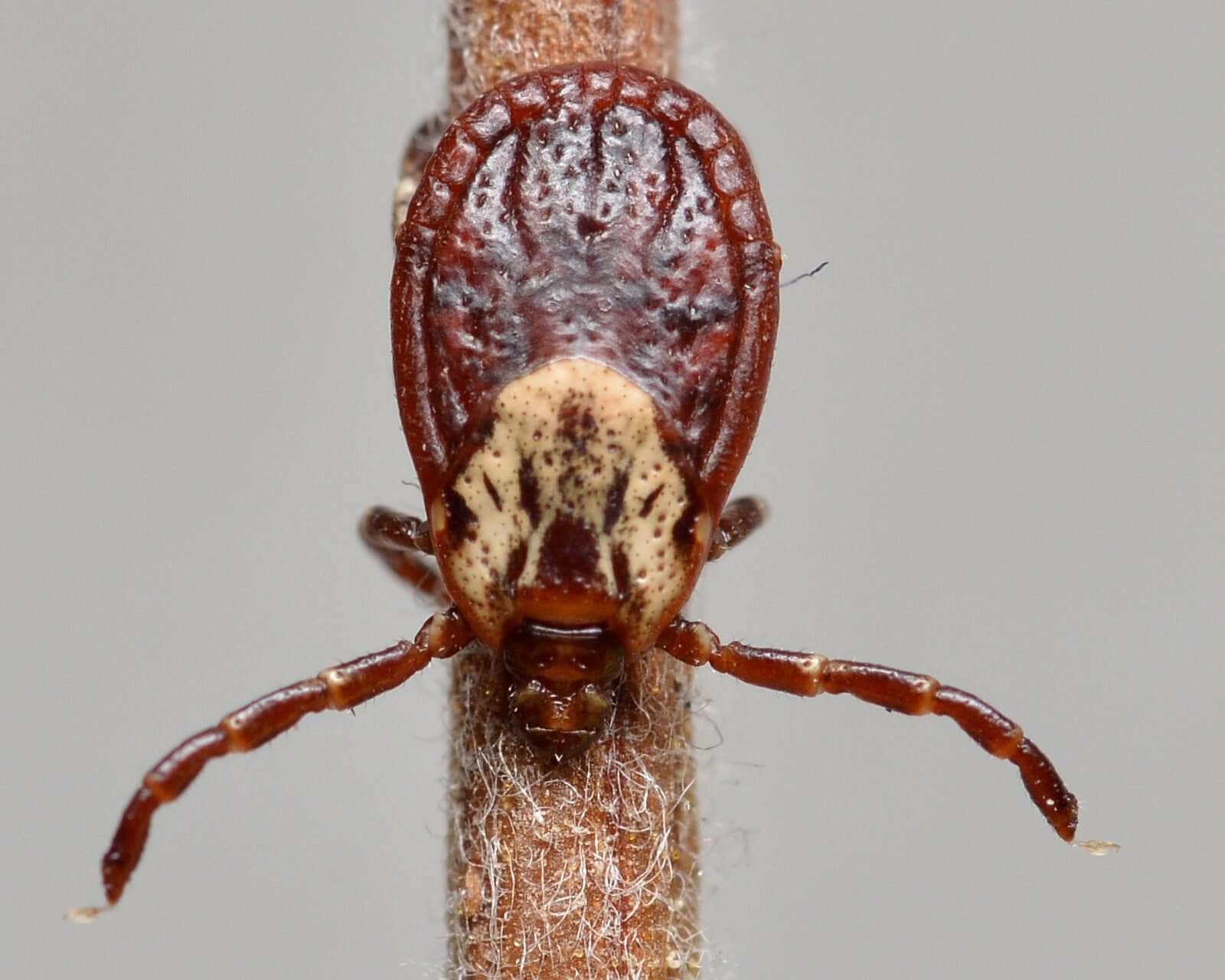
The American dog tick is a relatively large, reddish-brown tick with distinctive cream-colored or whitish markings. It is commonly found on dogs and people after walking through grassy fields, meadows, or overgrown trails during spring and early summer. It is one of the most widespread ticks east of the Rocky Mountains.
Although the American dog tick does not transmit Lyme disease, infected ticks can transmit the bacteria responsible for Rocky Mountain spotted fever and tularemia. Prompt identification and removal are important for reducing health risks.
This guide explains how to recognize the American dog tick, where it waits for passing hosts, how to remove an attached tick safely, and which personal protection, pet prevention, and yard-management practices can reduce exposure.
Key Points
The American dog tick (Dermacentor variabilis) is widely distributed east of the Rocky Mountains, with limited populations reported farther west. A closely related species, Dermacentor similis, was formally described in 2021 and occurs west of the Rockies. Adult ticks are reddish-brown with distinctive pale markings. The American dog tick is a recognized vector of Rocky Mountain spotted fever and tularemia, but it is not a known vector of Lyme disease.
Bite risk is highest during spring and summer, although activity varies with climate and location. Adults, particularly females, are responsible for most reported human bites. American dog ticks typically wait for passing hosts on grasses and other low vegetation in fields, meadows, overgrown areas, and along trails and woodland edges. Unlike the brown dog tick, American dog ticks do not normally establish reproducing infestations inside homes.
Remove attached ticks promptly using fine-tipped tweezers. Reduce exposure by using EPA-registered tick repellents, wearing permethrin-treated clothing and gear, checking yourself and pets after outdoor activities, and using veterinarian-recommended tick preventives for dogs. Keeping grass trimmed and reducing dense vegetation in frequently used yard areas can make those locations less favorable for ticks. Appropriately labeled pesticide treatments may reduce tick populations, but spraying alone does not provide reliable protection against tick bites.
In This Guide
- How to Identify the American Dog Tick
- Dog Tick vs Other Common Ticks
- Life Cycle and Season
- Where It Lives
- Health Risks
- How to Remove a Tick
- Protecting People and Pets
- Reducing Ticks in the Yard
- What a Pro Visit Looks Like
- What It Costs
- Common Questions
- References
How to identify the American dog tick
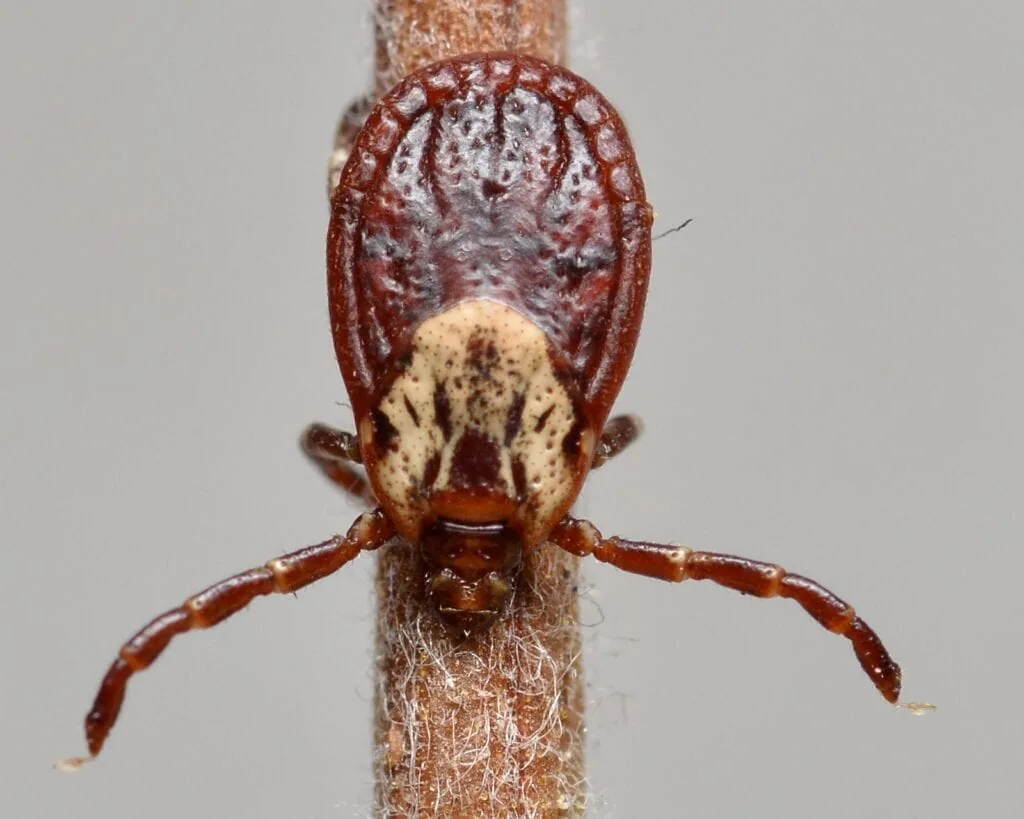
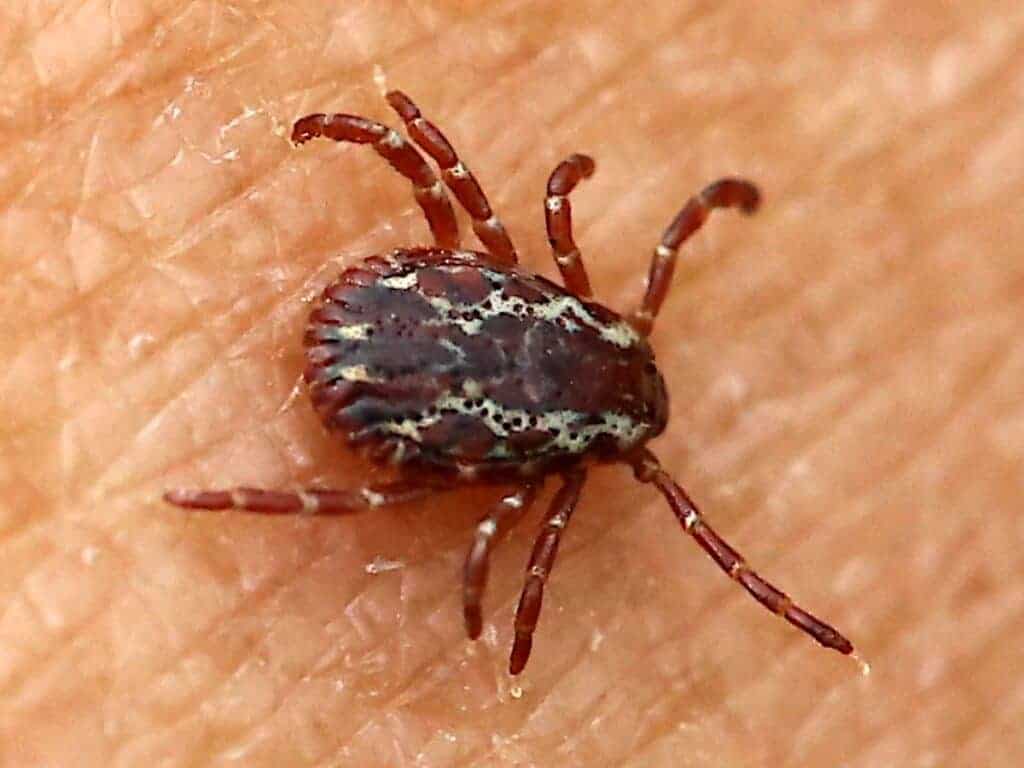
Adult American dog ticks are reddish-brown, flattened, and oval-shaped when unfed, with relatively short mouthparts. Their most distinctive feature is the ornate shield on the back, called the scutum, which has irregular whitish, cream-colored, or silvery markings.
In females, the patterned scutum covers only the front portion of the back, just behind the mouthparts. The rest of the body can expand considerably during feeding. In males, the patterned scutum covers nearly the entire back, limiting how much the body can expand.
Larvae and nymphs are much smaller and generally brownish or tan, without the conspicuous pale markings of adults. Larvae have six legs, while nymphs and adults have eight. Immature American dog ticks usually feed on small mammals and are much less commonly found attached to people than adults.
After feeding for several days, an adult female can become dramatically enlarged, with a swollen gray or bluish-gray body. Fully engorged females may reach approximately 1/2 inch (13 mm) or more in length, sometimes resembling a small seed, bean, or skin tag on a pet.
Size alone is not sufficient for identification, particularly when a tick is engorged. Examine the mouthparts, scutum pattern, and other anatomical features. Closely related Dermacentor species can look very similar, so geographic location and expert identification may be necessary to confirm the species.
Dog tick vs other common ticks
| Tick | Look | Main diseases (CDC) | Where it bites people |
|---|---|---|---|
| American dog tick | Reddish-brown with an ornate whitish or silvery shield and short mouthparts | Rocky Mountain spotted fever and tularemia | Grassy fields, meadows, overgrown areas, and trail or woodland edges; greatest bite risk in spring and summer |
| Blacklegged (deer) tick | Adults are relatively small; females have a reddish-orange body, dark shield, black legs, and long mouthparts | Lyme disease, anaplasmosis, babesiosis, Powassan virus disease, hard tick relapsing fever, and certain ehrlichiosis infections | Wooded and brushy areas with leaf litter; nymphs commonly bite in warmer months, while adults may remain active when winter temperatures are above freezing |
| Lone star tick | Adult female has a distinctive single white spot on her back and long mouthparts; males have pale markings near the rear of the body | Ehrlichiosis, tularemia, Heartland virus disease, and Bourbon virus disease; bites are also associated with alpha-gal syndrome, a potentially serious allergy | Wooded areas, brush, dense vegetation, and habitat edges across much of the South, Midwest, and Northeast; an aggressive human-biting species |
| Brown dog tick | Uniform reddish-brown, with a somewhat teardrop-shaped body and short mouthparts | Rocky Mountain spotted fever, particularly in the southwestern United States and along the U.S.-Mexico border | Dogs are the primary hosts, but people can also be bitten; may establish reproducing populations inside homes and kennels |
Disease associations depend on tick species and geographic location. Not every tick carries a disease-causing organism, and finding a particular species does not automatically mean that it is transmitting a disease locally.
For more information about the primary Lyme disease vector, see our blacklegged tick guide and Lyme disease overview.
Life cycle and season
Like other hard ticks, the American dog tick develops through four stages: egg, six-legged larva, eight-legged nymph, and eight-legged adult. The larva, nymph, and adult each require a blood meal to complete their respective developmental or reproductive processes.
American dog ticks are three-host ticks. Larvae generally feed on small mammals, drop to the ground, and molt into nymphs. Nymphs also feed primarily on mammals before dropping off and developing into adults. Adults seek larger hosts, including dogs, other medium-sized mammals, and people.
Larvae and nymphs are rarely encountered on people, while adult ticks account for most human bites.
Tick season varies. In Kentucky as just one example, the University of Kentucky Extension reports adult and nymph activity primarily from March through September. However, seasonal activity varies by geographic location, weather, and developmental stage.
Adult American dog ticks can survive for extended periods without feeding, sometimes up to two years under favorable conditions.
The greatest risk of human exposure generally occurs during spring and summer, although ticks may be encountered at other times when environmental conditions permit activity.
Where it lives
American dog ticks favor open or transitional habitats with grasses and low vegetation, including fields, meadows, overgrown lots, and the edges of trails and woodlands.
Rather than jumping or flying, they climb grasses and other low plants and wait for a passing host. They often extend their front pair of legs to detect and grasp a nearby animal or person. This host-seeking behavior is called questing.
Many people encounter ticks in their own yards or neighborhoods, particularly where maintained lawns meet tall grasses, brush, or other vegetation that provides cover and humidity.
Dogs may carry American dog ticks into the house after outdoor activity. However, these ticks generally do not establish reproducing populations indoors.
If ticks of different sizes repeatedly appear inside a home, particularly around dog bedding, baseboards, or kennels, consider the brown dog tick. Unlike the American dog tick, brown dog ticks can complete their entire life cycle indoors and establish substantial infestations.
Correct identification is important because indoor brown dog tick infestations require a different management approach.
Health risks
The CDC identifies the American dog tick as a vector of Rocky Mountain spotted fever (RMSF) and tularemia. These infections are caused by bacteria transmitted through the bites of infected ticks.
RMSF can be a severe and potentially fatal illness if treatment is delayed. Early symptoms often include fever, headache, muscle pain, nausea, or vomiting. These symptoms can resemble several other illnesses, making early diagnosis difficult.
A rash commonly develops two to four days after fever begins, although it may appear later or be absent entirely. Waiting for a rash before seeking care can dangerously delay treatment.
The CDC recommends doxycycline as the treatment of choice for suspected RMSF in adults and children of all ages. Treatment should begin promptly when RMSF is suspected rather than waiting for laboratory confirmation, because early tests may be negative.
There is currently no vaccine for RMSF.
Tularemia can also result from the bite of an infected American dog tick. Symptoms may include fever, swollen lymph nodes, and sometimes an ulcer at the bite site, depending on the route of infection.
American dog ticks can occasionally cause tick paralysis, a rare condition associated with a toxin produced during feeding. Unlike RMSF and tularemia, tick paralysis is not an infection. Progressive weakness or difficulty walking or breathing requires immediate medical attention.
When to see a doctor
- Seek prompt medical evaluation if you develop fever, headache, rash, nausea, vomiting, muscle pain, or other unexplained illness after a tick bite or possible tick exposure.
- Tell the healthcare professional when and where you were exposed, whether you removed an attached tick, and when symptoms began.
- Do not wait for a rash. RMSF can cause serious illness before a characteristic rash develops, and some patients never develop one.
- Seek emergency care for severe symptoms such as difficulty breathing, confusion, or rapidly worsening weakness.
Not every tick bite causes infection, but symptoms developing in the days or weeks after possible exposure should not be ignored.
Dogs can also develop tick-associated illnesses. Consult your veterinarian about suitable preventive products based on your dog’s age, health, and local tick species. Options include veterinarian-recommended oral medications, topical products, and collars.
How to remove a tick
CDC tick removal steps
- Grasp the tick close to the skin. Use clean, fine-tipped tweezers to grip the tick as close to the skin’s surface as possible without squeezing its swollen body.
- Pull steadily outward. Apply steady, even pressure away from the skin. Do not twist or jerk, because this may cause the mouthparts to break off.
- Handle remaining mouthparts carefully. If mouthparts remain in the skin, remove them with clean tweezers if they come out easily. Otherwise, leave them alone and allow the skin to heal.
- Dispose of the tick safely. Place it in a sealed container, wrap it tightly in tape, place it in alcohol, or flush it down the toilet. Never crush a tick with your bare fingers.
- Clean the bite and check for additional ticks. Thoroughly wash the bite area and your hands with soap and water, rubbing alcohol, or hand sanitizer. Examine the rest of your body for other attached ticks.
Remove attached ticks as soon as possible. Do not delay removal while seeking special equipment or professional assistance. If fine-tipped tweezers are unavailable, CDC advises using regular tweezers or carefully grasping the tick near the skin with your fingers while avoiding compression of its body.
Do not apply petroleum jelly, nail polish, heat, alcohol, or other substances to an attached tick to make it release. These methods may irritate the tick and increase the possibility of contaminated fluids entering the bite.
The CDC generally does not recommend testing removed ticks for disease-causing organisms to guide medical treatment. A positive result does not prove infection occurred, and a negative result does not rule out exposure from another tick.
If you develop fever, rash, or other concerning symptoms after a tick bite, seek medical care rather than waiting for tick-testing results.
Protecting people and pets
- Use an EPA-registered tick repellent. Products containing DEET, picaridin, IR3535, oil of lemon eucalyptus (OLE), para-menthane-diol (PMD), or 2-undecanone may provide protection when applied according to label directions. Do not use OLE or PMD products on children younger than three years.
- Wear permethrin-treated clothing. Treat boots, socks, pants, and outdoor gear with a product labeled for fabric treatment containing 0.5% permethrin, or purchase commercially treated clothing. Permethrin clothing-treatment products must not be applied directly to skin and the use for clothing must be on the pesticide label.
- Avoid likely tick habitat. Stay near the center of maintained trails and avoid brushing against tall grass, dense vegetation, and overgrown trail edges.
- Heat-treat clothing after outdoor activities. Tumble dry clothing on high heat for 10 minutes to kill ticks on dry garments. Damp clothing requires additional drying time. If clothing must be washed first, use hot water when the fabric permits; cold and medium-temperature washing may not kill ticks.
- Shower and check for ticks. Shower soon after outdoor activities, preferably within two hours. Perform a full-body tick check, paying particular attention to the scalp, ears, underarms, waist, behind the knees, between the legs, and around the belly button.
- Protect dogs and other pets. Check dogs after outdoor activity, especially around the ears, collar, neck, armpits, between the toes, and beneath the tail. Use tick preventives recommended by your veterinarian, and follow product instructions carefully.
Remember that tick exposure can occur in ordinary residential yards as well as in parks, fields, and wooded recreational areas.
Reducing ticks in the yard
American dog ticks favor grassy vegetation and protected locations that provide suitable humidity. The goal of yard management is to reduce these habitats in frequently used areas and limit contact between people, pets, and questing ticks.
CDC landscaping recommendations, developed largely for blacklegged ticks, also provide useful general strategies for managing tick habitat. However, their effectiveness can vary by tick species and local conditions.
- Keep grass maintained. Mow lawns regularly and prevent tall grasses from developing around frequently used walkways, patios, and pet areas.
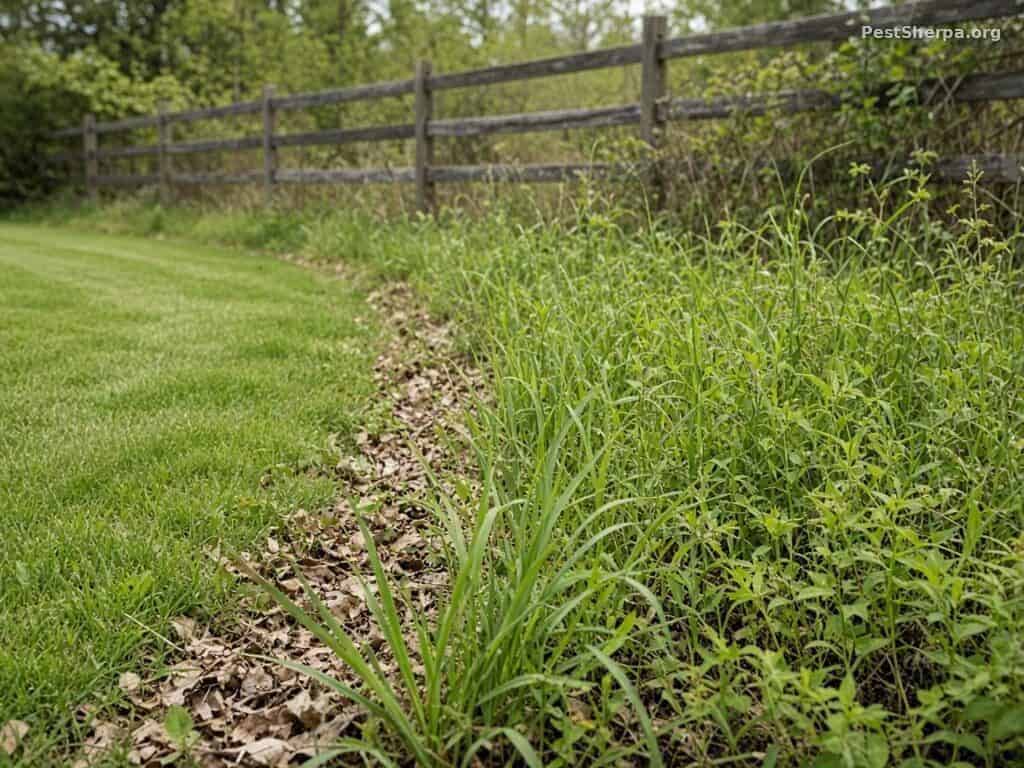
- Remove tall vegetation. Clear brush and overgrown grass near buildings and at transitions between maintained lawns and natural areas.
- Manage leaf litter and debris. Remove accumulated leaves and organic material from frequently used areas to reduce protected, humid habitats.
- Consider landscape barriers. A wood-chip or gravel border approximately 3 feet (0.9 m) wide between lawns and wooded or brushy areas may help define lower-risk recreational spaces. This recommendation is best documented for blacklegged ticks, and its effectiveness specifically against American dog ticks is less certain.
- Locate activity areas carefully. Place children’s play equipment, decks, seating areas, and frequently used outdoor spaces away from dense vegetation and overgrown yard edges when practical.
- Manage wood and clutter. Stack firewood neatly in dry locations, preferably away from the house, and remove discarded furniture, debris, and other objects that shelter rodents or create protected tick habitat.
- Reduce unnecessary wildlife access. Fencing and appropriate property management may discourage deer, stray dogs, and some other animals from entering frequently used areas. However, fencing does not eliminate ticks or exclude every potential host.
These habitat changes can help reduce exposure, but no yard-maintenance method provides complete protection. Personal repellents, tick checks, and appropriate pet prevention remain important even in well-maintained landscapes.
Pesticides can reduce tick populations in treated areas, but CDC cautions that spraying alone should not be relied upon to prevent tick-borne infections. Personal protection, pet prevention, and habitat management remain essential.
Before applying pesticides, consult local health or agricultural officials about the appropriate treatment timing, products, and applicable regulations. Follow all pesticide label directions. Outdoor treatment should be discussed with a professional pest control company in most cases. Some states require special licensing if the application is more than a set number of feet from a structure.
If hiring a professional, ask for a licensed applicator who understands where American dog ticks live and seek hosts. Treatment should focus on identified tick habitats, including grassy and brushy edges, ground cover, and other locations where people and pets may encounter ticks. Routine spraying of the entire open lawn is usually unnecessary, although treatment of additional areas may be justified when inspection confirms tick activity.
Our guide to what to do if you find a tick in your yard explains the first steps homeowners should take.
What a pro visit looks like
Professional tick control is primarily an outdoor service designed to reduce tick populations in areas where people and pets are likely to encounter them. A successful program begins with identifying the tick species, inspecting the property, and locating suitable tick habitats.
Depending on the situation, treatment may include targeted pesticide applications, habitat modifications, and recommendations for continued personal and pet protection.
The inspection
A qualified technician should inspect the property for tick habitat, including tall grass, brush, leaf litter, woodland edges, stone walls, ground cover, and shaded or protected areas where people and pets spend time.
The inspection should consider the tick species involved because American dog ticks, blacklegged ticks, and lone star ticks differ in their habitats, seasonal activity, and management needs.
Expect questions about pets, children, play areas, frequently used walkways, and locations where ticks have been found.
The technician should also identify nearby gardens, flowering plants, ponds, streams, wells, and other environmentally sensitive areas that may influence pesticide selection and application.
Your prep before the visit
- Mow and remove unnecessary clutter from areas scheduled for treatment, following the company’s preparation instructions.
- Bring pets, toys, and movable outdoor items indoors or away from treatment areas as directed.
- Remove or protect pet food and water bowls.
- Show the technician where dogs spend time, where people walk, and where ticks have been found.
- Identify vegetable gardens, flowering plants, ponds, and other sensitive areas.
- Ask for the proposed pesticide product name and label before treatment, including instructions for when people and pets may safely reenter treated areas.
The treatment
A targeted tick-control program may include:
- Application of an appropriately labeled acaricide, or tick-control pesticide, to identified habitat such as grassy edges, low vegetation, ground cover, and transitions between lawns and wooded areas.
- Treatment of additional locations when inspection confirms meaningful tick activity and the product label permits application.
- Recommendations for reducing tall grass, brush, accumulated leaves, and other conditions that favor tick survival.
- Landscape changes such as wood-chip or gravel borders to separate frequently used spaces from suitable tick habitat, recognizing that this approach is best documented for blacklegged ticks.
- Scheduling treatment when the target tick species and life stage are active, commonly in spring or early summer for adult American dog ticks.
Applications should avoid unnecessary exposure of flowering plants, pollinator habitat, water features, and other sensitive areas. All treatments must follow the product label, including restrictions related to application sites, weather, drift, and reentry.
Follow-up
Some tick-control programs involve a single targeted application, while others may require additional treatments during the season. The appropriate schedule depends on tick species, activity levels, habitat conditions, product performance, and local climate.
Ask the company to explain why repeat treatments are necessary and how results will be evaluated.
Even when treatment successfully reduces tick populations, it cannot guarantee a tick-free property. Continue using repellents, checking for ticks, and maintaining veterinarian-recommended tick preventives for pets.
Questions to ask before you book
- Which areas will you treat, and why?
- What product will you use, and when can people and pets safely return?
- How many applications do you recommend, and what determines their timing?
- Are you properly licensed for this work in my state?
- What habitat changes could reduce the need for pesticide treatments?
- How will you evaluate whether the treatment was effective?
For licensing and contract information, see how to hire a licensed pest control company.
Some mosquito-control programs also offer tick treatments. Our guide to hiring a pro for mosquitoes explains what to expect from a seasonal outdoor pest-management service. However, mosquito and tick treatments may target different habitats and require different application methods.
What it costs
Professional tick-control costs depend on the size of the treated area, the amount of suitable tick habitat, and the number of treatments required.
A smaller property with limited tick activity may need one targeted application. Larger properties or those with extensive vegetation and recurring tick activity may require additional work.
Angi’s September 2026 national pricing report provides several cost ranges based on infestation severity and treatment frequency.
For comparisons with other services, see what tick control costs alongside general pest-control plans and wildlife management.
Typical national ranges
Published consumer cost estimates include:
- One treatment for a mild problem: $50 to $150 (Angi, 2026).
- Moderate problem involving three to four treatments: $200 to $600 (Angi, 2026).
- Severe problem involving seven to eight treatments: $400 to $1,200 (Angi, 2026).
- Larger properties: Approximately $100 to $300 per acre (Angi, 2026).
- One-time tick treatment: $100 to $250 (HomeGuide, 2026).
These figures are national consumer estimates based on published data, not guaranteed prices or recommendations for how many applications a property needs.
The actual cost may vary considerably depending on location, property size, treatment area, accessibility, vegetation, and service frequency.
The number of visits should be based on documented tick activity and treatment needs rather than an automatic schedule tied only to infestation severity.
What moves the price
- Property size: Larger treatment areas generally require more labor and materials.
- Habitat complexity: Wooded borders, tall grass, brush, ground cover, and stone walls may require more careful inspection and targeted treatment.
- Treatment frequency: Additional visits increase the overall cost.
- Combined services: Mosquito and tick programs may offer package pricing, but the treatment plan should address the specific habitats of both pests.
- Access and preparation: Dense vegetation, steep terrain, and inaccessible areas can increase labor requirements.
Because American dog ticks do not normally establish indoor populations, routine interior pesticide treatment should not be included in a typical American dog tick service.
One-time job or ongoing plan
A single targeted treatment may reduce tick populations before a period of increased outdoor activity. However, its effectiveness depends on timing, the product used, tick movement, and the surrounding habitat.
Properties bordering fields, woods, or unmanaged vegetation may experience recurring tick pressure, but that does not automatically mean a seasonal pesticide contract is necessary.
Regular mowing, brush management, personal protection, and veterinarian-recommended pet preventives may provide sufficient protection for some properties.
When recurring treatments are recommended, ask the company to justify the frequency based on the local tick species, observed activity, and treatment objectives.
Red flags in a quote
- Promising a completely tick-free yard.
- Proposing blanket spraying of the entire lawn without inspecting tick habitat.
- Failing to identify the target tick species or explain the proposed treatment areas.
- Refusing to provide the pesticide name, label, or reentry instructions.
- Recommending routine indoor fogging for American dog ticks, which do not normally reproduce indoors.
- Offering repeated applications without explaining the timing or necessity.
Get the treatment areas, product names, application schedule, reentry requirements, and total costs in writing before authorizing service.
Common questions about American dog ticks
What does an American dog tick look like?
Adult American dog ticks are reddish-brown, flattened, and oval-shaped when unfed. They have relatively short mouthparts and distinctive whitish or silvery markings on the shield behind the mouthparts, called the scutum.
In females, the patterned scutum covers only the front portion of the back. In males, it covers nearly the entire back.
After feeding for several days, an adult female may become greatly enlarged and develop a swollen gray or bluish-gray appearance.
Do American dog ticks carry Lyme disease?
American dog ticks are not recognized vectors of the bacteria that cause Lyme disease.
The American dog tick is a recognized vector of Rocky Mountain spotted fever and tularemia. However, not every tick carries these pathogens, and the likelihood of infection varies geographically.
In the eastern United States, Lyme disease is primarily transmitted through bites of infected blacklegged ticks.
Can American dog ticks infest my house?
Not normally. American dog ticks live outdoors in grassy fields, meadows, overgrown areas, and along trail or woodland edges.
They may enter a home attached to dogs, clothing, or people, but they generally do not establish reproducing indoor populations.
The brown dog tick is different. It can complete its life cycle inside houses, kennels, and other buildings, sometimes producing persistent indoor infestations.
When are American dog ticks active?
Adult American dog ticks are most commonly encountered during spring and summer.
University of Kentucky Extension reports adults and nymphs active primarily from March through September in Kentucky, although seasonal patterns vary across the tick’s geographic range.
Adult ticks, particularly females, account for most reported bites on people.
How do I remove a tick?
Use clean, fine-tipped tweezers to grasp the attached tick as close to the skin as possible.
Pull steadily away from the skin without twisting or jerking. After removal, clean the bite area and your hands with soap and water, rubbing alcohol, or hand sanitizer.
Do not use petroleum jelly, nail polish, heat, or other substances to make the tick detach.
Remove attached ticks promptly rather than delaying removal while seeking medical assistance or special equipment.
Should I get the tick tested?
CDC does not generally recommend testing removed ticks to guide medical treatment.
A positive tick test does not establish that an infection was transmitted, and a negative test does not rule out exposure from another tick.
Tick-testing results should not delay evaluation or treatment when symptoms suggest a tick-borne illness.
Watch for fever, headache, rash, muscle pain, or other unexplained symptoms after possible exposure, and contact a healthcare professional promptly if they occur.
Does spraying my yard stop tick bites?
Spraying with appropriately labeled pesticides can reduce tick populations in treated locations, but it does not eliminate every tick or guarantee protection from tick-borne disease.
CDC advises against relying on spraying alone to reduce infection risk.
Combine habitat management with EPA-registered repellents, permethrin-treated clothing, routine tick checks, and veterinarian-recommended pet protection.
How much does professional tick control cost?
Angi’s September 2026 national estimates range from $50 to $150 for a single treatment of a mild problem, $200 to $600 for three or four treatments, and $400 to $1,200 for seven or eight treatments associated with a severe problem.
For larger lots, Angi estimates approximately $100 to $300 per acre. HomeGuide’s January 2026 price list estimates $100 to $250 for a one-time tick treatment.
These are general pricing estimates rather than quotes. Actual costs depend on the size of the treatment area, tick activity, property conditions, and number of applications justified.
This guide is part of our tick guide. Compare the blacklegged tick and lone star tick, or send a clear photo to Ask the Sherpa if you are uncertain which tick you found.
References
- Centers for Disease Control and Prevention. Where Ticks Live. July 30, 2025. CDC: Where Ticks Live.
- Centers for Disease Control and Prevention. About Rocky Mountain Spotted Fever. CDC: Rocky Mountain Spotted Fever.
- Centers for Disease Control and Prevention. Clinical Care of Rocky Mountain Spotted Fever. CDC: RMSF Clinical Guidance.
- Centers for Disease Control and Prevention. Preventing Tick Bites. August 28, 2024. CDC: Tick Prevention.
- Centers for Disease Control and Prevention. What to Do After a Tick Bite. June 9, 2026. CDC: Tick Removal and Follow-up.
- University of Kentucky Department of Entomology. Ticks and Disease in Kentucky. ENTFACT-618. University of Kentucky: Ticks and Disease.
- University of Missouri Extension. Ticks and Tick-borne Diseases. Publication IPM1032. University of Missouri: Tick Management.
- University of Rhode Island. American Dog Tick. TickEncounter Resource Center. University of Rhode Island: American Dog Tick.
- Lado, P., et al. Integrative Taxonomy of Dermacentor variabilis, with Description of Dermacentor similis. Journal of Medical Entomology, 2021. Taxonomic Study.
- Angi. Tick Extermination Cost: 2026 Data. Updated September 17, 2026. Angi: Tick Treatment Costs.
- HomeGuide. How Much Does an Exterminator Cost? January 9, 2026. HomeGuide: Exterminator Costs.
This article was written by Greg Baumann, founder of Pest Sherpa, and reflects more than 40 years of professional pest management experience.
About the Author

Greg Baumann | Pest Control Expert
Greg Baumann is the founder of Pest Sherpa and a Pest Control Expert with more than 40 years of professional pest management experience. His articles combine decades of field experience, technical expertise, and science-based guidance to help homeowners identify pests correctly, understand real-world risks, and make informed pest management decisions.
Mission: Identify the pest. Understand the risk. Stop the problem. Prevent the comeback. Know when it’s time to call a professional.