
German Cockroaches: Identification, Signs, Risks, and What To Do
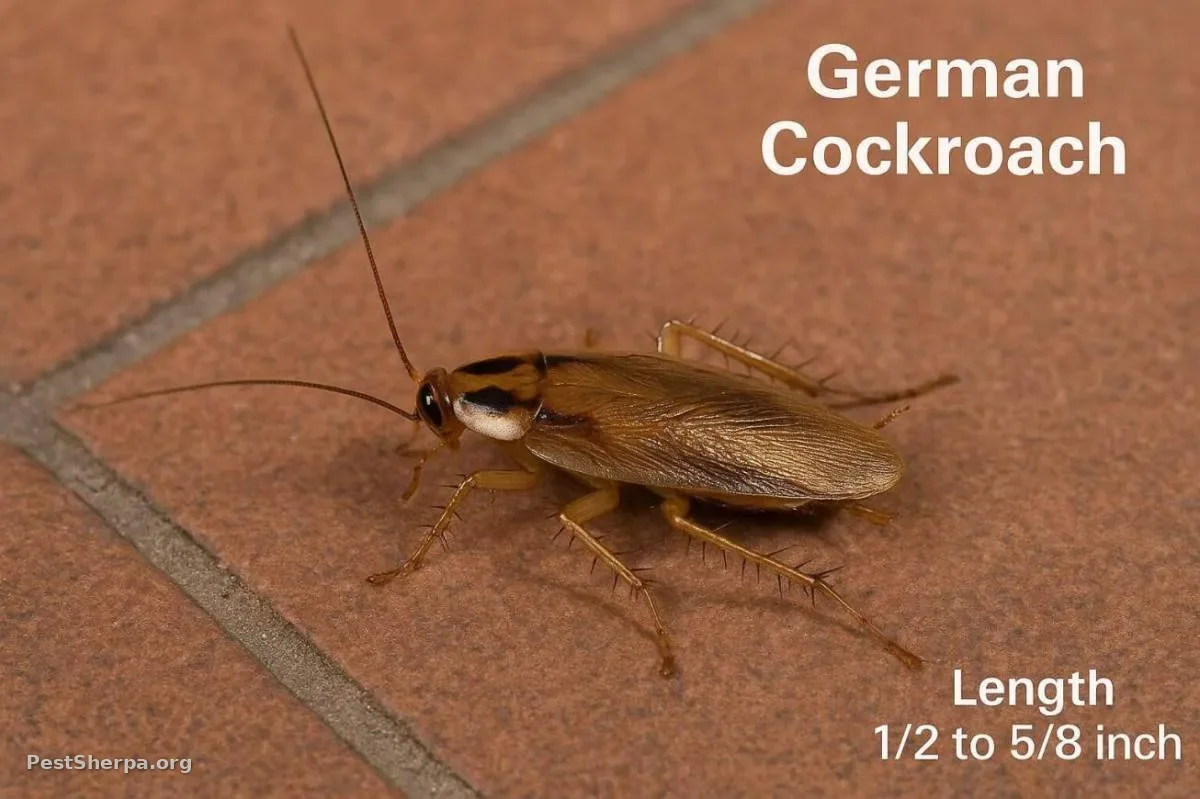
The German cockroach (Blattella germanica) is one of the most important indoor cockroach pests because it lives almost entirely around people, reproduces quickly, and hides in tight spaces near food, warmth, and moisture. A single sighting does not always prove a large infestation, but repeated sightings, small dark nymphs, pepper-like droppings, egg cases, or activity in kitchens and bathrooms should be investigated promptly.
This guide explains how to identify German cockroaches, what their presence may mean, where to inspect first, what usually does and does not work, and when professional help may be worth considering.
TL;DR
German cockroaches are small tan cockroaches with two dark lengthwise stripes behind the head. They usually live indoors, especially in kitchens, bathrooms, break rooms, food storage areas, and warm appliance voids.
The most useful first steps are to confirm the species, inspect close to food and water, reduce clutter and food residue, fix moisture problems, use monitoring traps, and avoid foggers or broad spraying. Baits and integrated pest management approaches are usually more effective than trying to kill only the cockroaches you see.
Because German cockroaches reproduce quickly and can be hard to reach in hidden harborages, professional help may be worth considering when activity is recurring, widespread, in a multi-unit building, or in a food-handling, healthcare, childcare, or high-risk setting.
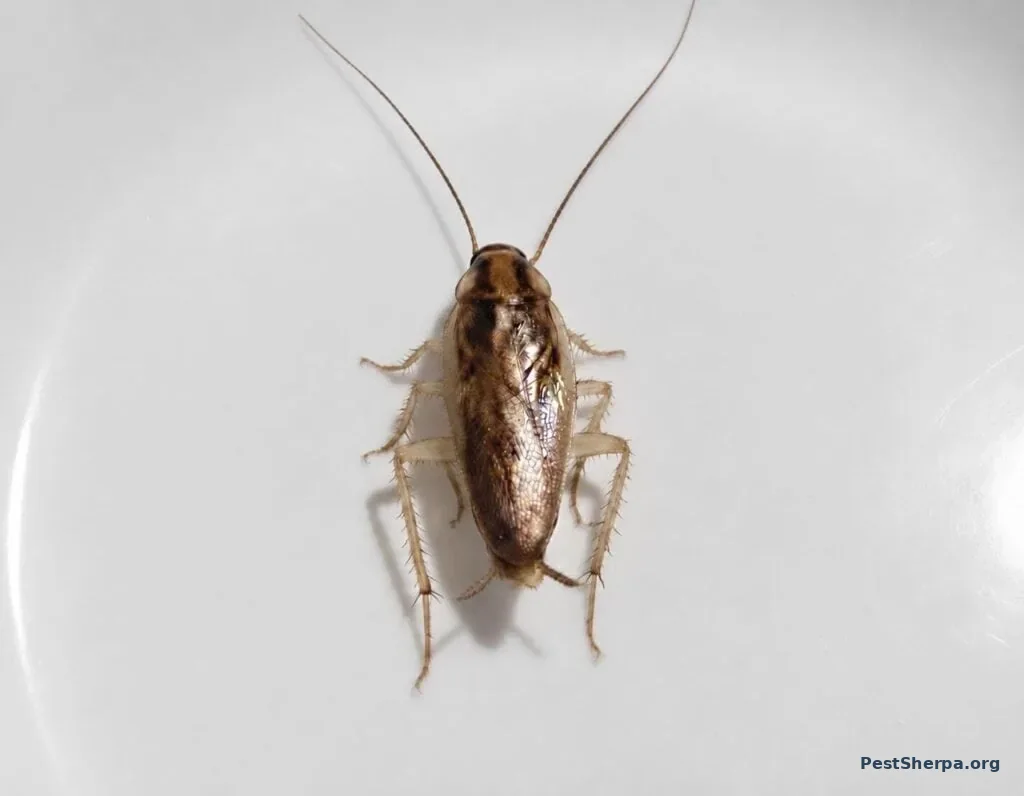
Adult German cockroach showing two dark stripes behind the head.
Quick Navigation
- Identification
- What a German Cockroach Sighting Means
- Quick Infestation Check
- Biology and Life Cycle
- Where German Cockroaches Hide
- Health and Contamination Concerns
- Inspection Checklist
- What To Do
- What Usually Does Not Work
- How Long Control Takes
- Long-Term Prevention
- When Professional Help May Be Needed
- Lookalikes
- FAQ
- References
Identification: What German Cockroaches Look Like
German cockroach adults are usually light brown to tan and about 1/2 to 5/8 inch long. The most reliable field mark is a pair of dark, parallel stripes on the pronotum, the shield-like area directly behind the head.
- Adult color: tan to light brown
- Key marking: two dark lengthwise stripes behind the head
- Size: small compared with many outdoor cockroaches
- Wings: present on adults, but German cockroaches rarely fly indoors
- Nymphs: smaller, darker, wingless, and often found near adults
- Movement: fast-running and likely to hide when lights turn on
For broader cockroach comparison, see the Pest Sherpa cockroach guide.
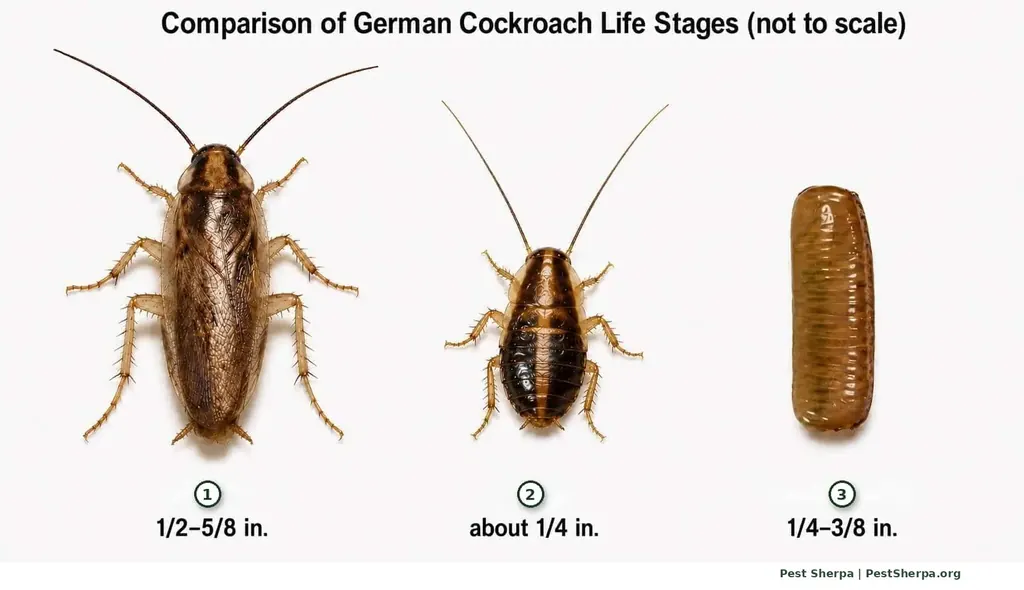
Which stage do you see? Match the number:
- Adult: 1/2 to 5/8 inch, light brown with two dark stripes behind the head and full wings.
- Nymph: about 1/4 inch, wingless and darker, with a pale stripe down the middle of the back.
- Egg case (egg casing): 1/4 to 3/8 inch, light brown capsule that the female carries until the eggs are almost ready to hatch.
German cockroach adult, nymph, and egg case comparison.
What a German Cockroach Sighting Means
German cockroaches are not like large outdoor cockroaches that may wander inside occasionally. They are strongly associated with indoor breeding sites. One cockroach may be an early warning, while repeated activity usually means there are hidden harborages nearby.
| What You See | What It May Mean | Priority |
|---|---|---|
| One adult German cockroach | Possible introduction or early activity | Inspect and monitor |
| Several adults over multiple days | Likely indoor harborage | Inspect kitchen, bathroom, appliances, and cabinets |
| Small dark nymphs | Breeding is likely occurring nearby | High priority |
| Droppings, shed skins, or egg cases | Established activity is likely | High priority |
| Cockroaches seen during the day | Population may be crowded, disturbed, or short on food/water | High priority |
| Activity in multiple rooms or units | Possible spread through shared walls, pipes, or moved items | Consider coordinated control |
Expert Insight: The visible cockroaches are only part of the issue. Hidden nymphs, egg cases, and harborages near warmth, food, and water are what allow the population to persist.
Quick Infestation Check
Use this quick check before deciding what to do next.
| Question | Why It Matters |
|---|---|
| Are you seeing nymphs? | Nymphs suggest breeding, not just an occasional adult. |
| Are sightings near the refrigerator, stove, dishwasher, sink, or cabinets? | These areas provide warmth, moisture, food residue, and hiding spaces. |
| Do you see black pepper-like droppings? | Droppings often collect near active harborages. |
| Do sticky monitors catch cockroaches overnight? | Trap counts help confirm location and severity. |
| Do neighbors or adjacent units also have activity? | Multi-unit infestations may require building-wide coordination. |
| Was used furniture, appliances, boxes, or food packaging recently brought in? | German cockroaches can be moved with infested items. |
Biology and Life Cycle
German cockroaches develop through incomplete metamorphosis: egg, nymph, and adult. The female carries a capsule-like egg case, called an ootheca, until shortly before hatch. A typical German cockroach egg case contains about 30 to 40 eggs.
Nymphs molt several times before becoming adults. Development speed depends heavily on temperature, food, water, and shelter. Warm indoor conditions can shorten development time, which is why activity may increase quickly in kitchens, food areas, and warm appliance voids.
Because many individuals can remain hidden, German cockroach problems often feel worse after a delay. By the time adults are seen regularly, nymphs and egg cases may already be present in cracks, seams, appliance gaps, cabinet hinges, and wall or plumbing voids.
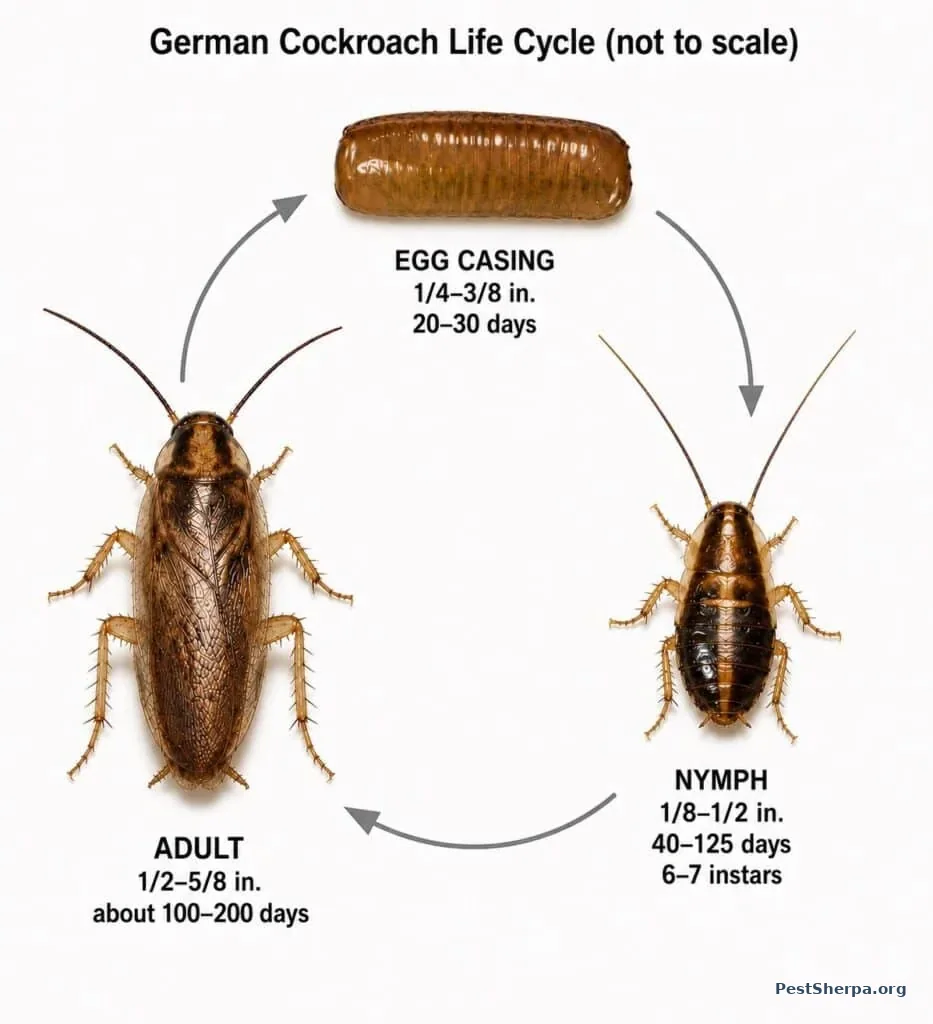
German cockroach life cycle from egg case to nymph to adult.
Where German Cockroaches Hide
German cockroaches prefer tight, dark spaces close to food, water, and warmth. They often rest with their bodies touching surfaces above and below, which is why thin cracks and equipment seams can be more important than open floor space.
Common Indoor Harborages
- Behind and under refrigerators, stoves, dishwashers, microwaves, and coffee makers
- Under sinks and around plumbing penetrations
- Cabinet hinges, drawer tracks, shelf seams, and countertop gaps
- Trash areas, recycling bins, and food storage zones
- Bathrooms, laundry rooms, and utility rooms with moisture
- Wall voids, pipe chases, electrical outlets, and shared walls in apartments
- Cardboard boxes, grocery bags, used appliances, and secondhand furniture
German cockroaches are especially important to distinguish from larger species that may have different sources. For example, American cockroaches, oriental cockroaches, and smokybrown cockroaches are often linked to different moisture, sewer, crawlspace, or outdoor conditions.
Health and Contamination Concerns
German cockroaches are sanitation pests. They can move through contaminated areas and then contact food, dishes, counters, utensils, and food-preparation surfaces. Their droppings, shed skins, saliva, and body fragments can also contribute to indoor allergens.
Cockroach allergens are a concern for sensitive people, especially in homes where asthma or allergies are already an issue. The risk depends on exposure, building conditions, population size, and individual sensitivity. Not every sighting creates a health emergency, but recurring activity should be taken seriously.
In restaurants, healthcare settings, childcare facilities, schools, and other sensitive environments, German cockroach activity can create sanitation, compliance, and occupant-safety concerns that require faster documentation and response.
German Cockroach Inspection Checklist
Inspection should focus on evidence, not guesswork. A flashlight, disposable gloves, and sticky monitors can help reveal where cockroaches are active.
Step 1: Confirm the Species
Look for the two dark stripes behind the head and the small indoor cockroach shape. Compare with other roaches if the insect is large, dark, winged, or coming from outdoors.
Step 2: Inspect the Kitchen First
- Refrigerator motor area, floor edge, and drip pan area if accessible
- Stove sides, drawer, underside, and nearby wall gaps
- Dishwasher edges and under-sink plumbing
- Cabinet corners, drawer tracks, hinges, and shelf seams
- Trash and recycling areas
- Pet feeding areas and spilled kibble
Step 3: Inspect Moisture Areas
- Bathrooms and vanity cabinets
- Laundry rooms and water heater closets
- Pipe penetrations and wall openings
- Leaks, condensation, and damp storage areas
Step 4: Use Sticky Monitors
Place monitors along edges where cockroaches travel, not in the middle of open rooms. Useful locations include behind the refrigerator, under the sink, near the stove, beside the dishwasher, inside cabinet corners, and near suspected wall or plumbing gaps. Check them regularly and note where captures are highest.
Step 5: Look for Introduction Points
Consider recent deliveries, used appliances, secondhand furniture, grocery boxes, storage totes, shared laundry areas, and movement between connected units. German cockroaches often spread when infested items are moved.
What To Do About German Cockroaches
The best approach is to combine sanitation, moisture correction, exclusion, monitoring, and targeted control. Killing a few visible adults is rarely enough if food, water, and hidden harborages remain.
1. Reduce Food Sources
- Clean grease, crumbs, and food residue from counters, floors, appliances, and cabinet corners.
- Store food, pet food, and pantry items in sealed containers.
- Empty trash and recycling regularly, especially containers with food residue.
- Clean under and behind appliances where debris accumulates.
2. Reduce Water and Moisture
- Repair leaks under sinks, behind toilets, near dishwashers, and around refrigerators with water lines.
- Do not leave wet sponges, standing water, or soaked towels out overnight.
- Improve ventilation where condensation is common.
3. Remove Clutter and Hiding Places
Cardboard, paper bags, unused small appliances, and crowded storage areas create protected spaces. Reduce clutter near kitchens, bathrooms, food storage, and utility rooms.
4. Seal Key Gaps
Seal cracks and gaps around plumbing penetrations, cabinet backs, baseboards, and shared walls when practical. Sealing does not replace control, but it reduces movement and hiding space.
5. Use Monitoring to Guide Decisions
Sticky monitors help show whether activity is increasing or decreasing and which rooms need the most attention. They are especially useful after cleaning, sealing, baiting, or professional treatment.
6. Use Pesticides Carefully, If Needed
Pesticides are not always necessary for a single uncertain sighting, but established German cockroach activity often requires targeted control. When any pesticide is used, read and follow the product label, keep products away from children, pets, food, dishes, and food-preparation surfaces, and avoid applying products in drains, vents, electrical equipment, or other places not allowed by the label.
Baits are often more useful than broad sprays because they can target foraging cockroaches while limiting unnecessary surface treatment. Avoid placing repellent sprays near baits, because this can reduce bait acceptance and scatter cockroaches away from treated areas.
For pesticide-label questions, see the Pest Sherpa Q&A on understanding pesticide labels.
What Usually Does Not Work
German cockroaches are difficult because most of the population may be hidden. Methods that only affect exposed adults usually produce disappointing results.
- Foggers and bug bombs: These may miss hidden harborages, increase exposure risk, and scatter cockroaches into new areas.
- Random surface spraying: Sprays may not reach the source and can interfere with bait-based control.
- Traps alone: Sticky traps help monitor activity but usually do not eliminate a breeding population by themselves.
- Cleaning alone after an infestation is established: Sanitation is important, but hidden populations may persist without targeted control.
- Ignoring adjacent units: In apartments, condos, dorms, and shared commercial spaces, activity may continue if nearby sources are untreated.
For a related practical question, see the Pest Sherpa Q&A about cockroaches, baiting, spraying, and fogging.
How Long Does German Cockroach Control Take?
The timeline depends on the size of the population, access to food and water, treatment quality, clutter, neighboring units, and whether the source areas are corrected. Small, early problems may improve quickly once food, water, and harborage are reduced. Larger or long-running infestations often require repeated inspection, monitoring, and follow-up.
| Situation | Likely Timeline Pattern |
|---|---|
| One uncertain sighting | Monitor for additional evidence before assuming infestation |
| Early localized activity | May improve with prompt cleaning, monitoring, sealing, and targeted control |
| Nymphs and adults present | Expect a more involved process because breeding is likely |
| Multiple rooms or shared walls | May require coordinated inspection and control |
| Food-handling or sensitive facility | Requires faster documentation, monitoring, and corrective action |
Do not judge progress only by one day of sightings. Use sticky monitor counts, locations, and recurring evidence to determine whether activity is actually declining.
Long-Term Prevention
Prevention focuses on making indoor areas less suitable and catching introductions early.
- Keep kitchens, break rooms, and food storage areas clean and dry.
- Store food and pet food in sealed containers.
- Clean grease and crumbs from under appliances and along cabinet edges.
- Repair plumbing leaks and reduce condensation.
- Inspect used appliances, electronics, furniture, cardboard boxes, and storage items before bringing them indoors.
- Use sticky monitors in high-risk areas if the home or building has a history of activity.
- Seal gaps around pipes, shared walls, cabinet backs, and utility penetrations where practical.
- In multi-unit housing, report recurring sightings early so adjacent sources can be investigated.
When Professional Help May Be Needed
Professional help may be worth considering when the infestation is established, hidden, recurring, or located in a sensitive setting. German cockroach control often requires careful inspection, monitoring, bait placement, follow-up, and adjustments based on activity patterns. For questions worth asking before you hire, see our Pest Lab guide to hiring help for German cockroaches.
- You see nymphs, egg cases, or droppings.
- Cockroaches are seen in multiple rooms.
- Activity returns after cleaning or store-bought products.
- You live in an apartment, condo, dorm, or connected housing.
- There are children, older adults, medically sensitive occupants, or people with asthma or allergies.
- The activity is in a restaurant, commercial kitchen, school, childcare facility, healthcare facility, or food storage area.
Professional help is not a substitute for sanitation and moisture correction. Even when a professional is involved, cooperation with cleaning, storage, access, and monitoring recommendations is usually important.
Lookalikes and Common Misidentifications
Correct identification matters because not every cockroach indoors has the same source or control strategy.
| Possible Lookalike | Key Difference | Useful Next Step |
|---|---|---|
| Brownbanded cockroach | Small indoor roach, but often found higher in rooms and away from wet areas | Compare markings and harborage location |
| Asian subterranean termite swarmers | Winged termite swarmers have different body shape and shed wings | Check whether insects have equal-length wings and termite-like bodies |
| American cockroach | Much larger and often associated with sewer, drain, basement, crawlspace, or outdoor moisture areas | Inspect moisture routes and entry points |
| Oriental cockroach | Darker, larger, and commonly linked to damp areas | Inspect basements, drains, crawlspaces, and exterior moisture |
| Turkestan cockroach | Often associated with outdoor areas and may enter from exterior sources | Check exterior lighting, landscape areas, and door thresholds |
Frequently Asked Questions About German Cockroaches
Does one German cockroach mean an infestation?
Not always, but it should not be ignored. One adult may have been introduced on an item, while repeated sightings, nymphs, droppings, or activity near food and water suggest a breeding population. See the Pest Sherpa Q&A on whether one roach means an infestation for a practical next-step explanation.
Where should I inspect first?
Start in the kitchen and bathroom. Focus on the refrigerator, stove, dishwasher, under-sink areas, cabinet seams, trash area, pet feeding area, and plumbing openings.
Why am I seeing small dark cockroaches?
Small dark cockroaches may be nymphs. If they are German cockroach nymphs, breeding is likely occurring nearby. This is stronger evidence than seeing one adult alone.
Do German cockroaches fly?
Adults have wings, but they usually run rather than fly indoors. If many insects are flying around lights, windows, or exterior doors, confirm the identification before assuming they are German cockroaches.
Are foggers a good idea for German cockroaches?
Usually no. Foggers may not reach hidden harborages, can increase exposure risk, and may scatter cockroaches into other areas. Inspection, sanitation, monitoring, exclusion, and targeted bait-based approaches are usually more useful.
Can German cockroaches come from neighbors?
Yes. In connected buildings, cockroaches can move through shared walls, plumbing penetrations, utility chases, and infested items. Recurring activity in apartments or condos may require coordinated inspection and control.
Can cleaning alone get rid of German cockroaches?
Cleaning is important, but it may not eliminate an established infestation by itself. It works best when combined with moisture correction, clutter reduction, monitoring, sealing, and targeted control.
References
- UF/IFAS Extension: German Cockroach, Blattella germanica
- Rutgers NJAES: German Cockroach
- NC State Extension: Biology and Behavior of the German Cockroach
- UC IPM: Cockroaches
- Penn State Extension: Got Roaches? Eliminate Roaches with IPM
- Insects: A Review of Alternative Management Tactics Employed for the German Cockroach
This article was written by Greg Baumann, founder of Pest Sherpa, and reflects more than 40 years of professional pest management experience.
About the Author

Greg Baumann | Pest Control Expert
Greg Baumann is the founder of Pest Sherpa and a Pest Control Expert with more than 40 years of professional pest management experience. His articles combine decades of field experience, technical expertise, and science-based guidance to help homeowners identify pests correctly, understand real-world risks, and make informed pest management decisions.
Mission: Identify the pest. Understand the risk. Stop the problem. Prevent the comeback. Know when it’s time to call a professional.