
Pillbugs / Roly-Polies: Identification, Moisture, and What to Do
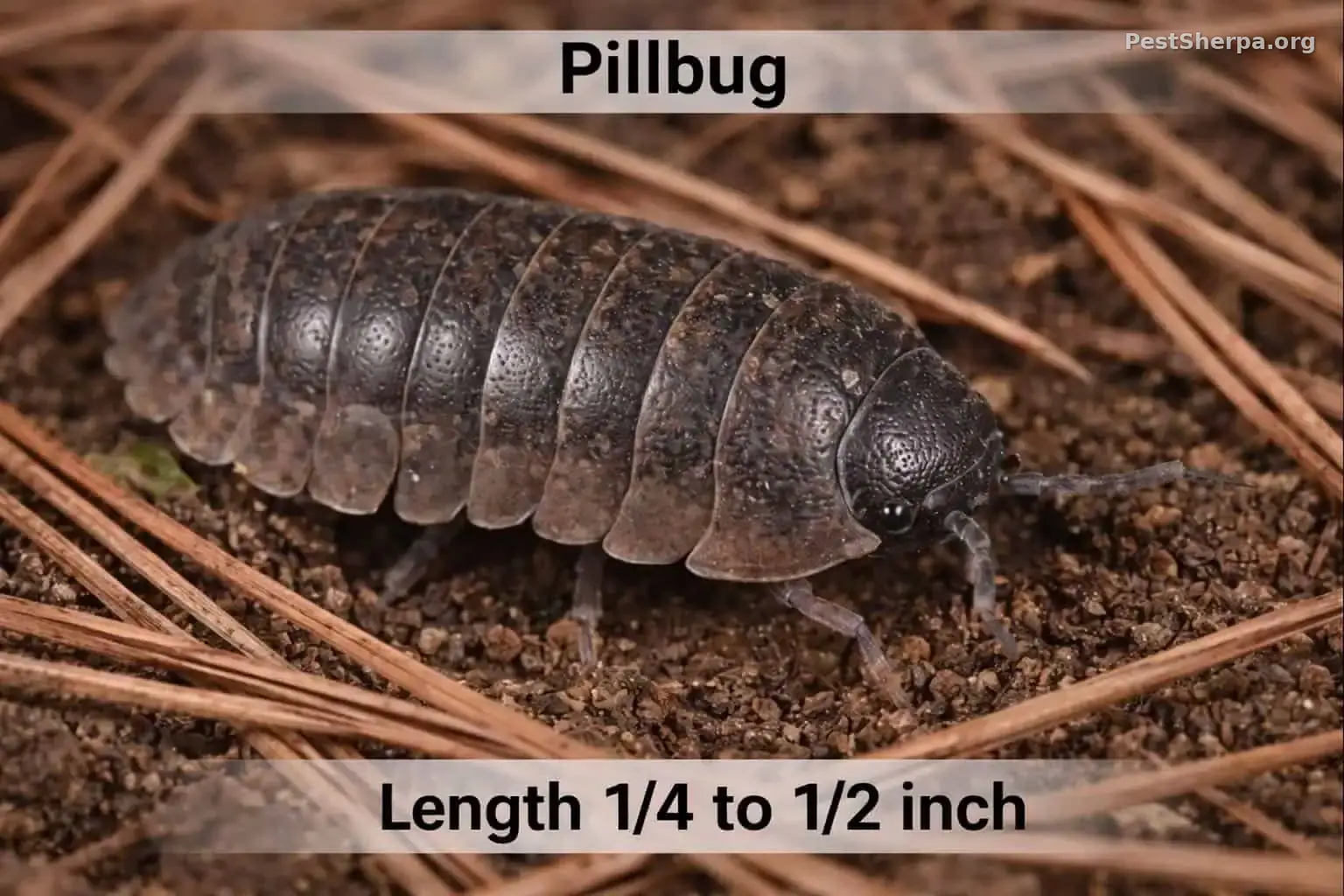
Pillbugs, often called roly-polies, are small moisture-loving crustaceans, not insects, that occasionally wander into homes from damp outdoor areas. They are not insects, do not bite or sting, and do not damage structures. Indoors, their presence usually points to excess moisture, heavy mulch, leaf litter, poor drainage, or another damp shelter near the foundation.
The most important question is not usually “How do I kill pillbugs?” It is “Why are conditions around the home damp enough for pillbugs to thrive?” This guide explains how to identify pillbugs, what their presence means, and where to inspect. It also covers how they differ from sowbugs and other lookalikes, and which practical steps reduce repeat indoor sightings.
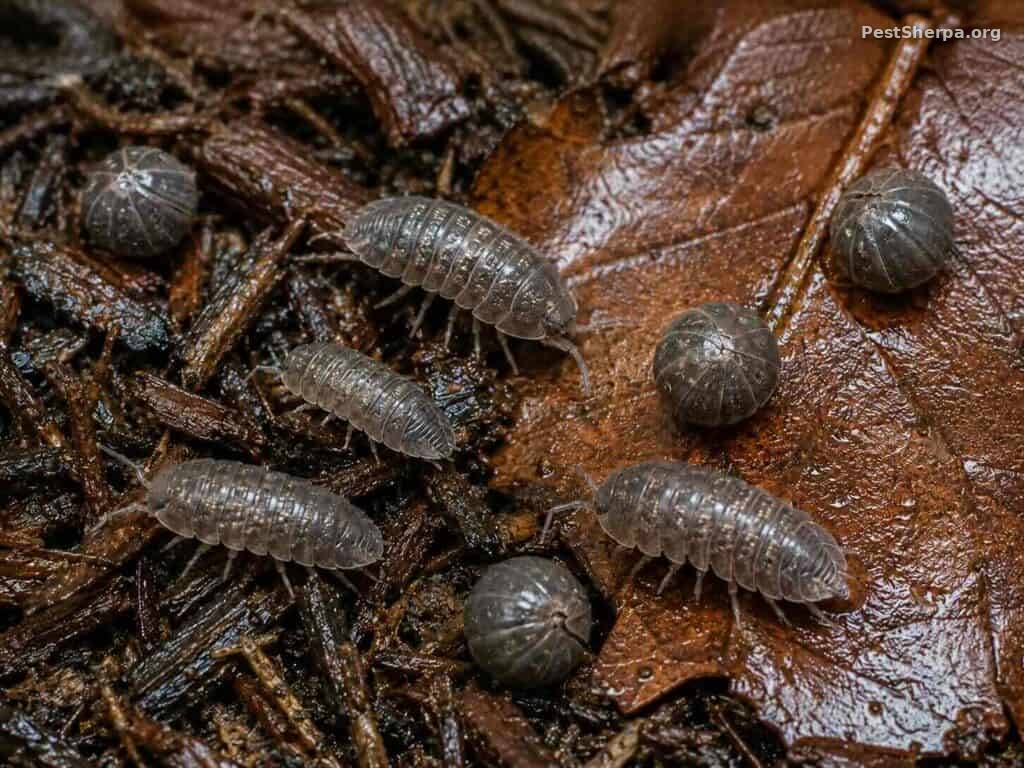
Pillbugs curled into a ball on damp mulch near leaf litter.
TL;DR
Pillbugs are terrestrial crustaceans, not insects. They have seven pairs of legs, a segmented gray body, and the ability to roll into a tight ball when disturbed. They usually live outdoors under mulch, leaves, boards, stones, flowerpots, compost, and other damp cover.
Seeing one or two indoors is usually a nuisance issue. Seeing many, especially alive in basements, crawl spaces, garages, or ground-level rooms, often means there is excess moisture or favorable habitat near the home. Long-term control depends on drying damp areas, improving drainage, reducing organic debris, and sealing low entry points.
Quick Navigation
- What Pillbugs Mean in Your Home
- Identification
- Pillbugs vs. Sowbugs
- Where Pillbugs Come From
- Source Investigation Checklist
- Biology and Life Cycle
- Do Pillbugs Damage Plants?
- What To Do
- What Doesn’t Work
- How Long Pillbugs Last Indoors
- Safety and Pesticide Notes
- When Professional Help May Be Worth Considering
- Lookalikes
- FAQ
- References
What Pillbugs Mean in Your Home
Pillbugs indoors are usually a moisture clue. They normally live outside and enter through gaps around doors, basement windows, utility penetrations, foundation cracks, garage thresholds, crawl space vents, and other low openings. They do not usually reproduce successfully in dry living spaces.
| What You See | What It Usually Means | First Place To Check |
|---|---|---|
| One pillbug indoors | Likely accidental entry | Nearby door, garage, or basement window |
| Several pillbugs after rain | Outdoor moisture or migration pressure | Foundation mulch, leaf litter, drainage, door sweeps |
| Many live pillbugs indoors | Moisture may be present indoors or immediately outside | Basement, crawl space, slab edge, utility room |
| Dead pillbugs along walls | They entered but dried out indoors | Perimeter gaps and outdoor shelter |
| Pillbugs plus musty odor or damp wood | Possible broader moisture issue | Crawl space, sills, leaks, drainage, damp framing |
Practical takeaway: Removing indoor pillbugs with a vacuum may solve the immediate nuisance, but repeat sightings usually require moisture reduction and habitat changes outside.
Identification: What Pillbugs Look Like
Pillbugs are small, oval, gray to slate-colored arthropods with a hard, segmented body. They are often called roly-polies because they can roll into a tight ball when disturbed. This rolling behavior is one of the easiest ways to separate pillbugs from many similar moisture-associated pests.
- Usually gray, slate, or gray-brown
- Oval body with overlapping armor-like segments
- Seven pairs of legs
- Short antennae visible from the front
- Often about 1/4 to 3/4 inch long, depending on species and age
- Rolls into a ball when disturbed
Pillbugs are crustaceans related to other isopods, not insects. Their need for moisture is tied to their biology, which is why they are most common in damp, protected places.
Pillbugs vs. Sowbugs
Pillbugs and sowbugs are closely related and often occur in the same damp habitats. The difference matters mostly for identification. The same moisture and habitat corrections usually help with both.
| Feature | Pillbug | Sowbug |
|---|---|---|
| Rolls into a ball? | Yes | No |
| Body shape | More rounded or domed | Flatter |
| Rear appendages | Usually not obvious from above | Often has small tail-like projections |
| Habitat | Damp mulch, leaf litter, soil cover, compost, under objects | Similar damp habitats |
| Indoor meaning | Moisture or entry gaps | Moisture or entry gaps |
Where Pillbugs Come From
Pillbugs usually originate outdoors. They hide during the day and are more active when conditions are cool and humid. Around homes, the most common sources are damp organic material and shaded cover close to the foundation.
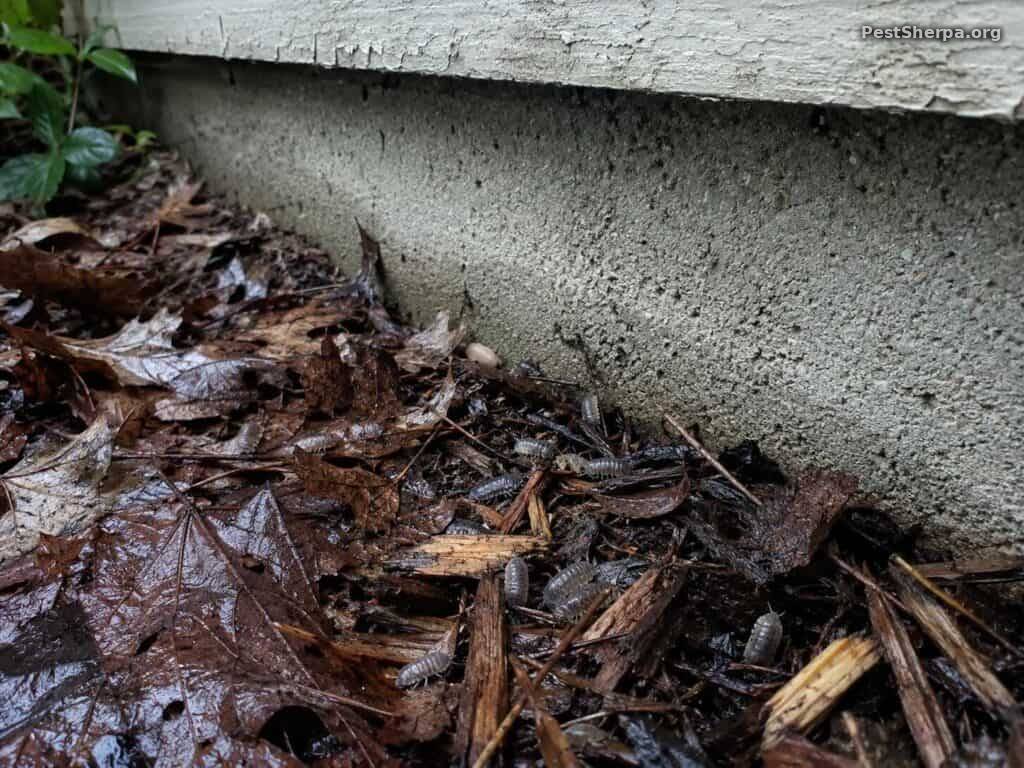
Damp mulch and leaf litter along a home foundation where pillbugs will thrive.
Pillbug Source Investigation Checklist
Step 1: Start Where You See Them Indoors
Note whether pillbugs are concentrated near a basement wall, exterior door, garage threshold, sliding door, utility room, bathroom, laundry area, or crawl space access. Their location often points to the nearest moisture or entry point.
Step 2: Check the Exterior Side of That Wall
Look for mulch piled against siding, wet soil, clogged gutters, short downspouts, leaf buildup, stacked items, irrigation overspray, or cracks near the slab or foundation.
Step 3: Inspect Low Entry Points
- Door sweeps and weather stripping
- Basement window frames and window wells
- Garage door corners
- Foundation cracks and expansion joints
- Utility, cable, plumbing, and HVAC penetrations
- Crawl space vents and access doors
Step 4: Look for Broader Moisture Clues
Pillbugs themselves do not damage structures, but persistent dampness can create other problems. Does the same area have soft wood, fungal growth, musty odors, or visible water staining? Then also consider moisture-related issues and compare with pests such as dampwood termites when wood damage is present.
Biology and Life Cycle
Pillbugs develop gradually. Young pillbugs resemble small, pale versions of adults rather than going through a caterpillar-like or maggot-like stage. Females carry eggs and young in a brood pouch on the underside of the body, then the young emerge and grow through repeated molts.
Because pillbugs depend on moisture, their populations build where damp cover and decaying organic matter remain available. Indoors, dry air usually limits survival. The exception is a consistently damp area such as a wet crawl space, damp basement, leaking utility area, or soaked slab edge.
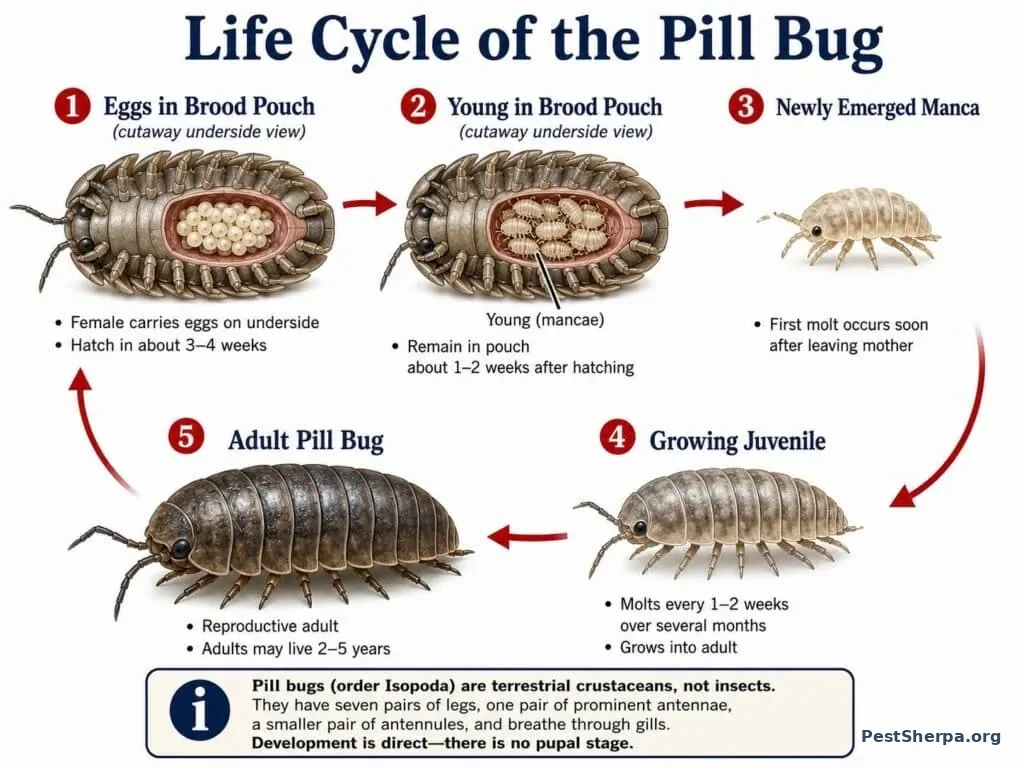
Pillbug life cycle showing young pillbugs developing into adults through molts.
Do Pillbugs Damage Plants?
Pillbugs mostly feed on decaying plant material and help break down organic matter. In gardens, they may sometimes chew tender seedlings, soft roots, lower leaves, or fruit and vegetables touching damp soil. This happens mostly when populations are high and conditions are very moist.
If you suspect plant feeding, inspect at night with a flashlight. Also check for slugs, earwigs, caterpillars, cutworms, snails, and other garden pests before assuming pillbugs are the primary cause.
What To Do About Pillbugs
1. Remove Indoor Pillbugs
Vacuum or sweep up live and dead pillbugs. Empty the vacuum contents promptly if many are collected. Indoor sprays are usually unnecessary for pillbugs because they often dry out after entering.
2. Reduce Moisture
- Repair leaking hose bibs, pipes, drains, and HVAC condensate lines
- Clean gutters and extend downspouts away from the foundation
- Correct low spots where water collects near the home
- Use dehumidification or ventilation where basements and crawl spaces stay damp
- Adjust irrigation so it does not keep foundation soil, mulch, or door thresholds wet
3. Modify Outdoor Habitat
- Pull mulch, leaves, and plant debris back from the foundation
- Thin dense groundcover where it traps moisture against the home
- Move firewood, boards, stones, and stored items away from exterior walls
- Elevate items that must remain outdoors so the soil can dry underneath
- Keep compost piles and heavy organic debris away from entry doors and foundation openings
4. Exclude Entry Points
- Install or replace door sweeps
- Repair weather stripping around exterior doors
- Seal cracks and gaps at the foundation, sill, and utility penetrations
- Repair damaged screens and crawl space vent covers
- Clean debris from basement window wells and improve drainage there
What Doesn’t Work Well
- Relying only on indoor sprays: This does not correct moisture or outdoor habitat.
- Using foggers: Foggers do not solve foundation moisture, mulch, leaf litter, or entry gaps.
- Ignoring drainage: Pillbugs often return when wet soil and organic debris remain near the structure.
- Assuming every sighting is an infestation: A few pillbugs may simply have wandered indoors.
- Removing all mulch everywhere: Mulch can be useful in landscapes, but it should not stay wet and piled against the foundation or entry points.
How Long Will Pillbugs Last Indoors?
In dry indoor rooms, pillbugs often die soon after entering because they lose moisture. Activity may continue, however, if new pillbugs keep entering from damp outdoor habitat or if an indoor moisture source remains unresolved.
| Situation | Expected Pattern |
|---|---|
| One-time accidental entry | Short-lived; vacuuming may be enough |
| After heavy rain | May appear in waves until outdoor conditions dry |
| Mulch or debris against foundation | May recur until habitat is reduced |
| Damp basement or crawl space | May continue until moisture is corrected |
| Entry gaps remain open | New individuals may keep entering even after cleanup |
Safety and Pesticide Notes
Pesticides are not always necessary for pillbugs. Moisture correction, habitat reduction, exclusion, sweeping, and vacuuming are usually the most important steps. If a pesticide is used, read and follow the label exactly. Use only products labeled for the site and pest situation. Keep children, pets, food, dishes, toys, and food-preparation surfaces away from treated areas until label directions allow reentry or reuse.
Avoid applying pesticides into drains, ventilation openings, wall voids, or damp areas unless the product label specifically allows that use. Do not mix products or apply more than the label permits. Persistent pillbug activity is usually a sign that moisture and shelter still need attention.
When Professional Help May Be Worth Considering
Pillbugs are usually manageable with moisture reduction and exclusion. A professional inspection may be worth considering when the pillbugs are only one sign of a larger moisture or structural issue.
- Pillbugs are repeatedly found alive in large numbers indoors
- The source appears to be a crawl space, basement, slab edge, or wall/floor junction that stays damp
- There is soft wood, musty odor, mold-like growth, or water staining
- You are unsure whether the pest is a pillbug, sowbug, millipede, springtail, or another moisture-associated pest
- Exclusion is difficult because of foundation cracks, drainage problems, or recurring water intrusion
Pillbug Lookalikes and Common Misidentifications
Several small pests appear in the same damp places as pillbugs. Correct identification helps avoid unnecessary or ineffective treatments.
| Lookalike | How It Differs | Why It Matters |
|---|---|---|
| Sowbugs | Do not roll into a tight ball; often flatter with rear projections | Same moisture and habitat corrections usually help |
| Millipedes | Longer, many more legs, often curl into a coil rather than a ball | Also associated with moisture and outdoor migration |
| Springtails | Much smaller and may jump; often appear in damp bathrooms, slabs, soil, or potted plants | Strong moisture indicator |
| Centipedes | Fast-moving predators with longer legs and a flatter body | May indicate damp areas with prey insects |
| Earwigs | Have forceps-like pincers at the rear | Often shelter in damp mulch, cracks, and outdoor debris |
| Slugs | Soft-bodied, slimy, no legs | Can be a stronger plant-feeding suspect in damp gardens |
Frequently Asked Questions
Are pillbugs insects?
No. Pillbugs are terrestrial crustaceans in the order Isopoda. They are arthropods, but they are not insects.
Do pillbugs bite people or pets?
Pillbugs do not bite or sting people or pets. They are mainly nuisance invaders when found indoors.
Why are pillbugs coming into my basement?
Basements are common places to find pillbugs because they enter from soil, mulch, leaf litter, window wells, foundation cracks, or damp crawl spaces. If they are often found alive, check for excess moisture indoors or immediately outside.
Do pillbugs mean my house has water damage?
Not always. A few pillbugs may simply enter from outdoors. However, recurring live pillbugs can be a clue that moisture, poor drainage, damp mulch, or a crawl space issue should be checked.
Will pillbugs infest my house?
Pillbugs usually do not establish lasting indoor infestations in dry living spaces. They need damp conditions and often die indoors unless moisture remains available.
What is the fastest way to reduce pillbugs indoors?
Vacuum or sweep up the ones you see. Then check the nearest exterior wall, doorway, window well, crawl space, or basement area for moisture and entry gaps. Removing damp shelter outside is usually more effective than treating indoors.
Are pillbugs bad for gardens?
Most of the time, pillbugs help recycle decaying organic matter. In very damp areas with high numbers, they may chew tender seedlings or soft produce touching the soil. Night inspection can help confirm whether pillbugs are actually feeding on plants.
References
- UC IPM: Pillbugs and Sowbugs
- University of Minnesota Extension: Sowbugs, Millipedes and Centipedes
- University of Kentucky Entomology: Sowbugs & Pillbugs
- Missouri Botanical Garden: Sowbugs and Pillbugs
This article was written by Greg Baumann, founder of Pest Sherpa, and reflects more than 40 years of professional pest management experience.
About the Author

Greg Baumann | Pest Control Expert
Greg Baumann is the founder of Pest Sherpa and a Pest Control Expert with more than 40 years of professional pest management experience. His articles combine decades of field experience, technical expertise, and science-based guidance to help homeowners identify pests correctly, understand real-world risks, and make informed pest management decisions.
Mission: Identify the pest. Understand the risk. Stop the problem. Prevent the comeback. Know when it’s time to call a professional.