
How to Get Rid of Cockroaches: Baits, Sanitation, and When to Call a Pro
When an infestation is minor, cockroaches are one of the few household pests a homeowner can often eliminate without professional help, but only with the right method. Difficult situations and large infestations require professional help. Most failed roach control I see comes from doing the intuitive thing: spraying what you see or setting off a bug bomb. What works is quieter and slower. You find where the roaches live, take away food and water, and put bait exactly where they will find it. This guide covers that process step by step, along with what fails, what a professional visit should include, and what it costs.
Key Points
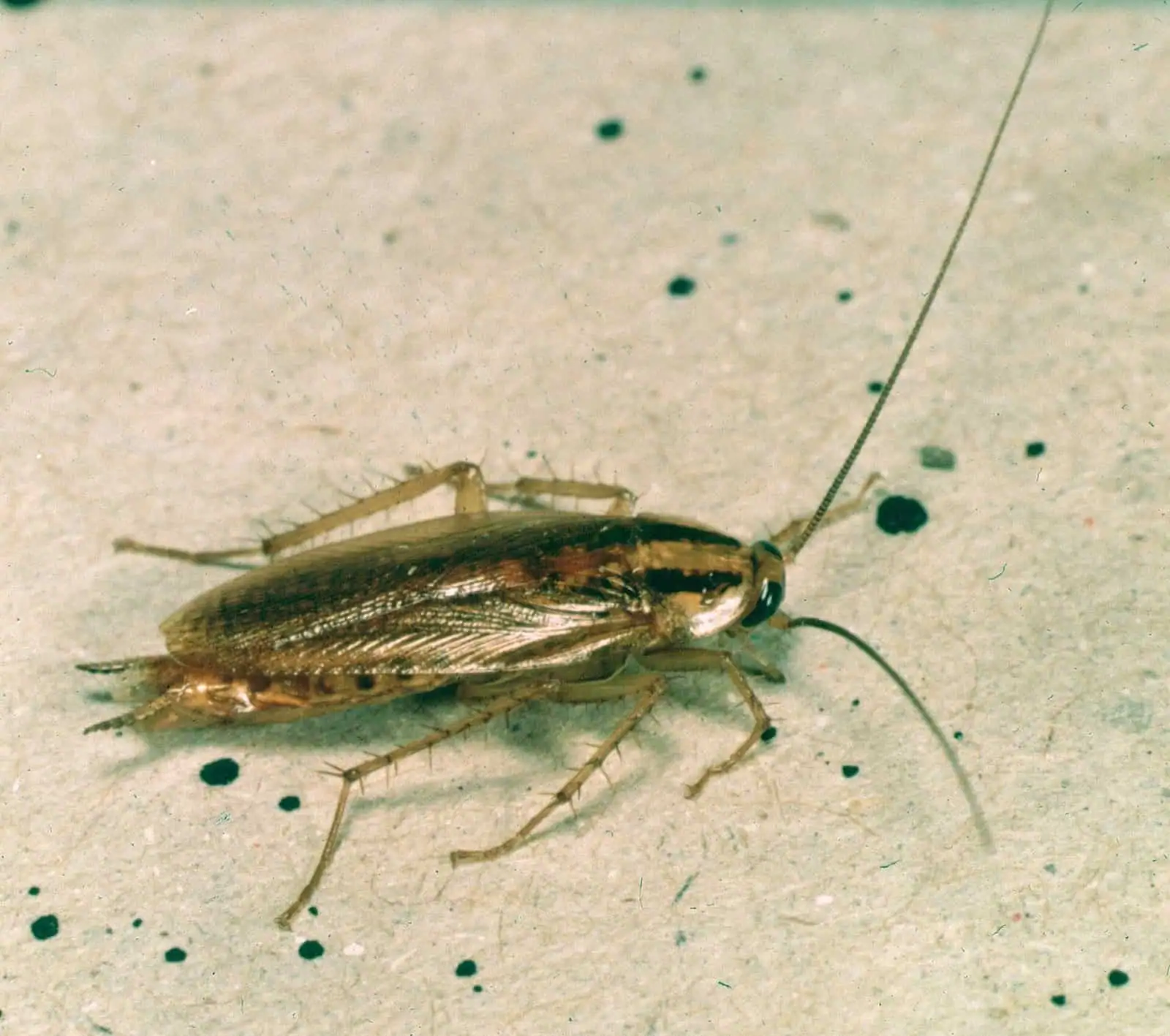
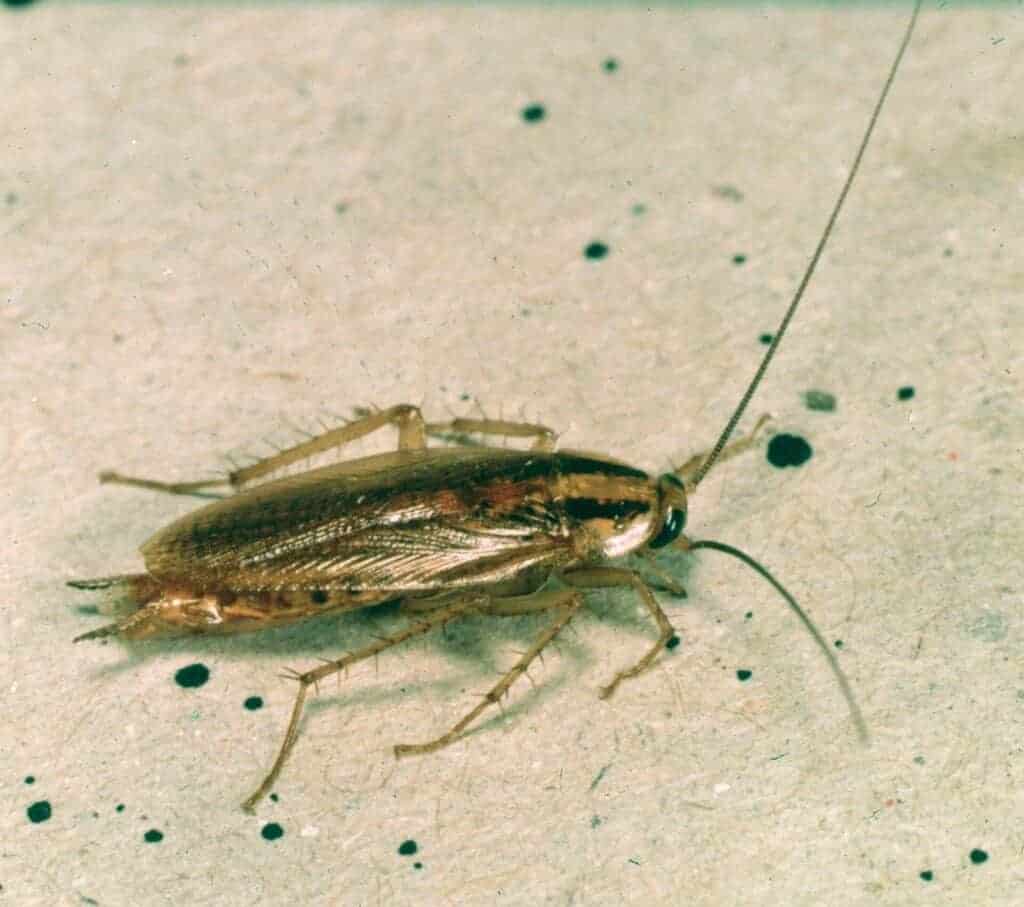
Identify the species first. German cockroaches live and breed indoors, mostly in kitchens and bathrooms, and multiply fast; larger species such as American and Oriental cockroaches usually come in from sewers, drains, or outdoors. The control plan differs.
Baits are the backbone of control. The University of Kentucky notes that householders get better results with baits than sprays, and that used correctly, baits can achieve results comparable to professional extermination. Many small dabs of gel bait in cracks, corners, and edges work better than a few large ones.
Skip foggers and broad spraying. The University of Kentucky does not recommend foggers for cockroaches, and Penn State notes that sprays and foggers are of little value against German cockroaches inside a structure. If roaches persist after a few weeks of good baiting, call a professional.
In This Guide
- Quick Answer
- Identify the Cockroach First
- DIY Steps That Work
- What Fails
- What a Pro Visit Looks Like
- What It Costs
- Prevention
- Common Questions
- References
Quick answer
- Identify the roach. Use our cockroach guide to tell German cockroaches from larger outdoor species.
- Set sticky traps against walls and in corners for a week to find where roaches concentrate.
- Clean up crumbs, grease, pet food, and standing water; store food in sealed containers; and take out trash nightly.
- Apply gel bait in many pea-sized dabs in cracks, hinges, corners, and anywhere you see droppings.
- Puff a fine layer of boric acid dust into voids behind appliances and under sinks, never on counters.
- Do not spray cleaners or insecticides around bait.
- Recheck traps and replace eaten bait every week or two until traps stay empty.
Identify the cockroach first
| Species | Where it lives | What it means | Guide |
|---|---|---|---|
| German cockroach | Kitchens, bathrooms, appliances; breeds indoors | A true indoor infestation; bait aggressively | German cockroaches |
| Brownbanded cockroach | Drier, warmer rooms; egg capsules under furniture | Treat bedrooms and furniture, not just the kitchen | Brownbanded cockroaches |
| American cockroach | Sewers, drains, basements, steam tunnels | Often entering from outside or plumbing | American cockroaches |
| Oriental cockroach | Damp basements, crawl spaces, drains | Moisture and entry points are the key | Oriental cockroaches |
| Smokybrown cockroach | Outdoors in mulch, trees, and gutters in the South | Exterior and entry-point control | Smokybrown cockroaches |
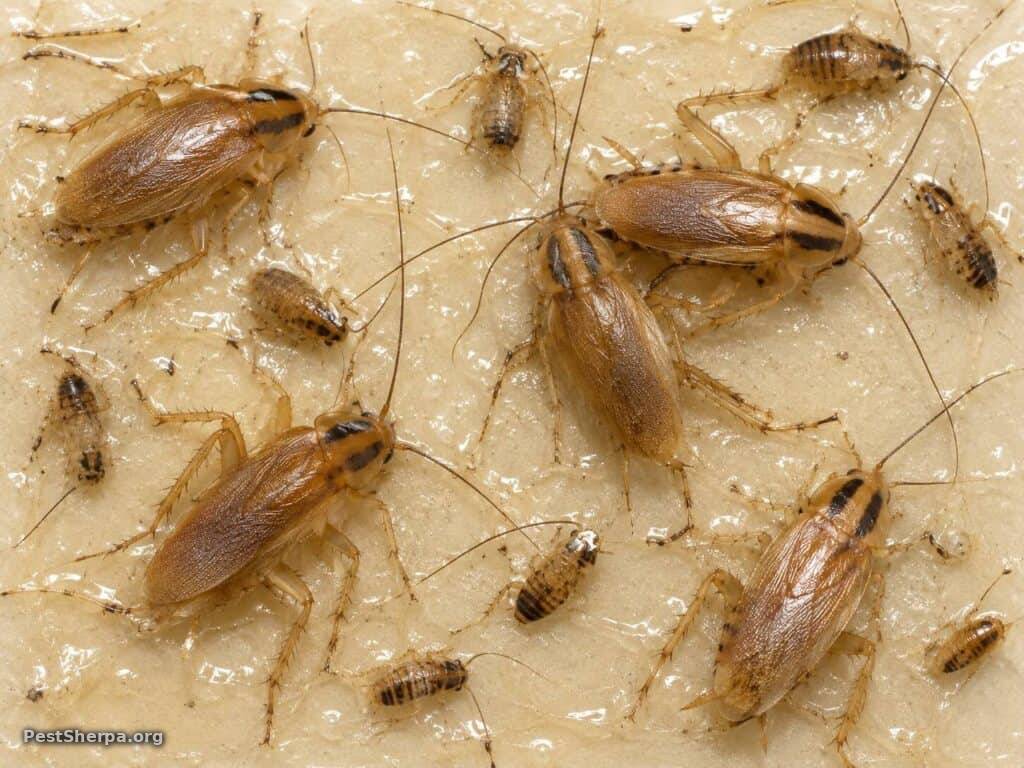
German cockroaches are the most common species in houses and other buildings. Each egg capsule holds up to 48 eggs, and the female carries it until it is about to hatch, which helps more nymphs survive. Penn State estimates that over 10,000 descendants can be produced in a year, assuming two generations. That is why a few German roaches today become a heavy infestation in a few months.
DIY steps that work
Map the infestation with sticky traps
Even a thorough inspection will not reveal every harborage. Penn State recommends a week of trapping at ten or more sites, with traps against walls or in corners of floors, shelves, drawers, and under equipment and counters. The traps with the most roaches tell you where to concentrate bait, and checking them later shows whether the plan is working.
Take away food, water, and shelter
Sanitation is a key factor in prevention and makes baits work better, because roaches with less competing food eat more bait. Wipe up grease and crumbs, especially around the stove and under appliances; store food, including pet food, in sealed containers; do not leave dirty dishes overnight; fix leaky faucets and pipes; and empty trash daily. Reduce clutter such as stacked bags, boxes, and papers. In apartments, sealing gaps around plumbing and wiring helps slow migration between units.
Bait the right way
Cockroach baits pair a slow-acting insecticide with a food attractant. Roaches do not travel far to find bait; they find it while foraging for food, so placement decides success.
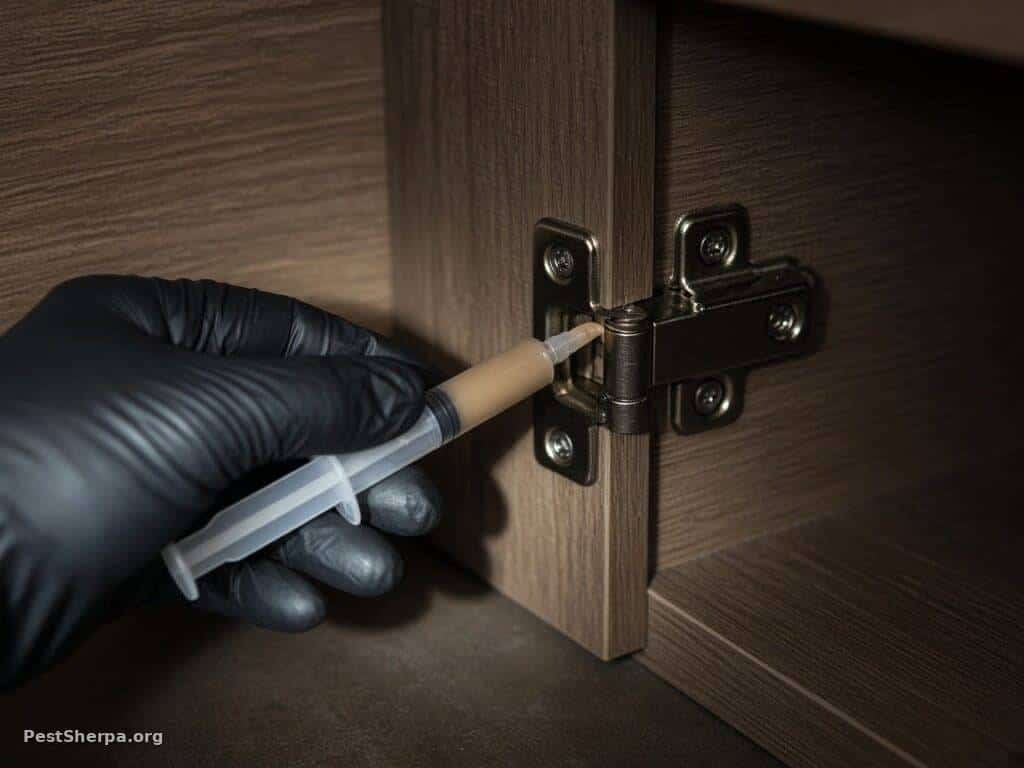
- Use many small, pea-sized dabs of gel rather than large globs or lines.
- Place bait in cracks, cabinet hinges and corners, the edges of drawers, and anywhere you see droppings or roaches.
- Set plastic bait stations flush against corners and cabinet edges, and put one behind or beneath any infested appliance.
- Do not spray cleaners or insecticides around bait placements; this can discourage roaches from feeding.
- Replenish bait as it is eaten. A roach that feeds typically dies within one to three days, and a substantial reduction should be apparent within a few weeks.
With baits, you usually do not need to empty kitchen cabinets or cover food surfaces before treating. Active ingredients used in effective roach baits include hydramethylnon, indoxacarb, fipronil, boric acid, DOT, and abamectin.
Add boric acid dust where roaches hide
Boric acid and disodium octaborate tetrahydrate (DOT) stay effective almost indefinitely as long as they stay dry. Apply it as a fine deposit barely visible to the eye, using a bulb or bellows duster, because roaches avoid heavy piles. Good places include the crevices along cabinet edges and corners, the wall and floor junction behind the refrigerator, stove, and dishwasher, and openings where plumbing enters the wall. Use a boric acid product labeled for cockroaches and follow its directions. Never apply it to countertops or food preparation surfaces, keep it out of electronics, and keep children away from treated areas. Many low-toxicity baits use boric acid or DOT as the active ingredient.
Use sprays only on harborage
If you use a spray, target the places roaches hide, such as cracks with fecal spotting and aggregations, and avoid spraying walls, floors, baseboards, and countertops. Roaches spend little time there and seldom stay long enough on a treated surface to absorb a lethal dose.
What fails
- Bug bombs and foggers. They seldom work, repel roaches deeper into walls, and can be flammable near pilot lights.
- Spraying baseboards and counters. Roaches rarely linger on those surfaces long enough to die, and repellent residues push them away from bait.
- A few big blobs of bait. Roaches find bait during normal foraging; many small placements beat a few large ones.
- Treating once and stopping. New nymphs hatch from egg capsules that bait does not reach, so placements must be checked and renewed.
- Myths about cleanliness and invincibility. We cover the most common misunderstandings in cockroach myths that waste your time.
What a pro visit looks like
A good cockroach service is mostly inspection, baiting, and follow-up. The University of Kentucky notes that many products professionals use remain effective for months.
The inspection
Expect the technician to identify the species, inspect kitchens, bathrooms, and appliances with a flashlight, look for droppings and egg capsules, and set monitoring traps. In apartments, adjoining units may need to be inspected too.
Your prep before the visit
- Clean the kitchen thoroughly, including under and behind appliances, but do not spray anything beforehand.
- Empty the cabinet under the sink and any heavily infested cabinets if the company asks.
- Store food in sealed containers and put pet food away at night.
- Tell the technician about asthma, allergies, pets, or a pregnancy in the home.
The treatment
- Gel or granular bait placed in cracks, hinges, voids, and appliance areas.
- Insecticidal dusts in wall voids and behind appliances.
- Insect growth regulators that interfere with development, often paired with or contained in a bait.
- Monitoring traps left in place to measure progress.
- Sealing and sanitation recommendations in writing.
Follow-up
Plan on at least one return visit to recheck traps and replace eaten bait, since large infestations need bait replenished. German cockroach infestations often take several visits, and more in multi-unit buildings.
Questions to ask before you book
- Which species do I have, and where are they living?
- Which baits and dusts will you use, and where?
- How many follow-up visits are included?
- What do I need to do between visits?
- Is there a guarantee, and what does it require of me?
Our guide to hiring a pro for German cockroaches covers what a complete job should include.
What it costs
Most cockroach jobs are priced as a treatment plus follow-up visits; only severe infestations that call for tenting and fumigation reach the top of the range.
If you are weighing a pro against more baiting on your own, compare what cockroach control costs for one-time and ongoing service.
Typical national ranges
- Cockroach pest control service: $100 to $600 (Angi, 2026)[3]
- Cockroach pest control service, one-time: $100 to $600 (HomeGuide, 2026)[4]
- Monthly service on a plan: $40 to $70 per visit (Angi, 2026)[3]
- Quarterly service on a plan: $100 to $300 per visit (Angi, 2026)[3]
These are national figures from consumer cost surveys, not quotes. Prices vary by region, home, and job, so treat them as a starting point for comparing written estimates.
What moves the price
- Species: German cockroach jobs usually need more visits than an occasional American roach.
- How many rooms and units are infested.
- Clutter and sanitation, which affect how well bait works.
- Number of follow-up visits included.
- Whether sealing and exclusion are part of the job.
One-time job or ongoing plan
A one-time visit rarely ends a German cockroach infestation; look for a quote that includes follow-up. For occasional invaders such as American or smokybrown roaches, a quarterly exterior plan can make sense in warm climates.
Red flags in a quote
- A fogging-only treatment.
- No clear prep instructions before service, such as which cabinets to empty and how to store food.
- No follow-up visit included for German cockroaches.
- No species identification.
- No clear expectations about results or how long control will take.
Get the species, the products, and the follow-up schedule in writing before you agree to a price.
Prevention
- Inspect grocery bags, boxes, used appliances, and secondhand furniture before bringing them in.
- Keep food sealed and counters, stovetops, and floors free of crumbs and grease.
- Fix leaks and keep sinks and drains dry overnight.
- Seal gaps around pipes, wires, and cabinets, and repair torn screens and door sweeps.
- Keep a few monitoring traps under the sink and behind appliances.
- Take trash and recycling out regularly.
For identification and the risks cockroaches carry, return to our cockroach guide. Penn State notes that cockroach droppings and cast skins contain allergens that can cause skin rashes, sneezing, congestion, and asthma. [Penn State Extension]
Common questions about getting rid of cockroaches
What is the fastest way to get rid of cockroaches?
Gel bait placed in many small dabs where roaches hide. The University of Kentucky notes that a roach that eats bait typically dies within one to three days, and a substantial reduction in the infestation should be apparent within a few weeks.
Do roach bombs work?
No. The University of Kentucky does not recommend foggers for cockroaches. They seldom work, their ingredients tend to repel roaches deeper into walls, and they can be flammable near an open flame. Penn State notes that sprays and foggers are of little value against German cockroaches.
Does boric acid kill cockroaches?
Yes, when it is applied correctly as a fine, barely visible dust in cracks and voids. Roaches avoid heavy piles of it. Keep it off food surfaces and out of reach of children.
Why do I still have roaches after spraying?
Sprays kill on contact but miss the roaches in cracks and voids, and roaches crossing treated baseboards often do not stay long enough to absorb a lethal dose. Repellent sprays near bait can also keep roaches from eating it.
Can a clean house get cockroaches?
Yes. Roaches can arrive in grocery bags, boxes, used appliances, and luggage, or move between apartments. Sanitation makes control work but does not guarantee prevention.
How long does it take to get rid of German cockroaches?
Expect a visible drop within a few weeks of good baiting, with follow-up placements over several more weeks to catch nymphs hatching from egg capsules. Heavy infestations and apartments usually take longer.
When should I call an exterminator for roaches?
Call when you have German cockroaches that persist after a few weeks of baiting, when the infestation is heavy or spreading between units, or when someone in the home has asthma or allergies.
References
- University of Kentucky Entomology, ENTFACT-614: Cockroach Elimination in Homes and Apartments
- Penn State Extension: German Cockroaches
- Angi, How Much Does Pest Control Cost? [2026 Data], updated October 9, 2026
- HomeGuide, How Much Does an Exterminator Cost?, January 9, 2026
This article was written by Greg Baumann, founder of Pest Sherpa, and reflects more than 40 years of professional pest management experience.
About the Author

Greg Baumann | Pest Control Expert
Greg Baumann is the founder of Pest Sherpa and a Pest Control Expert with more than 40 years of professional pest management experience. His articles combine decades of field experience, technical expertise, and science-based guidance to help homeowners identify pests correctly, understand real-world risks, and make informed pest management decisions.
Mission: Identify the pest. Understand the risk. Stop the problem. Prevent the comeback. Know when it’s time to call a professional.