
Mud Dauber Wasps: Identification, Mud Nests, and What to Do
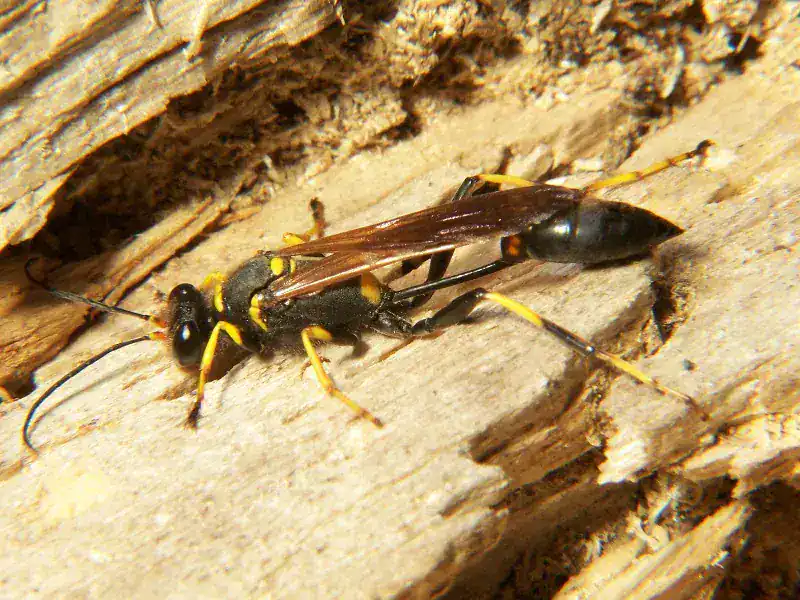
The gray or brown mud nests beneath roof eaves may be the work of mud dauber wasps, not termite shelter tubes or the exposed paper combs built by paper wasps. Mud dauber nests range from irregular mud masses to parallel tubes resembling organ pipes. These solitary wasps provision their nest cells with paralyzed spiders for their developing young. Mud daubers are generally nonaggressive and rarely sting unless handled or provoked. This guide explains how to identify mud daubers, recognize their nests, distinguish them from look-alike species, and determine when nest removal is necessary.
Key Points
Mud daubers are solitary, slender wasps with narrow, thread-like waists that build or reuse mud nests beneath eaves, on walls, in sheds, attics, and other sheltered locations. Common genera include Sceliphron, Chalybion, and Trypoxylon. Females provision nest cells with paralyzed spiders that serve as food for their developing young. Some species, particularly the blue mud dauber (Chalybion californicum), commonly hunt black widow spiders and are beneficial.
The risk of being stung is very low. Unlike social wasps such as paper wasps and yellowjackets, mud daubers do not have colonies of workers that aggressively defend their nests. Although capable of stinging when handled or provoked, they generally pose little threat to people. For most homeowners, their mud nests are more of an aesthetic nuisance than a safety concern.
The best recommendation is to leave mud daubers undisturbed whenever possible, because they are not harmful. If nests are objectionable, remove them after they are inactive, using a putty knife or scraper, and clean away the remaining mud. Cleaning improves the appearance of the surface but does not necessarily prevent future nesting. Insecticide treatments are generally unnecessary because mud daubers are solitary, nonaggressive wasps that do not defend their nests.
In This Guide
- Identification
- Nest Types and Life Cycle
- Look-alikes
- Sting Risk and Benefits
- What To Do
- Prevention
- Seasonal Timing
- Frequently Asked Questions
- References
How to identify a mud dauber
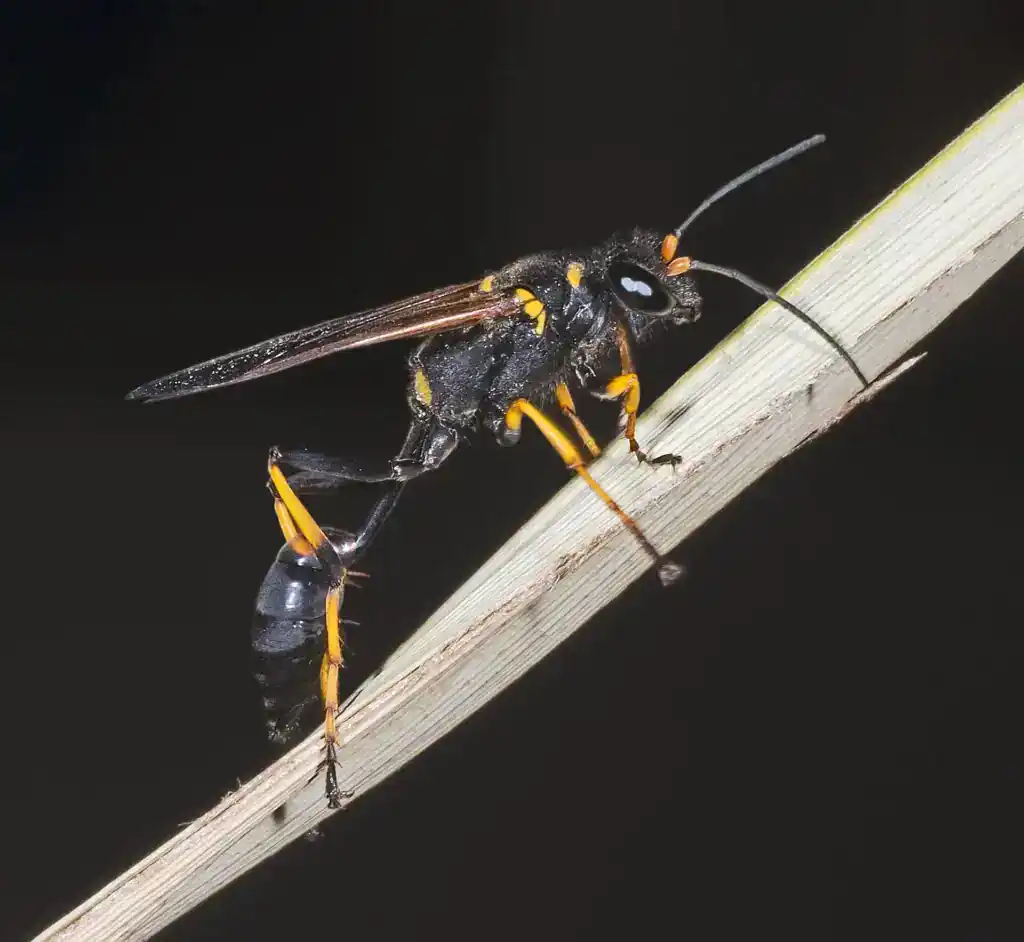
The black-and-yellow mud dauber (Sceliphron caementarium) is the classic: black body with yellow markings, yellow on the legs, and a very long, thin pedicel between thorax and abdomen. Females are about an inch long. The common blue mud dauber (Chalybion californicum) is metallic blue-black and often reworks older nests. Organ-pipe mud daubers (Trypoxylon politum) are dark and build neat side-by-side mud tubes. [UF/IFAS Featured Creatures] [Missouri Department of Conservation]
| Feature | Mud dauber | Paper wasp |
|---|---|---|
| Waist | Extremely long and thin | Narrow but not threadlike |
| Nest material | Mud | Paper (chewed wood fiber) |
| Social? | Solitary | Social colony |
| Defends nest? | No | Yes |
| Sting likelihood | Very low | Moderate near nest |
Nest types and life cycle
A female mud dauber gathers mud in her mandibles, builds a nest cell, provisions it with paralyzed spiders, lays one egg, and seals the cell. Nest appearance varies by species. The black-and-yellow mud dauber (Sceliphron caementarium) constructs clusters of cells that may form a rounded, fist-sized lump. The blue mud dauber (Chalybion californicum) commonly renovates nests built by other mud daubers, often leaving an irregular, lumpy appearance. The organ-pipe mud dauber (Trypoxylon politum) constructs distinctive parallel mud tubes resembling organ pipes.
After hatching, larvae feed on the stored spiders and eventually pupate within their nest cells. When development is complete, adult wasps emerge through holes in the mud. Depending on the species and climate, immature wasps may overwinter inside the nests. [UF/IFAS Featured Creatures] [UC ANR Green Blog]
UC ANR reports that a large nest may contain 15 to 20 cells and more than 500 spiders, although the number varies by species, nest size, and available prey. Blue mud daubers frequently reuse existing nests and are especially noteworthy because they prey on black widow spiders. Adults are active during daylight, primarily during the warmer months, and visit flowers for nectar. In temperate regions, activity generally occurs from spring through summer, although the timing varies with local conditions. [UC ANR Green Blog] [Missouri Department of Conservation]
Nests commonly appear beneath eaves, on porch ceilings, in sheds, on attic framing, and beneath bridges. Mud daubers may also nest in inconvenient locations, including equipment housings, openings, and occasionally ventilation systems. Nests that obstruct airflow or interfere with equipment should be removed, with the affected opening or equipment inspected to ensure it is clear. Preventing future access is generally preferable to insecticide treatment. Mud daubers do not require the same defensive precautions normally associated with removing an active yellowjacket nest.
Look-alikes
- Paper wasps: build open, umbrella-shaped paper nests and defend the comb. See the Paper wasp guide.
- Potter and mason wasps: Some species also use mud for nesting. Potter wasps may construct small, jug-shaped mud cells, while certain mason wasps use mud to partition existing cavities. Their nests can sometimes be mistaken for those of mud daubers.
- Yellowjackets and hornets: are social, build enclosed or cavity nests, and are defensive. See Yellowjackets and European hornets.
- Cicada killers and other digger wasps: nest in soil, not in lumps of mud on the eaves. See the Cicada killer guide.
- Termite shelter tubes: mud tubes on a foundation are not mud dauber nests. Shelter tubes are soil-colored passageways used by subterranean termites. See signs of termites.
An exposed comb of paperlike material suggests paper wasps rather than mud daubers. Clusters of hardened mud cells or parallel, organ-pipe-shaped tubes beneath an eave strongly suggest mud daubers, particularly when slender, narrow-waisted wasps are observed entering or constructing the nests. However, nest shape and construction should be examined before making a definitive identification.
Sting risk and benefits
Mud daubers are generally docile and rarely sting people. UF/IFAS describes stings by the black-and-yellow mud dauber as rare and generally of little medical significance, while Iowa State University Extension notes that mud daubers are very unlikely to sting even when provoked. Unlike social wasps such as paper wasps and yellowjackets, mud daubers do not collectively defend their nests. Stings are uncommon and generally occur when a wasp is handled roughly or accidentally trapped against the skin. As with other stinging insects, allergic reactions are possible. [UF/IFAS Featured Creatures] [Iowa State Extension]
Mud daubers provide a natural ecological benefit by hunting spiders to provision their nest cells with food for their developing young. Blue mud daubers (Chalybion californicum) are particularly noteworthy for preying on black widow spiders and reusing nests built by other mud daubers. Their hunting contributes to natural spider predation, although the extent to which they reduce spider populations around individual homes is uncertain. [UC ANR Green Blog] [Missouri Department of Conservation]
Mud daubers are best regarded as beneficial wasps that occasionally leave unsightly mud nests beneath eaves and on other sheltered surfaces. In most situations, they can be left undisturbed rather than treated as a stinging-insect emergency. For the nests that do deserve caution, see my Bees and Wasps guide.
What to do
- Prefer tolerance. If the nest is not blocking a vent, switch, sensor, or work area, leave it. [Iowa State Extension]
- Scrape and discard. At night, or while the wasp is away, scrape the nests into a bag and discard them. Wear gloves and eye protection to guard against debris; a putty knife or paint scraper is sufficient.
- Clean the scar. Wire-brush and wash the surface so that new mud adheres less readily.
- Repeat as needed. Females may rebuild in favored sheltered locations, and frequent removal is the practical deterrent.
- Skip routine spraying. Aerosol wasp sprays will work if you insist on using them, but you are addressing a cosmetic issue, not a nest that threatens public safety.
What not to do
- Do not respond to mud daubers with the alarm and heavy spraying appropriate to yellowjackets.
- Do not seal a nest inside a wall void on the assumption that you have paper wasps without first confirming the identification.
- Do not destroy every nest if black widows are your greater concern and blue mud daubers are active.
- Do not confuse mud cells with termite shelter tubes on a foundation.
Prevention
Preventing mud dauber nests is largely a matter of limiting access to sheltered nesting locations and removing nests where they cause problems, rather than attempting to eliminate these solitary wasps from the area.
- Reduce access to nesting locations: Seal openings into soffits, repair damaged screens, and close unused equipment housings where practical. Use appropriate screening on ventilation openings only where permitted by building codes and equipment manufacturers. Never install hardware cloth or other screens over dryer exhaust outlets, because accumulated lint can restrict airflow and create a fire hazard.
- Eliminate unnecessary mud sources: Repair dripping hose bibs and correct persistent puddles near buildings. Female mud daubers gather moist soil to construct their nests. Removing convenient mud sources may discourage nesting nearby, although wasps can obtain mud elsewhere.
- Clean areas after nest removal: Scrape unwanted nests from suitable surfaces and wash away remaining mud with soap and water. Cleaning removes residue and improves appearance, but does not guarantee that new nests will not be built in the same location.
- Tolerate nests where practical: Mud daubers are generally beneficial and rarely sting. Leaving nests undisturbed in out-of-the-way locations, such as shed walls, allows these wasps to continue hunting spiders. Blue mud daubers are particularly notable for preying on black widow spiders.
- Identify the wasp before taking action: Paper wasps and yellowjackets are social insects that may aggressively defend their colonies. Correct identification helps homeowners avoid unnecessary insecticide treatments and distinguish solitary mud daubers from more defensive wasps. See the paper wasp and yellowjacket guides.
If nests repeatedly appear inside living spaces or interfere with ventilation or equipment, inspect the area, remove nests as needed, and correct accessible entry points. Check problem locations periodically during the nesting season rather than waiting until fall. Avoid disturbing active nests when possible, since sealed cells may contain developing wasps. Use only appropriate vent covers or other exclusion measures that maintain required airflow.
If you have questions about an unusual nest site, Ask the Ask the Sherpa.
Three common mud daubers you might have
Three recognizable mud daubers found around homes in the United States can often be distinguished by their appearance and nesting habits. Nest shape is particularly helpful for identification, although observing the adult wasp provides additional confirmation.
- Black-and-yellow mud dauber (Sceliphron caementarium): A slender black wasp with yellow markings and a long, narrow waist. Females construct clusters of elongated mud cells that are often covered with an additional layer of mud, producing a rounded, lumpy nest. The nests may reach the size of a lemon or fist. These wasps prey on various spiders, with a preference for orb-web-building species. [UF/IFAS]
- Blue mud dauber (Chalybion californicum): A metallic blue-black wasp that commonly reuses nests originally built by black-and-yellow mud daubers. Females soften existing mud with water, reopen cells, and provision them with spiders captured for their young. Black widow spiders are a notable prey item. Renovated nests may have an irregular, lumpy appearance, although nest shape alone does not establish which species occupies them. [UC ANR] [Missouri Department of Conservation]
- Organ-pipe mud dauber (Trypoxylon politum): A predominantly black wasp with dark, bluish wings and pale markings on portions of its hind legs. Females build long, parallel mud tubes resembling the pipes of an organ. Each tube contains multiple cells provisioned with paralyzed spiders, often orb-weavers. Although solitary, this species has an unusual behavior: males may guard the nest entrance while females collect mud and hunt spiders. Males cannot sting, and these wasps generally pose little threat to people.
Other thread-waisted and solitary wasps occur regionally. Many digger wasps, including cicada killers, excavate nesting burrows in the soil rather than constructing exposed mud nests beneath eaves. Some other solitary wasps also use mud in their nests, so both the nest structure and the insect should be considered when identifying the species. See the cicada killer guide.
Adults feed on nectar, and only the larvae consume the stored spiders. That is why eliminating adults on flowers does little to reduce nests on the eave and it eliminates a beneficial insect.
Spider prey and black widows
Mud dauber nests can provide an interesting glimpse into the spiders these wasps capture. If you carefully open an abandoned nest outdoors, you may find spider remains or, in cells where the developing wasps have not yet consumed their food, numerous paralyzed spiders. The species present reflect the hunting preferences of the mud daubers rather than a complete survey of spiders living on your property. Blue mud daubers (Chalybion californicum) are particularly noted for preying on black widow spiders, one reason university Extension specialists recommend tolerating these generally harmless wasps. [UC ANR Green Blog] [Missouri Department of Conservation]
If black widow spiders are a concern, preserving mud dauber nests in out-of-the-way locations allows these natural predators to continue hunting. Although their impact on black widow populations around individual homes is uncertain, removing every nest eliminates opportunities for beneficial wasps to develop. Remove nests where they cause problems, such as around frequently used windows, but consider leaving those on distant shed walls undisturbed. Combine this approach with basic spider prevention, including reducing clutter, removing unwanted webs, and sealing entry points, as described in the spider guide.
When mud nests become more than cosmetic
UF/IFAS notes unusual nest sites in deck umbrellas, garage lights, equipment and even in vehicles. A nest inside a dryer vent, an electrical disconnect, or a sensor housing can matter, but it remains a matter of scraping and prevention rather than an emergency. After removal, screen the opening so that the next female chooses a fence board instead. [UF/IFAS Featured Creatures]
Compare any paper comb you find with the paper wasp guide, so that you neither underestimate a defensive colony nor overreact to a mud nest.
Homeowner decision tree
Work through these questions before you buy a can of wasp spray:
- Is the nest made of mud cells or organ-pipe tubes, with a thin-waisted wasp? It is a mud dauber nest; leave it or scrape it. The risk of stings is low.
- Is it an open, umbrella-shaped paper comb? It is a paper wasp nest, and the risk increases with the size of the nest and the amount of nearby traffic. Follow the paper wasp guide.
- Is it an enclosed aerial paper nest, or a hole in the ground with heavy traffic? Suspect yellowjackets or hornets, which call for a different and very careful approach.
- Is the “mud” a tube on a foundation leading into the soil? Suspect a termite shelter tube, and see signs of termites.
- Is the nest inside a dryer vent, sensor, or equipment housing? Scrape it, discard it, and screen the opening. If screening a dryer vent, do not use window screen but make sure that the vent closes when the dryer is not in use. It is still not an emergency, but do not neglect airflow or safety devices.
When in doubt, photograph the nest and the wasp, including a side view of the waist, before you spray. A misidentification wastes product and can eliminate a predator of black widows that you would have preferred to keep. Use this site for help in identifying type of insect.
Seasonal timing for scrape-or-leave decisions
In temperate regions, adult mud daubers are most active from late spring through summer, when females construct and provision nests. Activity varies by species and local climate. During winter, adult activity generally ceases, but sealed mud cells may still contain developing larvae or pupae that will emerge the following spring or summer. Small, round exit holes indicate that adults have emerged from those cells, although other cells in the same nest may remain occupied.
If you want to preserve the beneficial spider-hunting activity of mud daubers, leaving nests undisturbed on out-of-the-way walls is a sensible choice. Blue mud daubers are particularly noteworthy for preying on black widow spiders. If a nest is located above a frequently used doorway or in another inconvenient location, it can be carefully scraped away and the remaining mud cleaned from the surface. Removing nests during the nesting season may destroy developing wasps, so leave them undisturbed when practical.
During fall and winter, mud dauber nests may appear abandoned even when immature wasps remain inside. Nests with emergence holes in all cells are generally empty, while sealed cells may still contain developing wasps. Old nests can also be reused by blue mud daubers or occupied by other insects. When removal is necessary, wear gloves and appropriate protective clothing and avoid direct contact with wasps. Mud daubers rarely sting and do not aggressively defend their nests, so insecticide treatment is generally unnecessary.
Common questions about mud daubers
Do mud daubers sting?
Almost never. They are solitary and do not defend their nests as paper wasps and yellowjackets do, so a sting usually requires rough handling.
Are mud daubers dangerous?
No. They are regarded as beneficial hunters of spiders, and the main complaint about them is the untidy mud nests they leave on buildings.
What do mud daubers eat?
Adults feed on nectar, while the larvae eat the paralyzed spiders that the female stores in each mud cell. Blue mud daubers are known for hunting black widows.
Mud dauber vs paper wasp?
Mud daubers have a very thin, thread-like waist and build mud nests. Paper wasps are social, build open paper combs, and will defend those nests.
How do I remove a mud dauber nest?
Scrape it off after dark or while the wasp is away, then bag and discard it. If the location matters to you cosmetically, repeat the process as new nests appear; chemical control is optional.
Will mud daubers damage my house?
The nests are unsightly but do not cause structural damage. In rare cases, nests inside equipment, vents, or openings in aircraft and vehicles can cause mechanical problems.
Why are there holes in the mud nest?
They are emergence holes, which adult wasps chew when they finish developing. Old nests may also be reused or remodeled by blue mud daubers.
Should I spray mud daubers?
Usually not, since scraping the nests is sufficient. If you do spray, use a product labeled for wasps, and recognize that you are treating an aesthetic issue rather than a safety emergency.
Send a photograph to Ask the Sherpa if you would like help identifying a nest.
References
- UF/IFAS Featured Creatures: Black and Yellow Mud Dauber (EENY-654)
- Iowa State Extension: Mud Dauber Wasp
- Missouri Department of Conservation: Mud Daubers
- UC ANR Green Blog: Why mud daubers are on spider patrol
- Oklahoma State Extension: Mud Daubers
This article was written by Greg Baumann, founder of Pest Sherpa, and reflects more than 40 years of professional pest management experience.
About the Author

Greg Baumann | Pest Control Expert
Greg Baumann is the founder of Pest Sherpa and a Pest Control Expert with more than 40 years of professional pest management experience. His articles combine decades of field experience, technical expertise, and science-based guidance to help homeowners identify pests correctly, understand real-world risks, and make informed pest management decisions.
Mission: Identify the pest. Understand the risk. Stop the problem. Prevent the comeback. Know when it’s time to call a professional.