
Spider Myths That Scare People More Than the Spiders Do
Key Points
- Most spiders are not dangerous to people. They generally avoid contact, and bites are uncommon compared with the number of spider encounters.
- Not every unexplained skin wound is a spider bite. Many suspected bites are never confirmed and may have other medical causes.
- Brown recluse spiders do not live everywhere. Established populations are concentrated in parts of the central and south-central United States.
- Spider identification matters. Color and a supposed violin-shaped marking are not enough to identify a brown recluse. See the spiders hub.
- Prevention works better than panic. Reducing hiding places, sealing entry points, and removing unwanted spiders are generally more useful than widespread pesticide applications.
- Recommended approach: photograph a spider before you remove it, and use the linkable facts if you cite this page.
In This Guide
- Why spider myths spread
- Myth: they chase people
- Fact: unconfirmed bites
- Myth: recluse everywhere
- Fact: range and look-alikes
- Myth: daddy long-legs venom
- Fact: free pest control
- Myth: fog the house
- What to do this weekend
- When to call a pro
- Linkable facts
- FAQ
- References
Why spider myths spread
Spider myths spread quickly because fear often replaces identification. A blurry photograph becomes a brown recluse, an unexplained skin lesion becomes a spider bite, and a harmless cellar spider becomes the subject of an exaggerated story about deadly venom.
In reality, most spiders encountered around American homes pose little medical risk. Spiders are predators that feed on insects and other small arthropods. Their presence is generally a normal part of the environment. In my experience, the simplest way to find the truth in pest management is to go to authoritative publications by researchers, and the research on spiders is far calmer than the internet. Use this guide together with brown recluse, yellow sac, jumping spiders, and hobo spiders.
A few species, particularly certain widow and recluse spiders, deserve greater caution. However, the possibility of encountering a medically significant spider should not turn every spider sighting into an emergency.
The most useful response is to identify the spider, understand its behavior, and decide whether control is necessary.
For additional information about common species, visit the Pest Sherpa spider guide.
Fear of spiders is common, identification from a phone photo is difficult, and medical folklore fills the gaps. UC IPM and clinical sources consistently call for accurate identification and a proportionate response. [UC IPM] [Mayo Clinic] [CDC NIOSH]
Misconception
“That spider is chasing me”
The evidence: Spiders do not ordinarily pursue people as prey. Humans are far too large to be food for spiders, and most species attempt to escape or remain motionless when disturbed.
A spider running toward someone’s feet may appear to be chasing them, but the movement is usually incidental rather than an attempt to attack. Some spiders move rapidly when disturbed. Others may stand their ground, especially when guarding an egg sac or shelter. Movement toward a person does not, by itself, indicate aggressive behavior.
What homeowners should do: Avoid handling an unidentified spider with bare hands. If removal is necessary, place a clear container over the spider, slide a stiff card underneath, and move it to a suitable location.
WHAT THE EVIDENCE SHOWS
Many “spider bites” never include a spider
Many skin lesions attributed to spiders occur without anyone seeing a spider bite.
Skin infections, other arthropod bites, allergic reactions, and several noninfectious medical conditions can produce symptoms that resemble suspected spider bites.
Brown recluse spiders are particularly likely to be blamed for unexplained wounds, including in locations where established brown recluse populations are absent.
A confirmed spider bite is most reliably established when the spider is observed biting or when you can associate an accurately identified spider with the injury.
Even in areas where brown recluse spiders occur, a suspicious skin lesion should not automatically be attributed to one.
What homeowners should do: Seek medical evaluation for serious, worsening, or unexplained wounds. If a spider is safely available, preserve it for identification, but do not delay medical care while attempting to catch one.[Mayo Clinic]
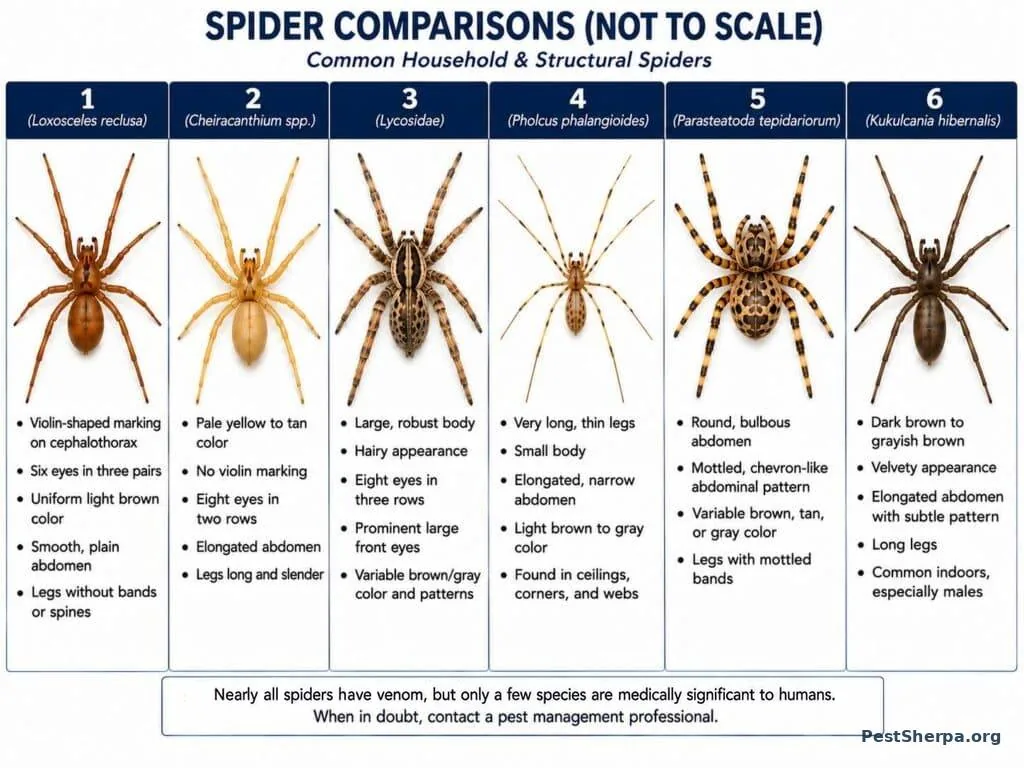
Identifying the spiders above:
- Brown Recluse Spider (Loxosceles reclusa)
- Yellow Sac Spider (Cheiracanthium species)
- Wolf Spider (family Lycosidae)
- Cellar Spider (Pholcus phalangioides)
- Common House Spider (Parasteatoda tepidariorum)
- Southern House Spider (Kukulcania hibernalis). The tan, long-legged males are the ones people find wandering and mistake for recluses; the females are velvety dark brown and stay in their webs.
MISCONCEPTION
“Brown recluses are in every state”
The evidence: Brown recluse spiders (Loxosceles reclusa) have a geographic distribution concentrated in parts of the central and south-central United States.
Their established range includes much of the lower Midwest and portions of neighboring southern states. They are not established throughout the country.
An individual brown recluse can occasionally be transported outside its established range in furniture, boxes, or other belongings. Finding an isolated transported specimen does not mean a breeding population exists in that area.
Other recluse species occur in portions of the Southwest, and a few introduced recluse species have localized populations. The distribution of these species should not be confused with that of the brown recluse.
Read the brown recluse guide for the limits of the violin marking, the eye arrangement, and the species’ actual range before you treat a closet with chemicals.
WHAT THE EVIDENCE SHOWS
Look-alikes and regional species deserve better than panic labels
Yellow sac spiders and other common hunting spiders are often blamed for recluse incidents. Hobo spiders carry their own outdated reputation for causing necrotic wounds in the Northwest. Joro spiders generate alarming headlines but pose little practical risk to most people.
Photograph the pattern on the spider’s back, the eye arrangement if possible, and the location where you found it.
MISCONCEPTION
“Daddy long-legs are the most venomous spiders”
The evidence: the viral claim confuses several different animals that share the name “daddy long-legs.” Harvestmen are not spiders and have no venom glands at all, and cellar spiders have weak venom that is no threat to people. There is no evidence that either one has super-powerful venom. Nearly every spider has venom, which is how spiders subdue insect prey, and only a tiny fraction of species can make a person ill. Do not base decisions on internet toxicology. [Burke Museum]
WHAT THE EVIDENCE SHOWS
Most house spiders eat pests you like less than spiders
Leaving a cellar spider in a corner often means fewer small flies and other small insects. If spiders in sleeping areas trouble you, reduce clutter and seal gaps rather than fogging every room.
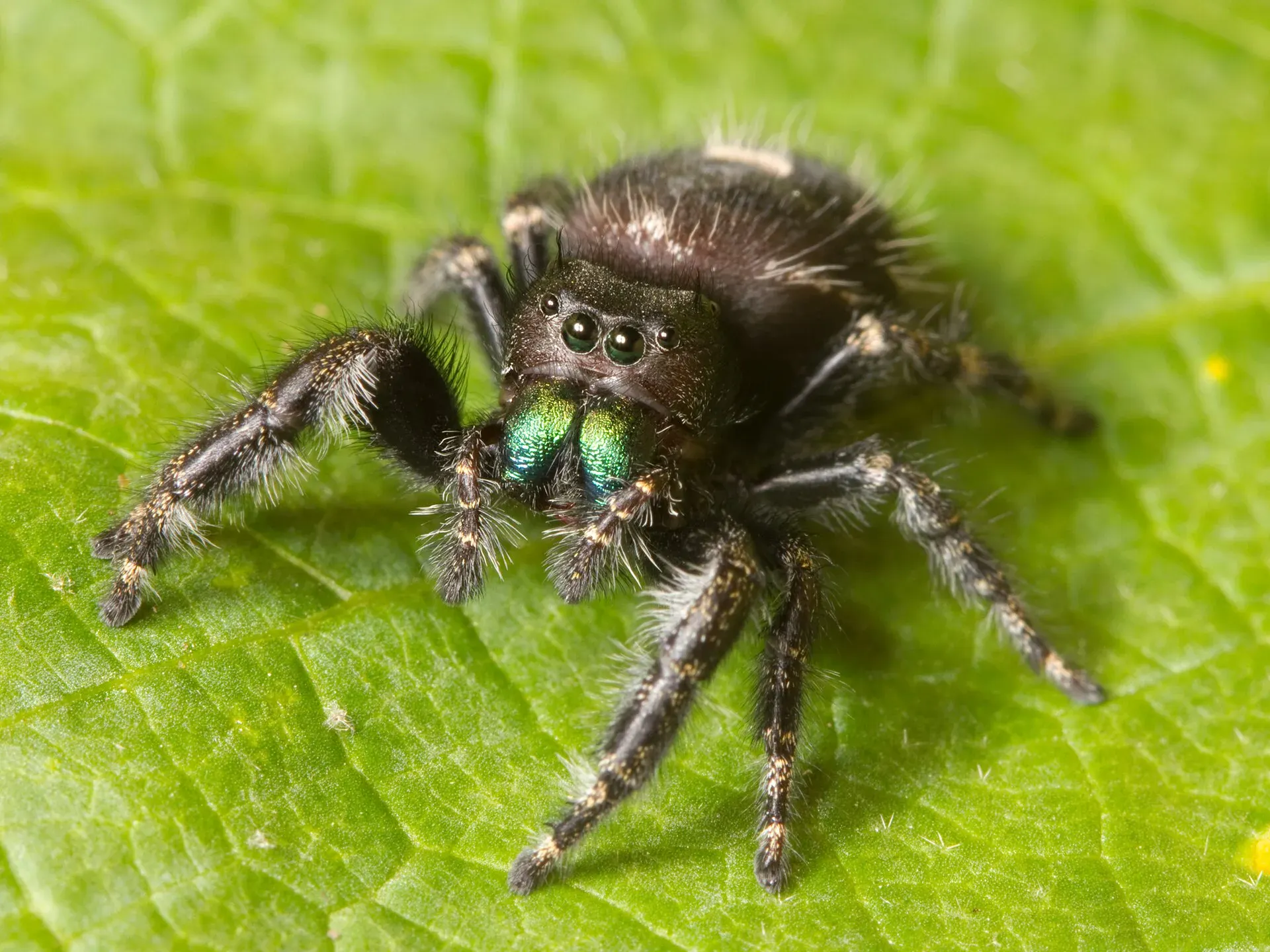
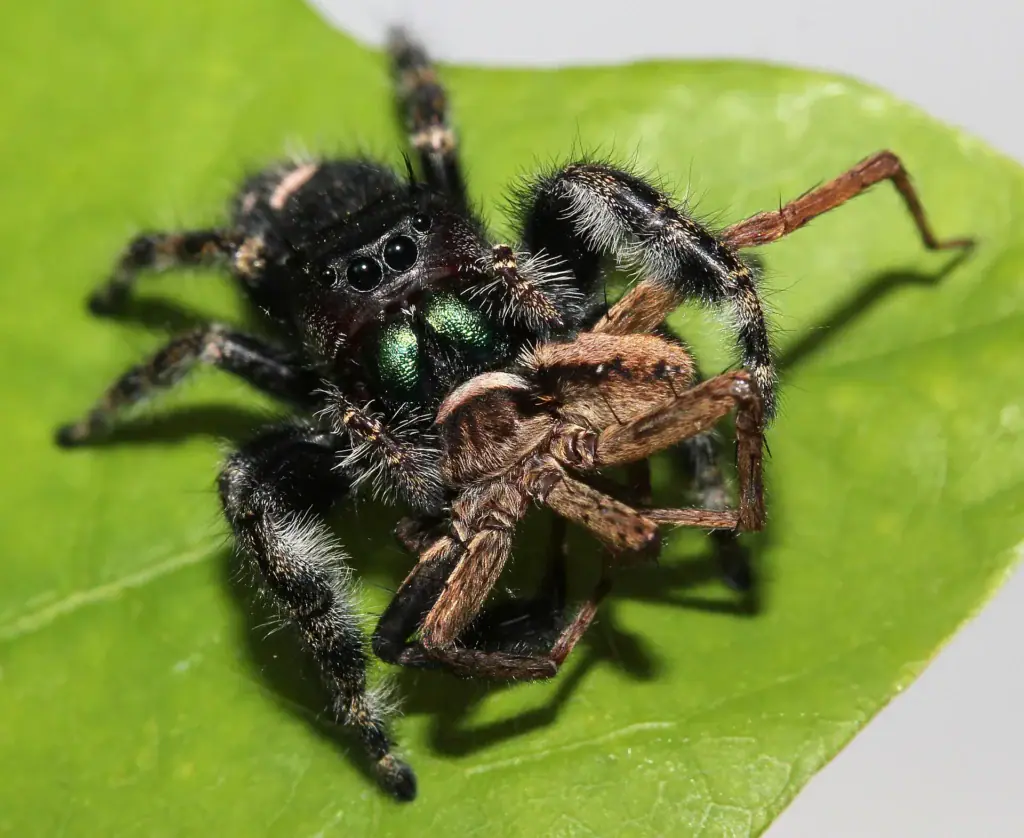
Jumping spiders are daytime hunters with large forward-facing eyes. They can appear bold, but they are not a public health concern.
MISCONCEPTION
“Fog the house whenever you see a web”
The evidence: broadcast foggers are a poor approach to spiders. They miss the places where spiders shelter, expose people and pets to pesticide, and kill predators that were feeding on other insects.
Vacuum webs, reduce the exterior lighting near doors that draws insect prey, and keep bedrooms uncluttered.
WHAT THE EVIDENCE SHOWS
Bedrooms are where spider standards can be stricter
Wanting a spider-free area next to a crib is entirely reasonable. Pull beds away from the walls, reduce storage beneath them, and in recluse territory, check shoes left on the floor. That is sensible caution, not a campaign against every spider in the house.
How to take an ID photo worth sending
Accurate identification begins with a useful photograph or an intact specimen.
When safe, photograph the spider from above so the body shape, coloration, and markings are visible.
Include an object of known size for scale, without placing your hands near the spider.
Record the city and state where the spider was found, along with its location around the house. Geographic information can be particularly important when evaluating suspected brown recluse spiders.
Photographs may not show enough detail for species-level identification. Important characteristics, such as the eye arrangement of recluse spiders, can require examination under magnification.
Do not attempt to manipulate a potentially dangerous spider simply to photograph its eyes.
If identification is important and the spider can be collected safely, an intact specimen may be examined by a qualified entomologist, university Extension specialist, or knowledgeable pest management professional.
For identification assistance, visit What Bug Is This? or compare them against the brown recluse and yellow sac pages before you discard clothing or call a pest control company over a single cellar spider.
Practical Precautions in Brown Recluse Territory
In regions where brown recluse populations are established, a few precautions can reduce the likelihood of accidental contact.
Brown recluse spiders favor sheltered, relatively undisturbed locations. They may be encountered in storage boxes, closets, basements, attics, and other protected spaces.
Spiders may bite defensively when trapped against the skin by clothing, shoes, or bedding.
Practical precautions include:
- Shake out shoes and clothing that have been stored or left on the floor.
- Keep beds slightly away from walls, and prevent bedding from touching the floor.
- Reduce clutter beneath beds and in closets.
- Store seldom-used clothing and equipment in closed containers.
- Wear gloves when handling stored materials in garages, sheds, or other undisturbed locations.
- Use sticky monitoring traps along walls in suitable locations, keeping them away from children and pets.
These precautions are useful where recluse spiders are established or have been confirmed in a building. They do not justify assuming that every brown spider is a recluse.
Kids, classrooms, and proportional responses
Teach children not to handle spiders with bare hands, and encourage adults not to describe every spider as deadly. Measured language keeps people safer, because it preserves credibility for the occasion when a medically significant spider is actually identified.
Beneficial hunters such as many jumping spiders can remain in garages and gardens, while sleeping areas are held to a stricter standard.
What spider webs tell you
Spider webs provide clues about the kinds of spiders occupying an area and the locations where they are capturing prey.
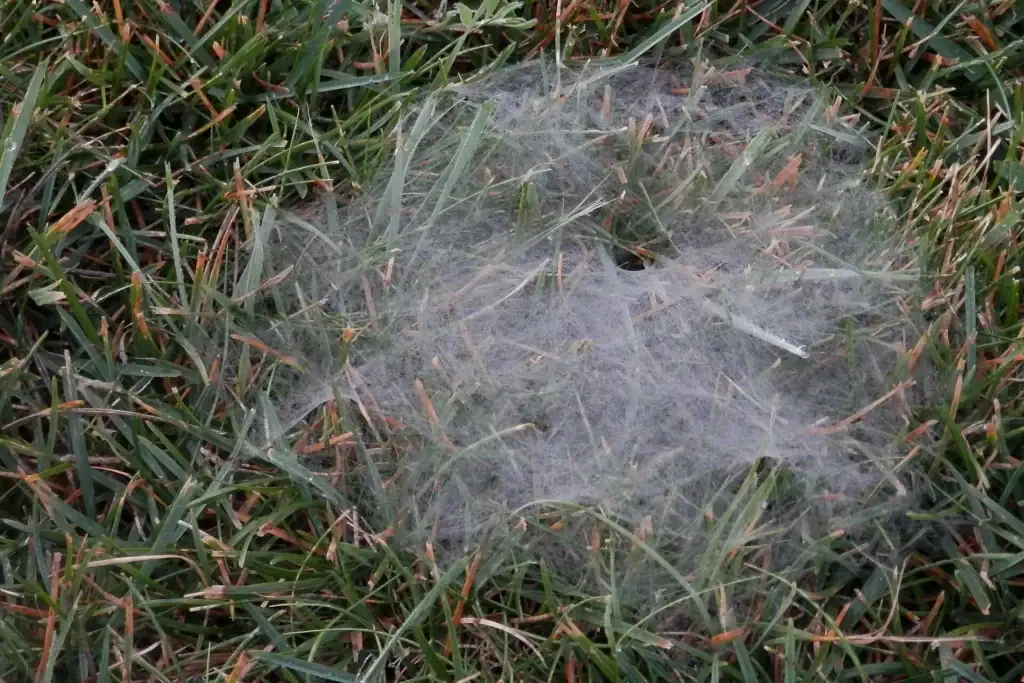
Orb-weaving spiders construct recognizable circular webs, commonly found outdoors. Cellar spiders build irregular, tangled webs in protected indoor locations. Grass spiders and certain other funnel weavers construct sheet-like webs with funnel-shaped retreats.
Web structure can help narrow an identification, but it is not always sufficient to identify a species.
Spider webs also indicate that the location offers suitable shelter or opportunities to capture prey. However, a web alone does not establish the presence of an insect infestation.
Removing webs may temporarily improve appearance, but spiders can rebuild them when conditions remain favorable.
When a suspected bite requires a medical visit
Most spider bites cause minor symptoms or no significant medical problems.
However, bites from certain widow and recluse spiders can cause serious illness or injury.
Seek prompt medical evaluation when a medically significant spider bite is suspected, or when symptoms include severe or increasing pain, abdominal cramping, a worsening wound, fever, or spreading redness.
Difficulty breathing or swallowing requires immediate emergency medical attention.
For a suspected minor bite, gently clean the area with soap and water and apply a cool compress. A medical professional can determine whether further treatment is necessary.
Do not cut the wound, attempt to extract venom, or assume a worsening lesion must have been caused by a spider.
Clinical assessment is more reliable than identifying the cause of a wound from an internet photograph.
Garages, sheds, and gloves as default tools
Stacks of cardboard boxes in a garage make ideal spider habitat because they are dark, undisturbed, and full of insect prey. Break down the boxes you do not need, and wear gloves when moving items that have sat idle in recluse-range storage. The advice is deliberately unglamorous.
For the necrotic-wound folklore of the Pacific Northwest, read hobo spiders before you fill a basement with pesticide over a misidentification.
Porch lights, insects, and spiders
Outdoor lighting can influence spider activity by attracting flying insects that become prey.
Reducing unnecessary nighttime lighting may reduce insect concentrations around entrances and windows.
Where outdoor lighting is needed, warmer-colored or yellow insect-attractant-reducing lamps can be useful, although results vary with the type of light and the insects present.
Positioning lights away from doors and directing illumination toward the entrance may also help.
Combining lighting adjustments with door sweeps, intact screens, and sealed gaps is more effective than relying on lighting changes alone.
These measures reduce opportunities for insects and wandering spiders to enter buildings.
What to do this weekend
Reducing unwanted spider encounters usually begins with simple maintenance.
- Inspect: Look for spiders, webs, and egg sacs around windows, storage areas, basements, and entry points. Consult the spiders hub and the species guides if you find spiders.
- Remove: Vacuum unwanted spiders, webs, and accessible egg sacs.
- Reduce clutter: Remove unnecessary cardboard boxes, accumulated materials, and other protected hiding places.
- Exclude: Repair screens and seal gaps around doors, windows, foundations, and utility penetrations.
- Manage outdoor conditions: Move firewood and stored materials away from the foundation and trim vegetation touching the building.
- Reduce insect attraction: Limit unnecessary exterior lighting and investigate persistent insect activity.
- Identify before treating: Confirm the spider involved before deciding whether pesticide applications are warranted.
Most occasional spider encounters do not require a pesticide application.
When to call a pest control professional
Professional assistance may be appropriate when spiders repeatedly enter living spaces despite preventive measures, large numbers are present indoors, or a potentially medically significant species is confirmed.
In areas where brown recluse spiders are established, repeated captures or evidence of an indoor population may justify a professional inspection and management plan.
A qualified professional should begin with identification and inspection, then recommend a treatment strategy appropriate to the species, infestation, building conditions, and exposure risks.
Professional service should involve more than simply spraying every room.
See How to Hire a Licensed Pest Control Company.
Related guides: hub, brown recluse, yellow sac, jumping, hobo, joro, and what bug is this.
Linkable facts (for editors and resource pages)
Concise, cite-ready statements. Deep-link this box with #linkable-facts or link a single line with #lf-1 through #lf-6.
- LF1. Most spiders found in U.S. homes are not considered dangerous to healthy people, and bites are uncommon relative to how often spiders are seen.
- LF2. Brown recluse spiders have a limited native range concentrated in parts of the central and south-central United States; many “recluse” photographs from outside that range are misidentifications.
- LF3. The claim that daddy long-legs are the most venomous spiders but cannot bite humans is a persistent myth, not medical guidance.
- LF4. Killing every spider eliminates natural pest control; to reduce encounters, concentrate on exclusion and clutter reduction in sleeping areas.
- LF5. Skin wounds are frequently attributed to spiders without a spider ever being seen, and clinicians and entomologists caution against the practice.
- LF6. Jumping spiders are day-active hunters with excellent vision, and they are more curious than aggressive toward people.
Cite #myth-recluse or #linkable-facts for accurate statements about the brown recluse’s range.
Suggested citation: Greg Baumann, Pest Control Expert, Pest Sherpa. “Spider Myths That Scare People More Than the Spiders Do.” https://pestsherpa.org/pest-guide/spiders/spider-myths-that-scare-people/ (deep-link https://pestsherpa.org/pest-guide/spiders/spider-myths-that-scare-people/#linkable-facts).
Frequently asked questions
Will a spider chase me across the room?
Spiders do not pursue people. Spiders flee or remain still, and a sudden movement in your direction is usually a frightened spider choosing a path at random, not a pursuit.
Is every mark on my skin a spider bite?
No. Many skin lesions have other causes, and a diagnosis of spider bite is far more reliable when the spider is caught and identified.
Are daddy long-legs deadly?
No. The viral story that they are “the most venomous, but their fangs are too small” is a myth. Harvestmen have no venom glands, and cellar spiders have weak venom that does not harm people.
Do I have brown recluses in my state?
Consult established range maps and your local extension resources. Outside the native range, misidentification is common. See our brown recluse guide for identifying features and an accurate account of the range.
Should I spray the whole house for spiders?
Broadcast spraying is a weak approach. Seal gaps, reduce clutter, manage the insects spiders feed on, and target the areas where a genuine problem exists.
Are jumping spiders dangerous?
They can bite if pinched, but they are not a medically significant group in typical household encounters, and most are beneficial hunters.
Have a question I did not cover? Send it to Ask the Sherpa.
References
- CDC NIOSH: Spiders
- UC IPM: Spiders
- Mayo Clinic: Spider bites
- WSU Extension (regional spider guidance)
- Burke Museum: Spider Myths
- UC IPM: Brown Recluse and Other Recluse Spiders
This article was written by Greg Baumann, founder of Pest Sherpa, and reflects more than 40 years of professional pest management experience.
About the Author

Greg Baumann | Pest Control Expert
Greg Baumann is the founder of Pest Sherpa and a Pest Control Expert with more than 40 years of professional pest management experience. His articles combine decades of field experience, technical expertise, and science-based guidance to help homeowners identify pests correctly, understand real-world risks, and make informed pest management decisions.
Mission: Identify the pest. Understand the risk. Stop the problem. Prevent the comeback. Know when it’s time to call a professional.