
How to Get Rid of Spiders in Your House: What Works and What Doesn’t
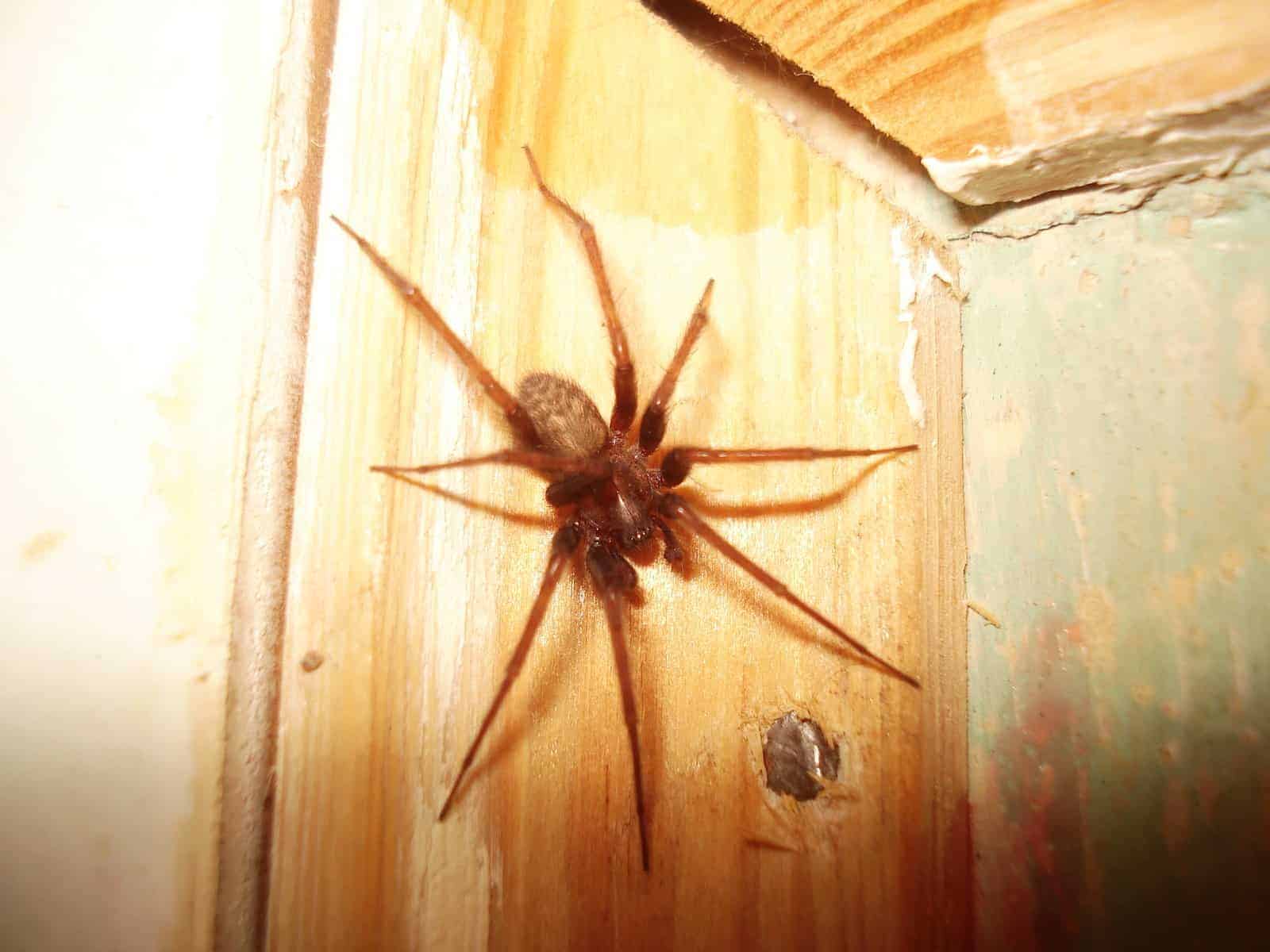
Most spiders inside a house are not an infestation in the usual sense. Some enter accidentally through openings around doors and windows, while others live and reproduce indoors. Spiders may find shelter in quiet areas where insects and other small arthropods are available as food. Their presence does not necessarily indicate an indoor insect infestation.
The good news is that most spider problems can be managed without extensive pesticide applications. Removing spiders, webs, and egg sacs, sealing openings, reducing clutter, and addressing insects that serve as prey are usually the best starting points. Pesticides can have a targeted role when necessary, particularly with medically important spiders, although insecticides often work less well on spiders than on many insects.
This guide explains which methods work, which are unlikely to help, and when the species or number of spiders justifies calling a professional.
Key Points
Identify the spider first. Most house spiders pose little danger to people and are beneficial predators that feed on flies and other arthropods. Spiders have an unfair reputation, but a few species should be avoided. Black widows and brown recluses require a more cautious approach. University of Kentucky Entomology, ENTFACT-623 and UC IPM Pest Notes provide identification and management information. Our spider guide and the species pages linked below can also help.
Start with physical removal and prevention. Vacuuming, sweeping, and sticky traps can remove spiders, webs, and egg sacs or help monitor activity. Sealing cracks, repairing screens, installing door sweeps, reducing clutter, and changing outdoor lighting can reduce future spider activity. UC IPM Pest Notes; University of Kentucky Entomology, ENTFACT-623.
Use insecticides selectively. Insecticides alone seldom provide lasting control. UC IPM discourages routine outdoor spraying for spiders, while the University of Kentucky notes that perimeter treatments may reduce entry and that significant recluse or widow infestations can warrant targeted insecticide applications. Effective management combines appropriate treatments with inspection, sanitation, exclusion, and monitoring.
In This Guide
- Quick Answer
- Identify the Spider First
- DIY Steps That Work
- What Fails
- What a Pro Visit Looks Like
- What It Costs
- Prevention
- Common Questions
- References
Quick answer
- Identify the species. If you suspect a black widow or brown recluse, avoid handling it directly. Wear protective gloves when moving stored materials, use sticky traps for monitoring, and consult our brown recluse guide or our black widow guide.
- Vacuum spiders, webs, and egg sacs from corners, windows, closets, basements, and garages. Empty the vacuum outdoors into a sealed bag. UC IPM Pest Notes.
- Place sticky traps along walls, in corners, and behind furniture to capture wandering spiders and identify areas of activity. Check traps regularly to determine whether control efforts are working. University of Kentucky Entomology, ENTFACT-623.
- Seal openings around foundations, doors, windows, utility pipes, and wires. Repair damaged screens and install tight-fitting door sweeps.
- Remove clutter indoors and reduce debris, firewood, stored materials, and dense vegetation along the foundation outside.
- Adjust outdoor lighting. Move lights away from doors and windows when practical, or use yellow or sodium vapor lighting that is less attractive to many night-flying insects.
- Use insecticides only when warranted. Depending on the species and location, appropriately labeled spot, crack-and-crevice, or exterior perimeter treatments may help. Avoid total-release foggers, which are generally ineffective for spider control.
Identify the spider first
Identification decides how much effort, and how much caution, a spider problem needs. The University of Kentucky notes that most spiders are harmless and beneficial, and UC IPM points out that only a few North American species can deliver a medically significant bite. [University of Kentucky Entomology, ENTFACT-623] [UC IPM Pest Notes]. Know which spiders are found in your location.
| Spider | Where you see it | Concern | Guide |
|---|---|---|---|
| Common house spider | Cobwebs in corners, windows, basements | Nuisance webs; seldom bites | Common house spider |
| Wolf spiders | Running across floors in garages and basements, especially in fall | Large and fast but not dangerous | Wolf spiders |
| Jumping spiders | Windowsills and sunny walls | Harmless hunters | Jumping spiders |
| Yellow sac spiders | Silk sacs at ceiling corners, behind pictures | Bite can be painful | Yellow sac spiders |
| Black widows | Garages, woodpiles, meter boxes, outdoor clutter | Medically important venom | Black widow spiders |
| Brown recluse | Undisturbed boxes, closets, attics in the central and southern U.S. | Medically important venom | Brown recluse |
Not every brown spider is a brown recluse, and not every black spider is a black widow. Correct identification helps prevent unnecessary treatments and ensures that potentially hazardous species receive appropriate attention.
If you are uncertain about an identification, our What Bug Is This? page can help narrow the possibilities. You can also submit a photograph to Ask the Sherpa.
DIY steps that work
Vacuum and sweep on a schedule
A vacuum or broom is one of the most effective tools homeowners have for managing spiders. Vacuuming removes accessible spiders, webs, and egg sacs without applying pesticides. UC IPM notes that spiders’ soft bodies generally do not survive the trip through a vacuum hose.
Pay particular attention to window frames, ceiling corners, behind and beneath furniture, closets, storage rooms, basements, and garages.
Dust-covered webs are often older and may have been abandoned. UC IPM notes that spiders generally maintain webs used for capturing prey. However, dust accumulation alone is not a definitive test of whether a web is occupied. Look for spiders, prey remains, egg sacs, and newly constructed webs when assessing activity.
Remove both fresh and dusty webs during routine cleaning.
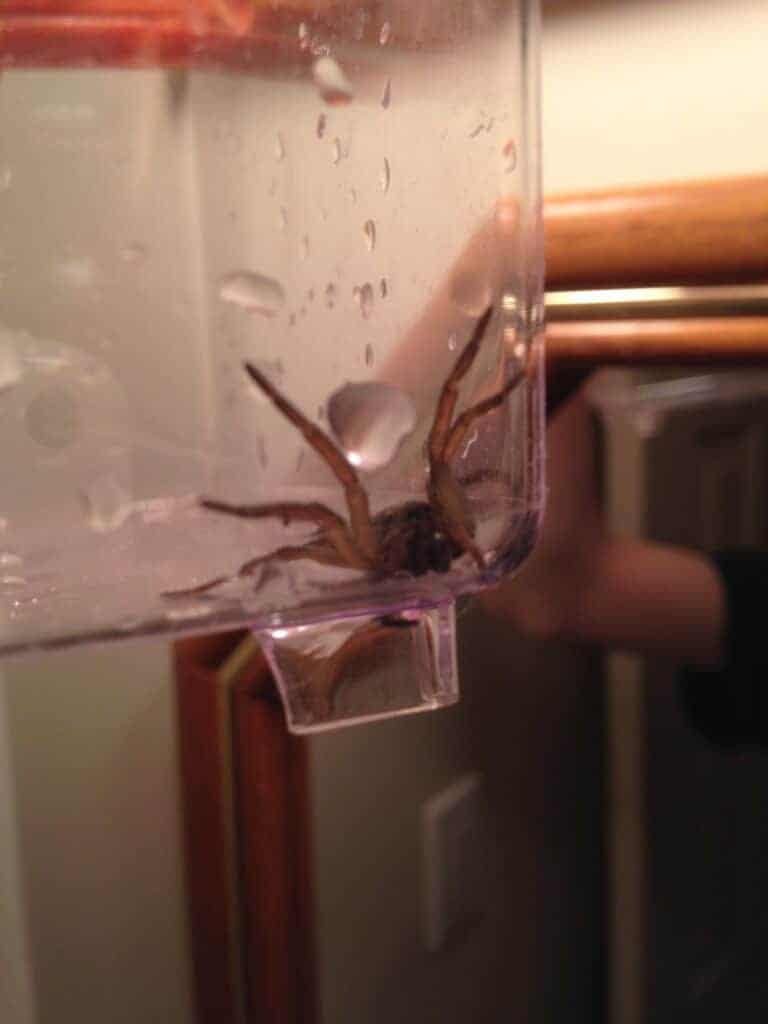
For a single spider that is not medically important, simple removal is usually sufficient. You can place a jar over the spider, slide a piece of paper underneath, and release it outside, or remove it with a vacuum. These methods avoid unnecessary pesticide exposure. [UC IPM Pest Notes]
Use sticky traps to find and catch hunters
Hunting spiders, including wolf spiders, sac spiders, and brown recluses, may wander along walls, particularly at night. Sticky traps placed against walls, behind furniture, and in closets or storage areas can capture these spiders.
Traps are especially useful for monitoring brown recluse populations. The University of Kentucky recommends them as part of inspection and management.
Sticky traps help determine where spiders are active, although they do not necessarily reveal the exact location where spiders entered a building. They are generally less useful for spiders that remain in established webs.
Check traps regularly, record captures when monitoring a suspected infestation, and replace traps as needed. Keep traps where children and pets cannot contact them.
Cut the clutter
Boxes, piles of clothing, stored household items, and undisturbed corners provide shelter for spiders.
Reducing clutter in basements, garages, attics, and closets removes potential harborages and makes inspection and cleaning easier. Tightly sealed plastic storage containers are preferable to open cardboard boxes, particularly in areas where brown recluse spiders occur.
In homes with brown recluse activity, take additional precautions with stored clothing, shoes, and bedding. Shake out items that have been left on the floor or stored in areas where spiders may hide.
Wear protective gloves when moving boxes or other stored materials in potentially infested areas.
Seal the way in
Many spiders enter homes from outdoors through openings around doors, windows, foundations, and utility penetrations. However, some species can live and reproduce indoors, so exclusion alone will not eliminate an established population.
Seal cracks in foundations and gaps around doors, windows, pipes, and electrical or other utility openings. Repair torn screens and install tight-fitting door sweeps, especially on garage and basement doors.
These measures can reduce the number of spiders entering from outdoors and also help exclude many insects that spiders use as food.
For established indoor populations, combine exclusion with vacuuming, removal of egg sacs, clutter reduction, and monitoring.

Change the lighting
Outdoor lights attract many night-flying insects, and web-building spiders may establish themselves where prey is abundant.
When practical, relocate exterior lights away from doors and windows. Another option is to use yellow or sodium vapor bulbs, which the University of Kentucky identifies as less attractive to many insects than conventional white lighting.
Reducing insect attraction around entrances can make these locations less favorable to spiders.
Lighting changes will not eliminate spiders already established indoors, but they can contribute to a broader prevention program.
Clean up the outside edge of the house
Keep the strip next to the foundation clear of leaf litter, trash, heavy vegetation, stacked pots, lumber, and stored materials. Stack firewood away from the house and off the ground. Knock down webs on eaves, windows, and porches with a broom or a strong spray of water. [UC IPM Pest Notes] [University of Kentucky Entomology, ENTFACT-623]
Spot-treat only where it helps
The University of Kentucky identifies several insecticide active ingredients used in appropriately labeled spider-control products, including cyfluthrin, bifenthrin, deltamethrin, and lambda-cyhalothrin. Dust formulations containing ingredients such as silica gel or deltamethrin may also be appropriate for certain labeled harborages or voids.
However, a product’s active ingredient alone does not establish where or how it may legally be applied. The specific product label determines permitted application sites, methods, and restrictions.
Exterior perimeter treatments may help reduce spiders entering through doorways, foundation vents, and other openings. They should not automatically be considered necessary for every spider problem.
Established indoor populations, particularly brown recluse infestations, may require targeted treatments in approved cracks, crevices, or other harborages.
UC IPM emphasizes that pesticide treatments often provide only temporary results unless combined with housekeeping and other preventive measures. Direct application to accessible spiders may be more effective than relying on residues alone.
Routine broadcast spraying of living areas is generally unnecessary for ordinary house spider problems.
What fails
- Bug bombs and total-release foggers. These products are generally poor choices for spider control. The insecticide mist often fails to reach cracks, crevices, and other protected locations where spiders hide. It can also deposit pesticide residues on exposed household surfaces. I do not recommend total-release foggers for ordinary homeowner spider problems.
- Peppermint oil, vinegar, citrus, and other smells. These remedies are widely promoted online. Some essential oils have demonstrated repellent effects against certain spider species under controlled experimental conditions, but that is not evidence that they will prevent spiders from entering or living in a house. Reliable, long-term household control has not been demonstrated. We examined another popular remedy in Do conkers keep spiders away?.
- Ultrasonic plug-in repellers. These devices are marketed as an easy solution, but dependable scientific evidence supporting their effectiveness against household spiders is lacking. See Do ultrasonic repellents work? for more information.
- Spraying spiders while ignoring their food. Where flies, crickets, and other suitable prey remain abundant, spiders may continue to occupy favorable locations. Reducing prey availability is useful, although spiders can survive for extended periods without feeding, so this approach is not an immediate solution.
- Treating every spider the same. A few common house spiders usually require little more than routine cleaning and removal. An established brown recluse population in closets, storage areas, or attics may require a more comprehensive management program.
What a pro visit looks like
Professional spider management should begin with identification and inspection, not an automatic pesticide application.
The treatment approach depends on the spider species, where activity occurs, and whether the spiders are entering from outdoors or living and reproducing inside.
For occasional spiders entering from outdoors, management may concentrate on exclusion, exterior harborages, and entry points. Established indoor populations, especially brown recluses, can require more extensive indoor inspections, monitoring, sanitation, and targeted treatments.
The inspection
The technician should identify the spider and inspect locations where activity is reported or likely.
These may include garages, basements, crawl spaces, closets, attics, eaves, window wells, woodpiles, and stored materials.
For black widows and brown recluses, the inspection should place additional emphasis on concealed or undisturbed areas where people may accidentally contact spiders.
Sticky traps can help determine the distribution and relative activity of wandering spiders, particularly brown recluses. Comparing trap captures over time can also help evaluate management efforts.
Your prep before the visit
- Move stored boxes, firewood, and yard debris away from the foundation when practical and safe.
- Clear access to garage perimeters, basement walls, and crawl space entrances.
- Bring pets indoors and protect food and water dishes if exterior insecticide treatments are planned, following the product label and technician’s instructions.
- Note where and when spiders, webs, and egg sacs have been observed.
- Avoid handling suspected black widows or brown recluses directly.
The treatment
Depending on the inspection findings, a professional treatment program may include:
- Removal of accessible spiders, webs, and egg sacs with a vacuum or web-removal tool.
- Exterior perimeter treatments at labeled locations where spiders may enter the building, when warranted.
- Targeted indoor crack-and-crevice or void treatments where permitted by the label and appropriate for the spider species.
- Clutter reduction, storage improvements, and removal of other harborages.
- Exclusion recommendations involving door sweeps, window screens, weatherstripping, and sealing gaps.
- Outdoor lighting modifications to reduce insect attraction near entrances.
Not every service requires insecticide treatment. Mechanical removal, exclusion, and sanitation may be sufficient for occasional spiders.
Follow-up
Residual insecticide effectiveness declines over time, and some pest control companies offer recurring exterior spider treatments.
However, repeated pesticide applications should not be considered automatically necessary.
Follow-up decisions should be based on the spider species, continued activity, monitoring results, treatment effectiveness, and the pesticide label.
Many occasional spider problems can be managed without ongoing pesticide service.
Brown recluse infestations may require repeated inspections, sticky-trap monitoring, sanitation, and appropriately targeted treatments over several months.
Continue vacuuming, reducing clutter, and maintaining exclusion measures between professional visits.
Questions to ask before you book a service from a professional
- What spider species did you identify, and does it present a significant safety concern?
- What product will you apply, where will you apply it, and how long is it expected to remain effective?
- Are indoor treatments necessary, and which specific locations will be treated?
- What exclusion, sanitation, or habitat modifications do you recommend?
- How will you determine whether the treatment is working?
- Is this a one-time service or an ongoing contract, and what are the cancellation terms?
See how to hire a licensed pest control company for additional guidance on licensing, contracts, and warning signs.
What it costs
Professional spider control is often priced similarly to general pest control service. However, costs can vary substantially depending on the species, extent of activity, property size, and treatment requirements.
A routine exterior service for occasional spiders may be less involved than managing an established brown recluse infestation.
Our guide to professional pest control costs compares one-time visits with seasonal and quarterly plans. Those figures are reported survey data, not fixed prices.
Typical national ranges
Published consumer pricing estimates include:
- Spider extermination: $100 to $500 (Angi, 2026)
- General pest control visit: average $172; reported range $50 to $500 (Angi, 2026)
- One-time spider treatment: $100 to $300 (HomeGuide, 2026)
- One-time exterminator visit for all pest categories: $100 to $600 (HomeGuide, 2026)
- Annual pest control plan: $300 to $900 (HomeGuide, 2026)
- Quarterly service on an ongoing plan: $100 to $300 per visit (Angi, 2026)
- Request written estimates that explain which inspections, treatments, and follow-up visits are included.
These are national figures from consumer cost surveys, not quotes. Prices vary by region, home, and job, so treat them as a starting point for comparing written estimates.
What moves the price
Factors that may affect professional spider-control costs include:
- Home size and the extent of the treatment area.
- Clutter, stored materials, and vegetation that complicate inspection or treatment.
- Whether garages, attics, crawl spaces, sheds, and other outbuildings are included.
- The spider species and whether an established population requires more extensive management.
- Whether monitoring and follow-up inspections are necessary.
- One-time treatment versus recurring service.
One-time job or ongoing plan
A one-time service may be appropriate when occasional spiders enter a home or when a short-term seasonal increase occurs.
Homes near wooded areas, fields, or water may experience more spider activity, but proximity to natural habitats does not automatically justify quarterly pesticide applications.
For many common household spiders, exclusion, cleaning, and occasional removal are sufficient.
Brown recluse infestations can require a longer management program involving repeated inspections, monitoring, sanitation, and targeted treatments. Such programs may involve indoor work rather than simply recurring exterior spraying.
The need for continued service should be established by inspection findings and monitored activity.
Red flags in a quote
Be cautious when a company recommends:
- Indoor fogging or routine broadcast spraying of living areas without a clear justification.
- Treatment without attempting to identify the spider type.
- A lengthy contract without clear service descriptions or cancellation terms.
- A guarantee that one service will permanently eliminate spiders.
- Recurring pesticide applications without considering sanitation, exclusion, and monitoring.
Ask for the identified species, treatment locations, product information, and proposed schedule in writing.
Prevention
Preventing spider problems is largely a matter of reducing entry points and favorable harborages.
- Vacuum corners, window frames, and storage areas regularly.
- Remove accessible webs and egg sacs.
- Store household items in tightly sealed plastic bins rather than open cardboard boxes.
- Maintain door sweeps, weatherstripping, and window screens.
- Seal cracks and utility gaps as they appear.
- Keep firewood, debris, and dense vegetation away from foundations.
- Reduce insect attraction near doors and windows by adjusting exterior lighting.
- Address indoor insect activity that may provide food for spiders.
- Use sticky traps when monitoring wandering spiders is appropriate.
Remember that some spiders can remain and reproduce indoors. Exclusion prevents additional entry but does not replace removal and management of spiders already present.
For identification and information about commonly encountered species, visit our spider guide. If professional assistance is necessary, our guide to hiring a licensed pest control company explains what to look for.
Common questions about getting rid of spiders
What is the fastest way to get rid of spiders in the house?
Vacuum the spiders, webs, and egg sacs you can see. UC IPM notes that spiders’ soft bodies usually do not survive the trip through a vacuum hose. For longer-term control, reduce clutter, seal openings, and address any indoor insect activity that may support spider populations. Established indoor spiders may require continued removal and monitoring.
Do bug bombs or foggers get rid of spiders?
Not reliably. Spiders hide in cracks and corners the mist does not reach, and UC IPM notes that spraying gives only temporary control unless it is paired with housekeeping. Foggers also put pesticide on open surfaces in living spaces.
What smell keeps spiders away?
There is no strong evidence that peppermint oil, vinegar, citrus, or conkers (European chestnuts) keep spiders out of a house. Smells dissipate quickly, so any value is temporary. Sealing gaps, reducing clutter, and changing outdoor lighting do more.
Why do I suddenly have so many spiders?
Late summer and fall bring more adult spiders and wandering males looking for mates, and many species come in along with the insects they eat. A sudden increase usually means an easy entry point or an indoor insect problem.
Should I kill house spiders?
Most house spiders are harmless and eat other pests. Relocating or vacuuming them is fine. Focus on control when you have a medically important species such as a black widow or brown recluse, or when webs and numbers become a nuisance.
Do glue traps work for spiders?
Yes, as a monitoring and removal tool. The University of Kentucky recommends sticky traps placed flush along walls and in corners to find and catch hunting spiders such as brown recluses. Keep them away from children and pets.
When should I call a pest control company for spiders?
Call when you find black widows or brown recluses in living areas, when large numbers keep coming in despite sealing and cleanup, or when you cannot safely reach eaves, crawl spaces, and attics.
References
- UC IPM Pest Notes: Spiders (UC ANR Publication 7442)
- University of Kentucky Entomology, ENTFACT-623: Eliminating Spiders Around Homes and Buildings
- CDC NIOSH: Venomous Spiders at Work (updated September 28, 2026)
- Angi, How Much Does Pest Control Cost? [2026 Data], updated October 9, 2026
- HomeGuide, How Much Does an Exterminator Cost?, January 9, 2026
This article was written by Greg Baumann, founder of Pest Sherpa, and reflects more than 40 years of professional pest management experience.
About the Author

Greg Baumann | Pest Control Expert
Greg Baumann is the founder of Pest Sherpa and a Pest Control Expert with more than 40 years of professional pest management experience. His articles combine decades of field experience, technical expertise, and science-based guidance to help homeowners identify pests correctly, understand real-world risks, and make informed pest management decisions.
Mission: Identify the pest. Understand the risk. Stop the problem. Prevent the comeback. Know when it’s time to call a professional.