
Rodent Guide: Identification, Risk, and What to Do
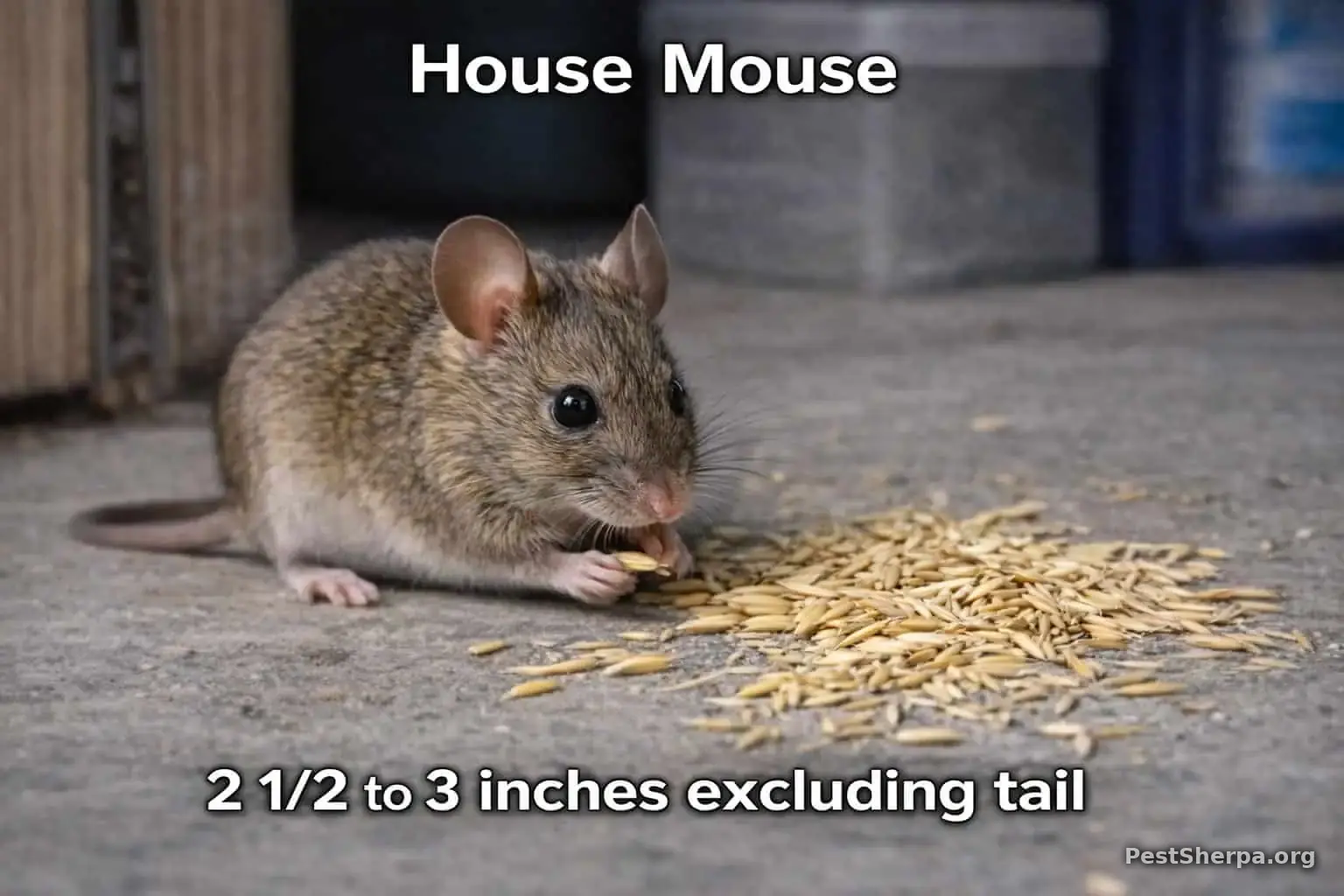
Five important rodents associated with homes and buildings in the United States are the house mouse, Norway rat, roof rat, deer mouse, and pack rat (woodrat). Their occurrence varies by region.
TL;DR: Identify the Rodent Before You Treat
- Identify first. House mouse, deer mouse, Norway rat, roof rat, and pack rat are not interchangeable.
- House mice live indoors year-round. Norway rats burrow; roof rats climb. Nest location is the fastest field clue.
- The deer mouse is the principal reservoir of Sin Nombre virus, the leading cause of hantavirus pulmonary syndrome (HPS) in the United States. White-footed mice, cotton rats, and rice rats are reservoirs of other HPS-associated hantaviruses. The common house mouse is not a recognized reservoir of these viruses. If you need the cleanup steps and disease background in one place, read the Pest Lab article on hantavirus.
- Snap traps plus exclusion beat gadgets. Seal a 1/4-inch gap for mice and about a 1/2-inch gap for rats. Foam, wood, and vinyl do not hold.
Start here based on what you’re seeing:
- Small gray-brown mouse in the kitchen, pantry, or stored food
- White belly and a bicolored tail in a cabin, shed, garage, or rural building
- Stocky rat, burrows along a foundation, basement, or ground floor
- Sleek rat in an attic, fruit tree, or traveling a utility line at dusk
- Stick nest (midden) or a rat with a furred tail
- Squirrel, raccoon, opossum, skunk, bat, or groundhog in the attic, yard, or under the deck
What this means right now
As of November 11, 2026: The D.C. Council passed the Rodent Education and Management Yields Results Amendment Act, or REMY Act, on November 10. The bill restricts certain rodenticides to trained, certified users, a step proponents say will protect pets, wildlife, and children, and it starts a pilot to help business districts pay for rat-proof trash bins in commercial corridors (Washington Post). That shift matters outside D.C. too. Food, entry points, and trash beat DIY rodenticide in any city. I start by sealing gaps, storing food in sealed containers, and tightening lids. If you already have an active infestation, or you are thinking about putting out poison bait yourself, call a licensed pro who can use the right tools safely and close the openings that keep bringing rodents back.
Rodent Species Guides
Species pages for the rodent you actually have or are concerned about.

Deer Mice: Identification, Health Risks, Cleanup, and Control
House Mice: Identification, Droppings, Risks, and Control

Norway Rats: Identification, Signs, Damage, and What to Do

Pack Rats (Woodrats): Identification, Signs, Damage, and What To Do

Roof Rats: Identification, Signs, Damage, Cleanup, and What To Do
Signs of Mice in Your House: Droppings, Sounds, and Smells
Squirrels, groundhogs, and voles are also rodents, but their management differs from that used for house mice and rats. A professional who handles wildlife may need a separate license, and wildlife professionals must be authorized by the state to do pest control work if they also control mice and rats. Depending on the species, appropriate measures may include habitat modification, exclusion, trapping, or other legally permitted methods. Consult state wildlife regulations before capturing or relocating wild animals. You will find field tested information on these, along with raccoons, opossums, skunks, and bats, in the Nuisance Wildlife guide.
Quick Navigation
- How to Identify
- Why It Matters
- What To Do
- When to Call a Professional
- What a Pro Visit Looks Like
- What It Costs
- Compare Species
- Prevention
- Common Questions
How to Identify Rodents
Treat “mice” and “rats” as groups, not one pest. The animal, droppings, nest site, and runways separate them.
Key Identification Factors
- Size and build: mouse vs rat; Norway stocky, roof sleek
- Tail: House mice and commensal rats (those that prefer to live near people) have sparsely haired, scaly tails. Deer mice generally have furred, bicolored tails, while woodrats have distinctly furred tails. Tail appearance is useful but should be considered with body color, proportions, and other identifying characteristics.
- Head: blunt muzzle and ears that miss the eyes (Norway) vs pointed muzzle (roof rat, house mouse)
- Where it lives: indoors (house mouse); burrows and ground floors (Norway); attics, trees, and lines (roof rat); rural buildings (deer mouse); stick nests (pack rat)
- Droppings: House mouse droppings are small, usually with pointed ends. Norway rat droppings are larger and generally blunt-ended, while roof rat droppings are often tapered or pointed. Droppings alone are not always sufficient for species identification.
Common Misidentifications
- Young rat vs adult mouse: young rats have large heads and feet for their bodies
- House mouse vs deer mouse: white belly and a bicolored, furred tail
- Norway rat vs roof rat: burrow vs high nest; tail shorter vs longer than the body
- Pack rat vs commensal rat: furred tail and stick middens
Why It Matters
The hantavirus that causes hantavirus pulmonary syndrome (HPS) in the United States is spread by the deer mouse, not the house mouse. People get it from urine, droppings, and saliva. Andes virus is the only hantavirus known to spread person to person; the U.S. HPS is not transmitted that way. If you become ill after rodent exposure, tell a physician. Andes virus is native to South America, and the rodents that carry it have not been found in the United States. [CDC: About Andes Virus]
Before cleaning a closed or poorly ventilated rodent-infested building, open doors and windows for at least 30 minutes and remain outside during ventilation. Wear rubber or plastic gloves. Do not dry-sweep or vacuum rodent droppings, urine, or nesting materials. Thoroughly wet contaminated materials with an EPA-registered disinfectant or a freshly prepared solution of 1.5 cups of household bleach in one gallon of water. Allow the solution to remain for five minutes, or follow the disinfectant label’s contact time, before wiping up the material. For heavy infestations, additional precautions and professional cleanup may be necessary. Check the latest CDC recommendations for cleanup.
Leptospirosis, salmonella, rat-bite fever, and mouse urinary allergens can come from other rodents; you cannot tell by looking.
What To Do
The order matters: Identify the rodent, eliminate accessible food and water, exclude entry points, and use properly placed traps. When rodenticides are warranted, use only products registered for the target species and application site, following all label directions and applicable regulations. Homeowners should use products specifically labeled for consumer use against the target pest. No homemade poison. [EPA: Restrictions on Rodenticide Products]
- House mice: snap traps along walls, checked daily, then seal holes down to 1/4 inch with metal or concrete. Foam is not a seal.
- Norway rats: Use rat-sized snap traps along established runways. Rats may avoid unfamiliar traps, so pre-baiting unset traps for several days can improve acceptance when trap avoidance occurs. Plus seal 1/2-inch gaps and take away water and garbage.
- Roof rats: trap the elevated runways (ledges, pipes, fence lines), proof the attic, and cut limbs back from the roof.
- Deer mice: exposure comes first. Ventilate, wet everything with disinfectant, and never dry-sweep or vacuum droppings. Rodenticides labeled only for house mice, Norway rats, or roof rats must not be used to control deer mice. University of California IPM reports that no toxic baits are registered for residential deer mouse control. [UC IPM: Deer Mouse] Some products are registered for deer mice in specified agricultural or nonresidential settings. Always verify the target species, application site, and state restrictions on the current label. [CDC: Cleaning Up After Rodents]
- Pack rats: native animals. Confirm the ID and your state’s rules before trapping, then seal the building so the nest cannot be rebuilt inside.
What fails: ultrasonic and magnetic gadgets, glue boards as the plan, scatter pellets or off-label bait, relocating house mice and rats, and sweeping up droppings dry.
When to Call a Professional
- Rats are established and you cannot find the nest or the elevated entry
- Trapping has not ended new droppings or captures after a sustained effort
- Deer-mouse cleanup involves a heavy infestation, a vacant dwelling, or HVAC contamination
- Children or pets make trap and bait placement unsafe, or you need rodenticide beyond an EPA-registered consumer label
- Native woodrats may be involved and legal status is unclear
High-priority cases: closed-up cabin with deer-mouse contamination; Norway rats in a basement with children or pets; roof rats chewing attic wiring; anyone dry-sweeping droppings first.
What a pro visit looks like
Rodent work is trapping plus exclusion. A company that only sets bait and leaves the holes open is not solving a problem.
The inspection
Expect a full inspection inside and out: droppings, gnaw marks, rub marks, spilled food such as seed or dry pet food, and nesting in kitchens, attics, garages, and crawl spaces, and a search for entry points around pipes, vents, doors, garage seals, and the foundation. The technician should tell you whether you have mice, rats, or both.
Your prep before the visit
- Store food in sealed containers and pick up pet food at night.
- Do not sweep or vacuum droppings dry; wait for cleanup advice.
- Note where you see droppings and hear activity.
- Keep children and pets away from any traps or bait stations. The professional should also make clear what you need to do after the visit, including safety requirements and keeping people away from stations.
The treatment
- Snap traps or other traps such as multi-use traps (metal or plastic boxes which trap rodents and can be reused) placed along runways, inside and out.
- Where rodenticides are appropriate, professionals may install tamper-resistant bait stations in locations permitted by the product label. Most professionals prefer not to use bait inside. One industry concern is that the bait works but the rodents die somewhere unseen, such as inside a wall. Stations must be secured and maintained to minimize access by children, pets, and nontarget wildlife as required by the label.
- Exclusion: sealing gaps with steel wool, or preferably copper mesh, hardware cloth, sheet metal, sealant, and door sweeps. Trap and immediately exclude.
- Cleanup and sanitizing of droppings and nesting, sometimes priced separately.
Follow-up
Expect return visits to check and reset traps until captures stop, then a final check. Ask what the exclusion warranty covers.
Questions to ask before you book
- Do I have mice or rats?
- Is sealing included, and what is the warranty?
- Where will bait be used, and how is it secured?
- How many trap checks are included?
What it costs
Angi’s October 2026 data puts rodent extermination at $180 to $600.[7] HomeGuide puts mouse extermination at $150 to $550 and rat extermination at $150 to $600, with an inspection alone at $75 to $150.[8]
Typical national ranges
- Rodent extermination: $180 to $600 (Angi, 2026)[7]
- Mice: $150 to $550 (HomeGuide, 2025)[8]
- Rats: $150 to $600 (HomeGuide, 2025)[8]
- Inspection alone: $75 to $150 (HomeGuide, 2025)[8]
- Sealing one entry point with light cleaning: $100 to $500 (HomeGuide, 2025)[8]
- Up to four visits plus sealing multiple entries: $500 to $1,500 (HomeGuide, 2025)[8]
- Cleanup service: $600 to $1,000 (HomeGuide, 2025)[8]
These are national figures from consumer cost surveys, not quotes. Prices vary by region, home, and job, so treat them as a starting point for comparing written estimates.
What moves the price
- Mice or rats, and how many.
- Number of entry points to seal.
- Cleanup and insulation replacement.
- Number of trap-check visits.
One-time job or ongoing plan
Rodent work is usually a project: trapping, sealing, and follow-up checks. Ongoing bait-station service makes sense for homes with constant outdoor pressure.
Red flags in a quote
- Bait only, with no sealing/exclusion.
- Loose poison indoors. This is not only dangerous but illegal for the pest control company to do.
- No follow-up trap checks.
See what to look for when hiring a pro for rodents.
Compare Common Rodent Species Before You Act
Tail, belly color, and nest site beat a size guess.
House Mouse
Indoor commensal mouse that can live entirely inside. Snap traps and 1/4-inch exclusion. Not the U.S. HPS reservoir.
Norway Rat
Stocky burrowing rat. Ground floors, basements, outdoor burrows. Rat-sized traps and 1/2-inch exclusion.
Roof Rat
Sleek climbing rat. Attics, trees, fruit, utility lines. Trap on elevated runways.
Pack Rat
Native woodrat with a furred tail and stick nests. Not commensal Rattus. Check local wildlife rules.
Deer Mouse
Native mouse with a white belly and bicolored tail. Principal U.S. HPS reservoir. Traps, exclusion, and habitat only. No residential baits registered.
Prevention
Exclusion
- Seal a 1/4-inch gap for mice and about a 1/2-inch gap for rats. For durable exclusion, use metal mesh, sheet metal, concrete, or other gnaw-resistant materials. Sealants may be used to secure these materials and close small remaining gaps.
- Stuff small holes with steel wool or copper mesh, then cap with metal or concrete
- Close larger holes with hardware cloth, cement, or metal sheeting, not plastic, rubber, vinyl, foam, or wood
- Fit doors tightly. Roof-rat proofing includes soffits, attic vents, and tree limbs within 6 feet of the roof
Sanitation
- Keep human food in thick plastic, metal, or glass with tight lids
- Do not leave pet food or water out overnight
- Use garbage containers with tight-fitting lids and repair leaks. Norway rats require regular access to water, which may come from drinking sources or moisture-rich foods. Repair hose bibs that leak. Eliminating accessible water helps make properties less attractive to rats.
Habitat
- Move woodpiles away from the house and raise them off the ground
- Trim shrubs; remove leaf piles and deep mulch against the foundation
- Prune tree and vine bridges to the roof
- Every few months, clean out garage and eliminate clutter that can hide rodents.
Common Questions
- Now that the weather is warmer, will mice leave my basement?
- Is Hantavirus Contagious From Person to Person?
- How do I identify mouse droppings?
- What are the first signs of mice, and how do I keep them out?
- How do I keep mice out of the pantry?
- What should I do if I find mice in my pantry?
How do I tell a house mouse from a young rat?
Young rats have large heads and feet for their bodies; match trap size to the animal you have.
Can I use store-bought rat or mouse bait on deer mice?
No. No toxic baits are registered for deer mice in residential settings.
References
- University of California IPM: Rats
- University of California IPM: House Mouse
- University of California IPM: Deer Mouse
- CDC: About Hantavirus
- CDC: Cleaning Up After Rodents
- EPA: Restrictions on Rodenticide Products
- Angi, How Much Does Pest Control Cost? [2026 Data], updated October 9, 2026
- HomeGuide, How Much Does Rodent Removal Cost?, September 2, 2025
- HomeGuide, How Much Does an Exterminator Cost?, January 9, 2026
This article was written by Greg Baumann, founder of Pest Sherpa, and reflects more than 40 years of professional pest management experience.
About the Author

Greg Baumann | Pest Control Expert
Greg Baumann is the founder of Pest Sherpa and a Pest Control Expert with more than 40 years of professional pest management experience. His articles combine decades of field experience, technical expertise, and science-based guidance to help homeowners identify pests correctly, understand real-world risks, and make informed pest management decisions.
Mission: Identify the pest. Understand the risk. Stop the problem. Prevent the comeback. Know when it’s time to call a professional.